Delusions

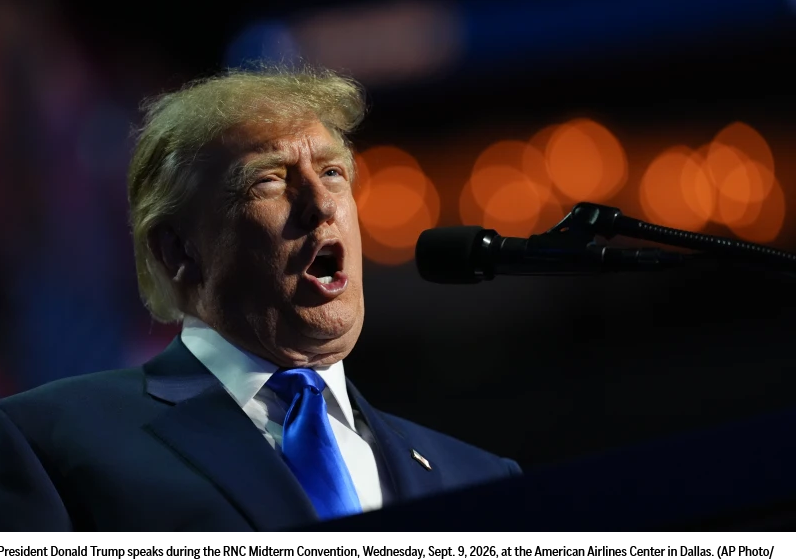
“If the Republicans win the House of Representatives and the United States Senate, both of them,” President Donald Trump said at his midterm convention, “I will issue a dividend to every adult citizen in the United States of America for $5,000.” As the New York Times (NYT) tells us, in 2020, Democrats in Georgia pointed to $2,000 coronavirus relief checks if their party took control of the Senate. Politicians always promise more cash or other monetary benefits if you’ll vote their way:
The Socialist Party of America (DSA), which exerts more and more influence on the Democratic Party, promises either lots of free stuff or more cash in your pocket through things like greatly expanding the minimum wage. All these promises come against the backdrop of “The Affordability Crisis.”

The crisis is just a way of saying prices are rising faster than our ability to pay them. Both parties point to putting more dollars in everyone’s pockets as the answer. But does this make sense? Say ten people are in line to buy one of the ten parcels of necessities needed to survive. Each has $100; the necessities, to no one’s surprise, cost $100. Now President Trump, or Mayor Mandami, comes along and gives each $50. Everyone has more money in their pockets, but now the price of necessities has risen to $150. Unless supply increases, this is the only outcome.

Donald’s or Zohan’s largesse runs aground because of the Law of Supply and Demand. It still rules, as it has through the ages. Simply put, if Demand exceeds supply, prices will rise. Increasing Demand without more supply keeps prices rising.

Increasing supply to meet or exceed Demand stops inflation. However, this solution requires capital investment. Planting more acreage, building a factory, drilling wells, ships to bring in imported goods, or opening a mine- whatever is needed to increase supply demands capital.

Capital is forgone consumption, or put another way, savings, and the positive returns on them. If you lend at interest or invest directly in assets that grow in value, you have more capital, but you also face the risk of loss. Not every well finds oil, gas, or even water.

Continue reading →

AI In The Crosshairs

While we await the umpteenth peace that Trump has promised since the Iran ceasefire, it might be a good time to address the rising calls to impose controls on Artificial Intelligence (AI) and to reduce the power and wealth of the leaders of the enterprises leading the technology. After all, bringing concentrated knowledge and computing power to the masses can overturn the social order and threaten humanity.

Leaders in both parties appear to be tripping over each other, demanding that the Government take control now before it’s too late. From GOP Senator Josh Hawley to Democratic socialists, Sen. Bernie Sanders (I-Vt.) and Rep. Alexandria Ocasio-Cortez (D-N.Y.), there is pressure to go much further with government intervention.

None of this is new, as I’ve pointed out in my series, “The Long Journey to More.” At the start of the Industrial Age, the handicraftsmen known as  Luddites destroyed weaving machinery. Farm mechanization provoked a mass migration away from farm work. More recently, Computers connected to the internet caused an upheaval in how we do almost everything. The great economist Joseph Schumpeter called this process “Creative Destruction.”

Continue reading →

Not The Change We Need

Don’t count on things getting better. When we’ve gone through a rough patch, we wish the next election would result in greater competence, but that’s hope over experience. The last election saw a voter revolt against the worst inflation in 40 years, wide-open borders, and the Afghan fiasco, which encouraged bad actors to start two ugly wars. The relatively solid economy and the absence of major fighting during Donald Trump’s first term fostered nostalgia.

Trump promised peace, safety, and prosperity in 2024. A little over one year in, we still have rising prices, albeit at a somewhat lower rate, violence on the streets in cities like Minneapolis, and an ever-widening war in the Middle East. Maybe we didn’t want wide open borders, letting in bad people, but we want the good contributing to our nation, treated humanely, not terrified and abruptly deported.

Given where we are, how is that election working out? More importantly, will the future election bring improvement? Plagued by high prices, poorly conceived international actions that have led to more bloodshed and increased costs, civil unrest, lawfare, executive orders that ignore Congress, and corruption, a change in leadership surely will lead to a different direction.

But will it? Everything we’re complaining about today has its roots in the prior Democratic administration: high prices, almost double-digit inflation. Afghanistan, Ukraine, and Gaza weren’t examples of international stability. The Black Lives Matter riots weren’t peaceful. Forgiving billions in student loans by executive order, the courts were Trump’s second home during the 2024 campaign, and if you wanted Biden’s attention, his son had a painting for you.

Yes, you can argue that the current Trump administration is worse in all these areas, but that is just because Trump exceeded them, not because he initiated them. Just as Trump followed and expanded on the Democrats’ path, there is no reason to believe the Democrats won’t build on and exceed the present administration in these areas. A continuing game of ” Can you top this?”

Instead of a fresh approach to our myriad of problems, the Democratic leaders with the loudest voices promise more of the same. From California to New York City, Newsome to Mandani, and all Blue spots in between, we hear the same old, same old. The rich are getting richer at the expense of the rest of us, and not “paying their fair share.” Corporations, you name the place, are price-gouging, and inequality is growing by leaps and bounds.

Given these diagnoses of our problems, the solutions have a familiar ring to them. Increase taxes on those nasty billionaires and millionaires’ ill-gotten gains. In California, increasing income taxes on the “rich” isn’t enough; we have to tax their accumulated wealth. Investigate companies whose prices have moved up significantly. Stronger price controls on things like rent in New York City. Hike up the minimum wage to give everyone a raise. Close the growing gap between the haves and have-nots by increasing transfer payments.

Continue reading →

The Pursuit Of Happiness

While waiting for the long-overdue Supreme Court Tariff ruling, I’ve had time to reflect on why so many Americans have either a dim view or little knowledge of our capitalist economic system. How can a simple, common-sense system be misunderstood by so many?

I’ve been reading Zhang Weiying’s “The Logic of the Market: An Insider’s View of Chinese Economic Reform” to better understand how the Chinese economy compares to our own. Most economists talk in jargon, but the Author explains capitalism in terms of happiness rather than marginal returns and GDP.

In capitalism, people engage in consensual exchange. Consumers and suppliers freely exchange a wide range of goods. As each gets what they asked for, both are happy. You go to the supermarket, you get what you want, and the store gets paid. Both of you win.

However, if goods or cash change hands with only one party happy and the other sad, it’s robbery. Think about that. Someone points a gun at you, demanding your stuff. The thief is happy, but you’re really sad. The point of human interaction is shared satisfaction, rather than gloom.

The gauging of happiness and sadness in society to determine whether an action is successful or just a thief. can be applied to both governance and economics. Most commercial transactions in free-market economies result in happiness for all the participants. You go to Costco, get a hot dog, and fill your cart with goods you value. At checkout, both you and Costco are happy.

Continue reading →

Allow People To Interact

All the noise about the Elon Musk-led Department of Government Efficiency (DOGE) lopping off unneeded chunks of the Federal Government and the horrified response by the big government-favoring progressive left got me thinking about what the purpose of Government is in the modern world and how we can match it to those goals.

My take on the question will shock and horrify others, but hear me out. The purpose of modern Government is to provide the structure for free and open markets to thrive. These markets are another way of saying people can freely and safely interact.

Markets are the best way to allocate resources to better the human condition. Nothing, including the various forms of socialism, mercantilism, feudalism, or tribalism, has lifted humanity more than free and open markets. If you don’t accept this, I urge you to read “Super Abundance.” As the structures necessary for markets to thrive expanded, humanity’s living standards have dramatically improved, even as its numbers have grown.

The reasons for market superiority aren’t hard to find. Billions of people using the latest information will arrive at better decisions and make them quicker than the relatively few elites in Government. In the information age, this advantage only grows.

Markets are the most democratic form of choice. People vote for their preferences. These are hard choices because their money is involved rather than theoretical. We are all human, so markets make mistakes momentarily but self-correct as new information enters the continuous exchange. We invest funds to receive a proper return. If the profit potential leaves, so do we.

Continue reading →