No monopoly lasts without government sanction. That’s just a fact. If you can think of one, I’d like to know. In competitive free markets, dominance is fleeting; look at American Online, Sears, IBM, or Microsoft.
You might ask, what about the Gilded Age Robber Barons? Didn’t Standard Oil and U.S. Steel use their dominance to gouge the public? Even then, both competed in the world market and faced plenty of competition. Instead, out of fear of competitors and to reach lower price points that expanded their markets, they lowered their product prices during the period.
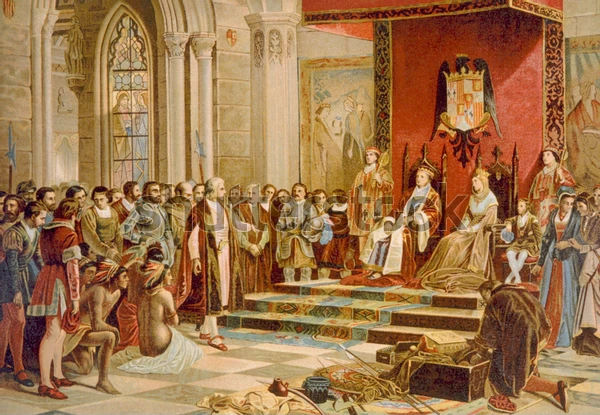
Given the thousands of years of government favoritism, patronage, monopolies, and corruption, pointing to Capitalism’s so-called moral deficiencies is laughable. If Government didn’t control so much of the economy, we wouldn’t need the vast army of lobbyists encamped in Washington. All seek some favor or try to prevent others from using Government favor against them. We now mimic a Royal Court, attracting those seeking benefits:
The recent Skydance-Warner Bros merger illustrates how far down the road to corruption we’ve come. The Government, with its power over “monopolies ” and “restraint of trade ” at various levels, seems to have extracted large sums from the Ellisons and their company, Skydance, to ensure completion of a merger they had already committed large sums to.
No one in their right mind thinks the merger could create a media monopoly or meaningfully restrain trade. At 27%, its largest share of any media sub-market, Motion Pictures is hardly a monopoly—just a large entity in a vast market. Still, the Ellisons contributed 45 million dollars to the Trump ’24 election campaign, and more to other Trump-favored endeavors.
Then many states jumped in through their attorneys general, forcing Skydance to commit huge sums for favored constituencies. Doesn’t this sound more like doing business in a banana republic than in the U.S.?
Adam Smith was, in fact, a moral philosopher; he saw greater virtue in businesses serving their customers rather than their rulers. A business that loses its customers’ confidence will go out of business, but if the Government protects it from competition, serving the public matters little. The invisible hand sorts the trustworthy from the rest.
If you order from Amazon today, you expect it to arrive on time at the agreed-upon price. Even as big as it is, it works hard to keep your trust, knowing that if it doesn’t, someone else will. Do you feel the same when you deal with the Government? How about the IRS or the motor vehicle department?
Many claims of environmental degradation, social costs, and exploitation date back to the Industrial Revolution. The mass movement of workers from rural areas to cities was joined by mass immigration from overseas. Of course, cities were overcrowded. With 20+ million arriving, housing was initially overwhelmed. Disease spread, but cities had long been hotbeds of disease.
What was different during this period was the same emphasis on knowledge and the scientific method that fueled the Industrial Revolution, which provided answers and understanding of disease and helped control it. Yes, we had disease, but we also had Louis Pasteur and others to gain control. Even with the overcrowding, life expectancy grew during the period.
As with disease in cities, mass child labor existed throughout the preceding agrarian societies. Even in 1900, two-thirds of child laborers in the U.S. worked in agriculture. While agrarian work was always hard, Child labor in cities included many newsboys and peddlers. As the U.S. had one of the highest literacy rates in the 19th century, most kids got educated.
Keep in mind: those tens of millions of migrating people weren’t forced at gunpoint to work long hours in crowded conditions; they came willingly because they saw better prospects for themselves and their families, and they were right.
Real wages grew by 50% during the Gilded Age. They kept rising as output grew more complex; training and education commanded higher pay. Industry needed skills, and competition for them kept wages rising. The spread of electricity and autos needed more than raw labor. Nobody forced Henry Ford to raise his wage to the then-unheard-of $5. He realized it was more profitable to retain those he trained than recruit and train new, cheaper but unskilled people.
As for environmental concerns, capitalist countries are far and away better at tackling them: keeping things clean and habitable takes money. They have it, and everyone, rich or not, has an interest in living in a good environment.
Whether progressives admit to being Marxists or not, they all aim for greater top-down Government control. While they claim all sorts of successes, the record shows the human condition improves fastest where there is less Government. In the U.S., we see steady migration from high-regulation, high-tax states to those offering more freedom and a favorable climate for capital. World migration reflects the same.
Statists sometimes point to Europe, with its greater regulation and economic interference, as the way to go. Since 2008, when the European Union (EU) had a larger GDP, it has steadily fallen behind the U.S.: it lacks innovation and is absent from tech leadership. The heavy hand of Government seems to have created a plague that restricts progress. The choice is clear: fall away from growth like the EU or play to our strength, free markets. The facts point to the route to Abundance, as outlined in Marian Tupy and Gale Pooley’s book, “Super Abundance.”
I know what I’ve written is at odds with what most Americans have been taught and now believe, but I stand behind the sources and Authors I’ve presented. Capitalism, or, if you will, the free market or free enterprise, has given far more people better lives than ever before. Why would anyone want to turn back the clock?
In the past, an elite ruling group always existed: an aristocracy of hereditary landowners who never dirtied their hands in commerce. Trade provided hard cash (Gold and Silver) for taxes and the luxury goods the upper class craved (the only ones who could afford them), but even rich traders were considered below the elite. The military, clergy, bureaucrats, the learned, and those involved in the legal system ruled but provided no real goods and services. That was below their status. They answered to no one but their own class.
In his much-praised book, “The Radicalism of the American Revolution,” Gordon S. Wood illustrated the monumental break the colonists made with the past. Government was diffused through checks and balances and was answerable to all citizens—no class barriers. We were free to choose and achieve.
The same groups that ruled in the past still exist and want their status back, but given our amazing gains since our founding, why would we agree?
Better to realize we have already traveled some distance back to top-down government control, and Marxism is just the latest manifestation. At some point there will be no turning back.
Rather than going back to ruling-class dominance, we should go back to our founding principles. They worked splendidly for us when other systems failed.

