Crisis, What Crisis?

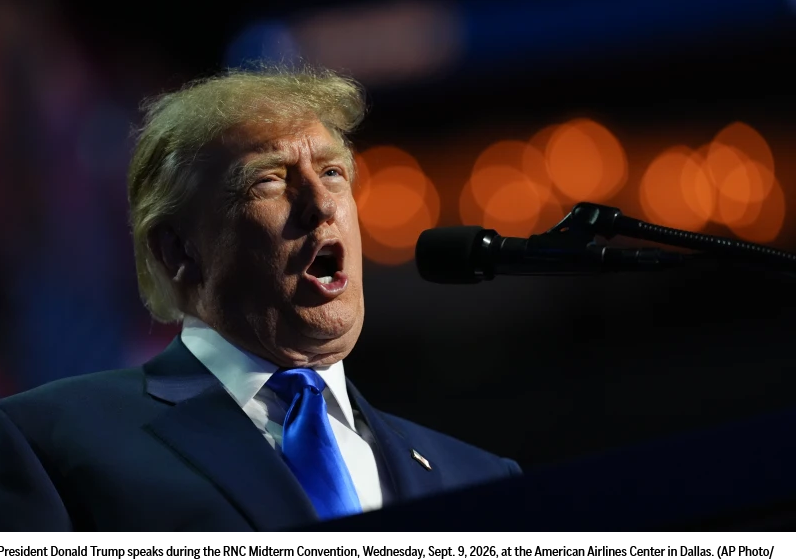
We’re entering the mid-term election home stretch, and it looks as if it will come down to which we hate more: Trump or Socialism. Polls show a majority of Americans dislike both. Younger voters abhor Trump. At the same time, older Americans feel the same way about socialism. Each party is expending resources to convince the populace which is more terrifying.

This state of affairs makes it easy to follow the campaigns. Thank goodness there are no other concerns we need to discuss before they become a crisis. After all, our exploding national debt is a long-term worry. Our losing the Iran war only confirms that foreign adventures always turn bad. Just stay at home. Like, that’s a possibility in an ever-shrinking world.

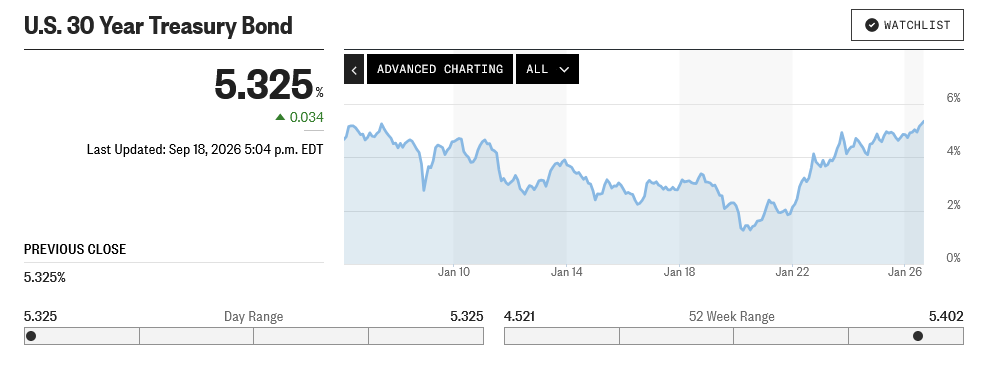
I don’t want to be a wet blanket, but there are signs that the debt crisis may be closer than we think. Are you aware that the U.S. government is about to sell 30-year bonds at the highest interest rate in a quarter of a century? Don’t feel bad; most people aren’t:

The current rate on the long Treasury bond yields more now than at the height of Quantitative Easing (QE) coming out of the Great Recession. It’s higher than when we had 9% inflation under Biden.

This is true even though the Treasury issues far fewer of these long bonds than short-term obligations. Generally, there is a ready market for long bonds from insurance and pension funds that need to match long time frames and commitments, and the Treasury accommodates them, but refrains from issuing more for fear it will raise rates the Federal Reserve has little or no control over.

The Federal Reserve can no longer affect longer-term interest rates because of the masses of longer-term bonds bought under QE to keep rates down in the past. Those bonds are now held at a loss. That’s right, our central bank is losing money. The new Fed chairman, Kevin Warsh, was no fan of the QE program that resulted in the first loss since the Fed’s first year in 1915, so it’s unlikely to repeat it.

The climbing long rate seems to signal future inflation problems. We are already paying more interest on our debt than we do for national defense. With the impending insolvency of Social Security and Medicare just a few years out, spending looks like it has nowhere to go but up. With most of the debt short-term, any further interest rate rise is reflected almost immediately in much higher payments.

Japan, with debt two and a half times its GDP, is further along a crisis path. Its currency came under attack, meaning a possible inflationary devaluation. In the past, nations under similar attacks either raised interest rates or sold reserves to buy and bolster their currency.

Continue reading

Why Fauci Matters

With the publishing of the diary Dr. Anthony Fauci kept on a government computer, many people who are still struggling with economic setbacks, their kids’ learning loss, mental problems, and the failure to see loved ones before they passed away, among other things, are calling for the Doctor’s head. While I share their dismay at the unnecessary detrimental actions Fauci favored that cost so many so much, I think we need to look at how these failures came about so we never repeat them.

Pandemics have occurred throughout history and likely will continue in the future. It stands to reason that institutions such as the World Health Organization (WHO) and our Centers for Disease Control and Prevention (CDC) should create guidance on how to proceed when one raises its ugly head. By developing their responses before a crisis and coolly analyzing the data during calm times, we could avoid hasty, even panic-driven actions likely to make matters worse. Maybe much worse.

So why didn’t these esteemed organizations have a plan when COVID hit? It may come as a surprise to many, but both WHO and the CDC did have well-developed, thoughtful guidance. It was the Trump administration that decided to appoint a new board to guide our response, rather than follow the CDC plan already in place. It’s as if a school had a well-developed fire plan, but at the first sign of smoke the principal appointed a committee to work out a new plan rather than just following the existing one. Makes no sense and is likely dangerous, but that’s what we did.

Vice President Mike Pence, Alex Azar, the Health and Human Services Secretary, Dr. Deborah Birx, coordinator, Dr. Antony Fauci, infectious diseases; Dr. Robert Redfield, CDC director; and Jerome Adams, Surgeon General, made up the board. Maybe impressive on paper, but why would any plan this bunch came up with be as well thought out as the existing CDC plan? If Redfield had the CDC plan, and he did, why did he go along with this ad hoc committee?

The answer is Donald Trump didn’t trust or care for the CDC. He chose to bring the COVID response into the White House, making it impossible not to be political. In a sharply divided nation, this made certain the partisan backbiting that followed.

Like all committees or boards, someone becomes the spokesperson. The Committee face. After reading Fauci’s diary, is it any wonder this publicity-seeking narcissist grabbed the limelight? If Birx was supposed to be the coordinator, does anybody remember her other than her scarves?

Continue reading

AI BIAS?

I was checking factual information on some points about the similarities between the progressive reaction to today’s technological age and the progressive reaction to the Gilded Age for a recent post. A simple AI inquiry: “Did the Gilded Age see the greatest leap in living standards in history?” Google qualified the statement with “it’s debated because it also featured severe poverty and extreme wealth inequality.” The summary goes on to spell out social costs of deep inequality, crowded cities, and harsh labor:

The Gilded Age is generally thought to have begun with the completion of the Transcontinental Railroad in 1869 and extended to WWI.

These qualifiers seemed strange first because I didn’t mention social conditions, just the economic advancement, and they’re at odds with the rest of the summary. In the next sentence, after it mentions the inequality and poverty, it states that real wages for nonfarm workers grew by about 53%. It goes on to confirm the Gilded Age’s Leap: with falling prices, things became more affordable to the average person, life expectancy went up, and the new technologies transformed daily life.

Adding in downbeat notes seems at odds with the rest of the findings. If things were so awful, why did millions leave farms, or come from other nations? People don’t migrate to have less. With all those people coming to our cities to take higher-paying jobs, of course there’s a housing shortage.  

Curious, I put the same statement to Microsoft’s Copilot. Its conclusion: The Gilded Age produced the fastest sustained improvement in material living conditions ever recorded for a large population,” confirmed my understanding. Yet it had to echo Google about inequality and bad labor conditions, while adding corruption and racial divisions. “Jim Crow hardened, immigration tensions rose, Native Americans suffered catastrophic losses.” But all of these problems existed before the Gilded Age. What did the Gilded Age have to do with Jim Crow? Again, these nuances are at odds with the rest of the summary.

My curiosity about AI adding extraneous and contradictory information was further piqued when I wondered about the widespread Genocide accusation leveled against Israel. In the modern world, the concept of Genocide goes back to approximately 60% to 65% (or roughly 1.5 million out of an estimated 2 to 2.5 million) of the Armenian population in the Ottoman Empire who died during the Armenian Genocide between 1915 and 1923.

Continue reading

They’re Back!

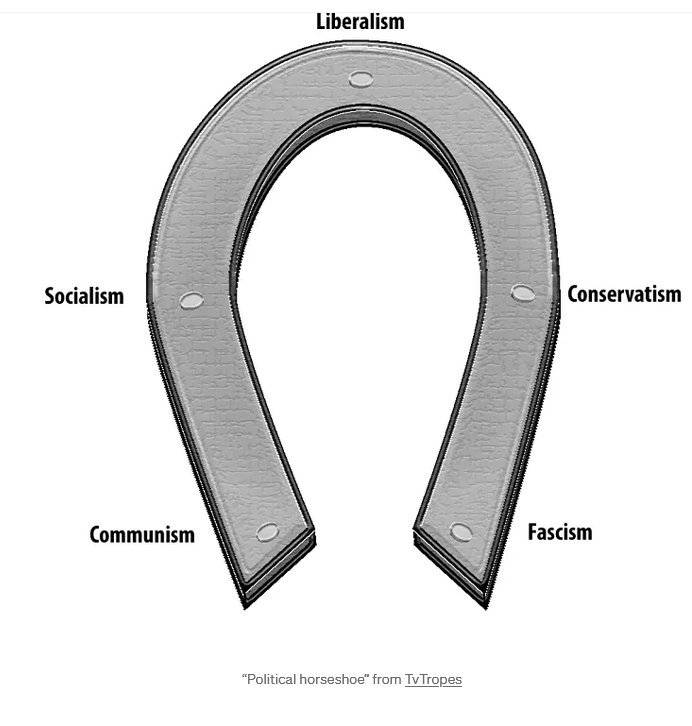
It’s as if we passed the graveyard of discarded ideas, and we heard murmurs. Ideas that failed to work in the modern world, or sounded great but failed horribly in practice. Thought dead and buried, they seemingly are rising from their graves, or are already at the graveyard’s gate:

Walking haltingly, Marxism, mercantilism, anti-semitism, and Ludism, nevertheless, are rising and walking among us. While some are horrified, many have no comprehension of the harm these zombies of the past did when they were ascendant on Earth and believe they present the way forward.

Most of the fans of these living dead are too young to remember the millions who paid with their lives at the hands of the believers. Even though many are college graduates, few seem aware of the thousands of years of slow human progress under elites controlling from the top down. organization. Everyone below owed the aristocracy, mandarins, or Brahmans, but little obligation moved downward to the bulk of the people.

Yet, what these young people advocate would reinstall systems incompatible with a modern, advancing nation. The Democratic Socialists of America’s (DSA) platform calls for eliminating the Senate and the Electoral College. Congress would appoint the President and control the judiciary. In effect, they would trash our Constitution.

Why dump a system that has made us the longest-surviving and most prosperous Republic ever? A New York State DSA spokesman, when asked this very question, replied, “to be more Democratic.” Sadly, the questioner failed to point out that our founders weren’t fans of direct democracy.

Charismatic leaders could rouse the populace to take momentarily popular actions that are detrimental in the longer term. Much of what the new populists on both the left and the right propose follows what William Graham Sumner saw when he talked about the “Forgotten Man” in 1881. In the present parlance, Politician A perceives that more numerous Bs want more, and conspires with them to take from the fewer but more prosperous Cs. Through B’s votes, A gains control of the Government.

At first, this situation may seem to work. The Cs get some more. Inevitably, as Margaret Thatcher pointed out, “You run out of other people’s money,” or the Cs leave. Then, A has to oppress the Bs to maintain the lifestyle of the ruling regime.

Today’s populists only have to look at countries such as Cuba, Venezuela, and North Korea. The people remaining in them live in the end stage of what began as mob rule, expressed through direct democracy. How many of these “idealists” will pack up and move to these “workers’ paradises?”

Continue reading

As The World Turns

Back in March of 2023, I questioned in the post “Out of the Jaws” whether Ukraine could ever win its war with the Russian invader without the ability to shoot back. Though the Ukrainians had halted the invasion, they could never win if they couldn’t hit back at the Russian war machine’s homeland infrastructure. While the Russians hammered every military or civilian target they could, the Biden administration allowed the use of U.S. weapons only close to the battlefield. Only in 2024, in response to Russia’s use of North Korean troops, did it slightly extend the range.

Russian territory was largely exempt. Biden reasoned it was best to limit the scope of the war. Fearing that hits on Moscow or St Petersburg like those on Kyiv, the Russians might use nuclear weapons or attack NATO nations. As unlikely as either of these Russian reactions is, the Biden Administration must have believed in them, as they slow-walked arms to Ukraine.

This policy led the Biden administration to push Ukraine into an ill-fated offensive without air superiority or the longer-range weapons Ukrainians had requested. Without the means to cut off supplies to the well-dug-in Russians, the attack was doomed before it even started.

The U.S. military doctrine says it must have air superiority before a major offensive, yet where were the F-16s the Ukrainians asked for?

Things didn’t improve under Trump. While keeping many of the range restrictions in place, his administration taunted Ukrainian President Zelensky, saying he had no cards and should give in to Russian demands. It never seemed to dawn on them that Ukraine might have cards, but the U.S. prevented them from playing them.

If Russians felt no pain at home, they had little reason to oppose the war. Yes, troops were maimed or dying, but drafted from rural areas, criminals, or recruited foreigners; the horror of war didn’t touch Russian elites. Life in Moscow or St. Petersburg went on as usual—some inflation, but nothing aimed at them.

Instead of folding, the brave Ukrainians fought on. The same imagination and ingenuity that stopped the initial massive Russian attack, the Ukrainians applied to the modern battlefield. High-tech is increasingly used to gain an edge, especially in the new drone warfare. Rapidly updating design, software, command, and tactics, allowing them to blunt the Russian manpower and equipment advantage.

If the U.S. wasn’t going to provide the longer-range weapons sorely needed to isolate the battlefield and attack Russia’s war infrastructure deep in that vast nation, Russia lacked any incentive to make peace. Yet, when asked, the U.S. turned down Ukraine’s request for Tomahawk long-range missiles.

It was left up to the Ukrainians to develop the weapons they needed. These freedom-loving people rose to the challenge, especially with long-range drones. Residents in Moscow and St. Petersburg find themselves treated to towering smoke plumes rising from their major oil facilities;

Continue reading