Recalling a Similar Time

Celebrating our 250th birthday over the weekend brought back memories of our Bicentennial in 1976 and the similarities between then and now. The fall of Saigon marked the humiliating end of the Vietnam War. We maintained something of a detante with what many thought was an ascendant Soviet Union, with us in decline. We were suffering from stagflation, a stagnant economy with ever-increasing prices. Many were pushed into higher tax brackets, while their income bought less.  

After Watergate and President Nixon’s resignation, we were looking forward to the less-than-thrilling choice between Gerald Ford and Jimmy Carter for President. I hoped that Ronald Reagan would somehow prevail at the Republican Convention the following month, but it wasn’t to be. It was the period that caused Jimmy Carter, as President, to give his “malaise ” speech.

President Ford’s “Whip Inflation Now” Campaign, with its WIN buttons and voluntary appeals to save rather than spend, plant gardens, turn down the thermostat, and carpool, summed up his policy. After the progressive McGovern fiasco, the Democrats turned to a Georgia peanut farmer about whom nobody knew much, especially what he’d do.

We celebrated our birthday, but we wished we could be more upbeat about the future. Maybe those prophecies of gloom and doom were right, and we were in decline.

I thought we had all this behind us, but Déjà vu, here we are at 250 with many of the same or similar problems. A war gone awry, with humiliation in the wings, inflation refusing to go away, and most people having little faith in the abilities and policies of our two major parties. Again, maybe we’re in decline, and the American dream is gone for good. Some share New York Mayor Mandani’s dark view of America, where the wealthy oppress working people.

Continue reading
Dump Primaries?

Some recent events point to our need to reflect on what our nation is about. Primaries in both parties produced candidates appealing to the extremes of the electorate. Longtime Senators John Cornyn of Texas and Bill Cassidy of Louisiana lost their reelection bids due to a perceived lack of loyalty to Donald Trump. He endorsed their primary challengers, and his loyal base did his bidding. While these were the most prominent, the President also prompted other Republicans to retire amid primary challenges or the threat of one.

Democratic Socialists challenged more moderate Democrats with solid results in such Blue Strongholds as New York, Maine, and the District of Columbia. In one-party areas, the primary is the election.

No one believes either the Trump-backed or the Democratic Socialists’ nominees are stronger general-election contenders. In fact, in the Texas Senate race, Trump backed Ken Paxton in what is a safe seat with Cornyn, now in jeopardy.

If the actions of Donald Trump and the Democratic Socialists result in weaker general election candidates, why would you back the less electable? Power! If you’re contemplating a career in elective politics, you must win a place on the general election ballot by winning a primary. If you fail to tow the extreme line, you may have little or no chance of advancing.  

Primaries attract far fewer voters than general elections. Even the contested House seats in New York State failed to draw many people. These small turnouts allow the dedicated minorities to determine winners. For instance, Public employees and their Unions are directly affected by who employs them and have every reason to turn out. The average voter, not so much.

If you don’t bow towards Trump on the right or bend your message towards Marxists on the left, you’ll likely face a competitor who does. Even if you manage to win the nomination, you’ve expended so much and are so bruised that you’re weakened in the general election.

In my series, The Future Party,” I predicted the homelessness of prospective candidates espousing policies similar to those of Ronald Reagan or Bill Clinton. I pointed to primaries as a major culprit.

Continue reading

Making Things Worse

Maybe you might feel the same way. It’s as if the Trump administration looks at things and asks, ‘ How can I make things worse? Take our problem with Iran. Israel had hammered Hamas, Hezbollah, and most importantly, Iran, to a point where they could offer little resistance from air strikes. The U.S. joined in by bombing and burying Iran’s nuclear ambitions. Mismanagement by the ruling regime led to water shortages and galloping inflation.

The Iranian people had it. All we needed to do was to find a way to create some space in Iran where they could arm, train, and organize. Once established, the regime is on the horns of a dilemma. Put their most loyal troops out where airpower can disseminate them, or hold back, allowing the revolution to grow.

With restive minorities and an army overshadowed by the Revolutionary Guard, coupled with Israeli contacts on the ground in Iran, with some planning, the regime is ripe for overthrow. Done right, we control the timing of the regime’s demise. Involved in an existential civil war, the last thing they’d want to do is use their limited military resources to attack other nations or international shipping.

What we got is a massive bombing attack on Iran’s military and nuclear facilities by a vast armada, Israel’s air force, and other resources, combined with decapitating the regime’s leadership.

Rather than surrendering, Iran struck back at our military installations and our allies’ infrastructure, mainly by massing drones. These were followed by the closure of the Strait of Hormuz, destabilizing the world’s economy.

Our response has been a “ceasefire” and a blockade of Iran, further restricting the movement of oil, gas, fertilizer, and other goods, worsening the world’s problems.

The Iranian people, the ones we should be helping, are far worse off. With less of everything, runaway inflation is making people poorer than ever. The regime continues to hang the opposition. We never gave them anything needed to fight back, and they’re paying a steep price that only looks to get worse.

Somehow, we’ve managed to make everything much worse.

The American people elected Donald Trump to another term in hopes of returning to the strong economy of his first term, based on growth-friendly tax policies and reduced regulation. Increasing supply to defeat Biden’s high inflation.

Continue reading

Trumpland

President Trump has loudly demanded ownership of Greenland as a matter of crucial national defence. Highlighting Greenland’s role in Arctic trade routes and national defense, he drew a dire picture.

Our U.N. ambassador, Mike Waltz, made the administration’s case on several TV shows by claiming that, in the event of problems in the Arctic, the Island doesn’t even have an icebreaker—no wonder they need us.

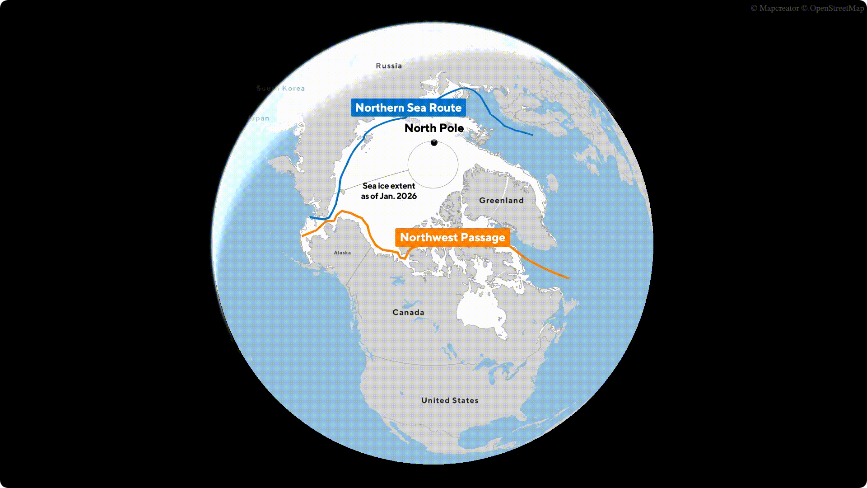
To understand the situation, we need to know why the Arctic is becoming so important. This map should help:

With warming temperatures, two significant new trade routes are emerging. The Northern Sea Route, which mainly runs through Russian waters, and the Northwest Passage, which runs by Greenland, Canada, and the U.S. (Alaska). As I pointed out in my post, “What’s Trump Thinking,” The Former is of the utmost importance to China. A shorter route to Europe, accessible to Russian resources, is the future. That’s why China isn’t about to allow Russia to change alliances without a painful response.

The search for a Northwest Passage dates back centuries, driven by obvious commercial advantages. Now it’s happening. As with any critical trade route, it needs protection. It’s still the Arctic, so commercial and military vessels will need icebreaker support. As NATO allies, Denmark, Canada, and the U.S. should have no problem establishing bases and patrols as required.

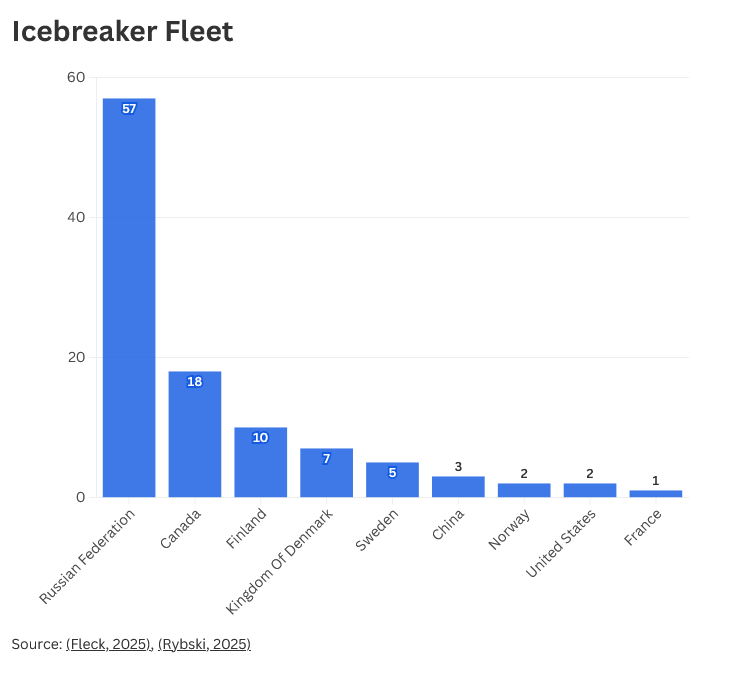
Of course, Ambassador Waltz is correct in highlighting the need for Icebreakers. Still, you can’t look to the U.S. We have two or three ancient icebreakers that may or may not be available in a time of need. We’ve ordered a couple from Finland, hopefully for delivery in 2028. Presently, the Northwest Passage depends on Canada’s 18 capable ships, with even more modern ones on the way. With the increasing importance of icebreakers, note that Denmark has more than the U.S.:

With the safety of the Northwest Passage more dependent on Canada than the U.S., let’s look at Trump’s other military arguments for U.S. ownership of Greenland. We need the Island for the Golden Dome defence system, but that’s just an upgrade to the North American Aerospace Defense Command (NORAD), which includes bases across the frozen north of the U.S., Canada, and Greenland.

Continue reading

Trump: Inept Colonialist?

Shades of the British in India, we depose a Leader favorable to our enemies, leaving the existing government compliant to our rule. Trump seized and deposed Venezuela’s leader and set up a colonial relationship with the remainder of his government.

Facing an overwhelming force, those in charge of the nation surrendered control of their primary asset, oil, to the U.S. We will take the oil and market it. Whatever amount we decide to share with Venezuela must be used to purchase U.S.-made goods.

These terms sound like our colonial relationship with King George’s Britain. Control of our trade lay with the mother country. We could only buy from British manufacturers. Our Declaration of Independence leaves no doubt about what we thought of the situation. Now, Trump has taken on George III’s mantle.

At least past colonial Empires went after places that produced stuff that didn’t compete with their home products. Tobacco, indigo, sugar, and tea didn’t grow in Britain or France. These mercantilist nations made money by selling colonial produce and by monopolizing the sale of manufactured goods to their colonies.

Isn’t someone in the present administration aware that the U.S. is the world’s top oil producer? It’s as if, when England was the largest wool exporter, it deposed a foreign leader to expand his nation’s wool production. One could see eliminating a competitor, but Trump only talks about rapidly expanding Venezuela’s output. Even crazy George III could see the flaws in this policy.

Continue reading