A Multi-Party US?

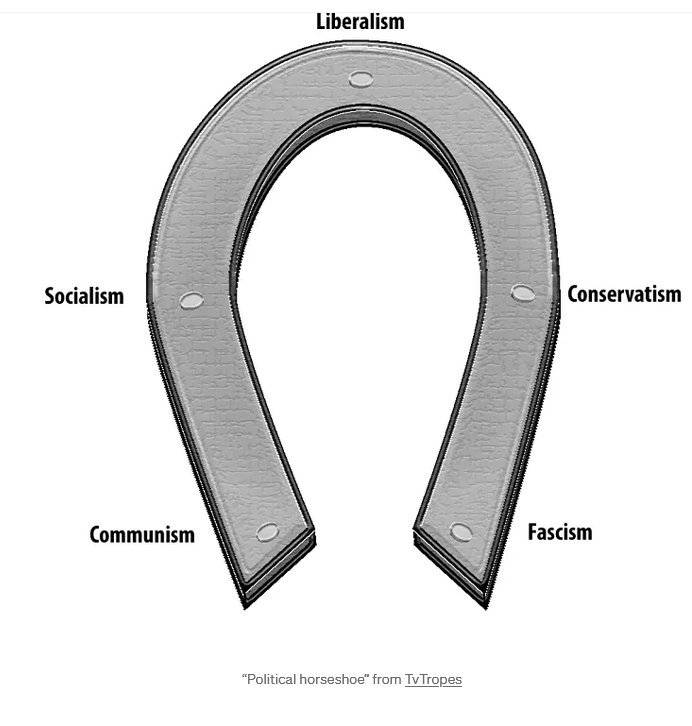
A two-party system has long dominated politics in both the U.S.A. and the UK, but the UK has recently evolved into a multi-party system. Public disillusionment with the Conservatives and Labor opened the door for Reform UK and the Green Party. Could this political change cross the pond and expand US ballots?

Donald Trump’s longtime friend, Nigel Farage, heads Reform U.K. Both men share a dislike of immigration and the establishment, as well as a love of media attention. A major backer of the UK leaving the European Union, Farage left the Conservative Party over Prime Minister John Major’s signing the Maastricht Treaty, which he felt was too pro-European Union. He formed a new party in protest.

Reform UK now leads the polls at 24-27%, followed by the Conservatives at 17-20%, Labor at 17-20%, the Greens at 14-16%, and the Liberals at 12-14%. The Conservatives and Labor can no longer count on passing their programs whenever they win. Coalitions loom in the future as they are in other multi-party nations.

How did the dominant parties lose their hold? People didn’t know what they stood for. Margaret Thatcher undid much of the Labor Party’s failed socialist policies with great success. After privatizing entire industries, capitalism returned to the forefront.

Yet conservatives dumped her. One of the main reasons the old-guard conservatives acted was Thatcher’s wholehearted opposition to joining the European Union (EU). The born-to-rule class old-guard conservatives went on to join the EU. With Farage at the forefront, the Brexit vote later pulled the UK out of the EU. Conservatives failed to listen to the people.

When Liz Truss, as Prime Minister, tried to return to the classical Liberalism of Thatcher and her good friend, Ronald Reagan, the same old guard sabotaged her with a phony bond crisis. The Conservatives appeared to stand for nothing except their own power.

Like Bill Clinton in the US, Tony Blair, Labor’s leader around the turn of the century, accepted many of the Reagan-Thatcher reforms. As Clinton said, “‘The Era of Big Government is over.”

Not for long. After a time in the wilderness, Labor is back in control, but it seems lost. Going back to failed Socialist policies isn’t promising. An expensive transition to renewables has left the UK with an inadequate, costly energy sector. Yet a large part of the Party still wanted to return to socialism and continue heavy spending on renewables. Adding in a good deal of anti-semitism, this bunch broke off as the Green Party.

Today, Tony Blair offers Labor a way back, touting a radical center prescription. Boost productivity by treating business more kindly, adopting realistic energy policies, and enacting welfare reform.

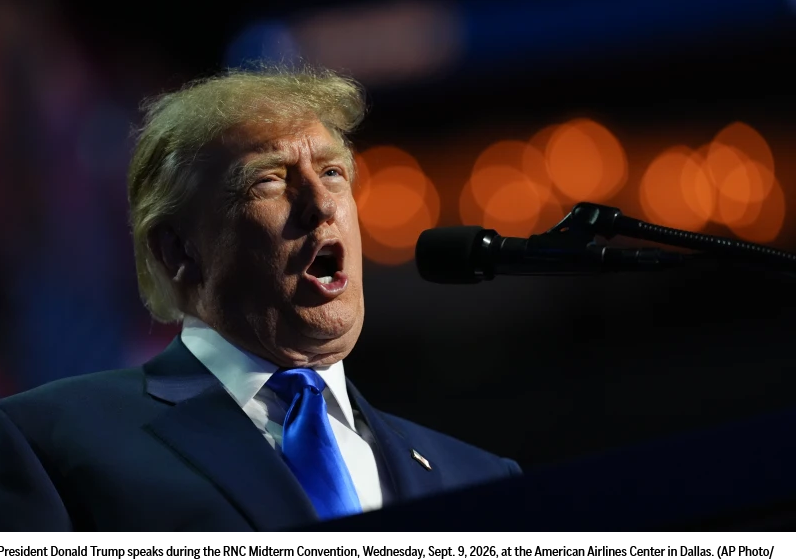
Why is the proliferation of parties in the UK important to us? Many of the same problems that broke up the Tories and Labor are present in our two main parties. To many in our country, the parties aren’t even presenting a viable choice. The Republicans are devoid of ideals or a consistent policy. It has deteriorated into a cult of personality. The Republicans are for whatever Trump puts out in the middle of the night on Truth Social. If it conflicts with what he posted yesterday, no matter, everyone falls in line with the new direction.

Disagreeing with the President, especially in public, results in the end of your political career. Just ask Senator Bill Cassidy or Representative Thomas Massie. Because Trump has approximately a third of the electorate, and that’s enough to dominate the Republican primaries, Trump only has to endorse a challenger, and you’re on the outside looking in. If you’re in the executive branch, you’re out the door if you’re lucky as an ambassador to Lower Slobovia. In most cases, you’re just gone.

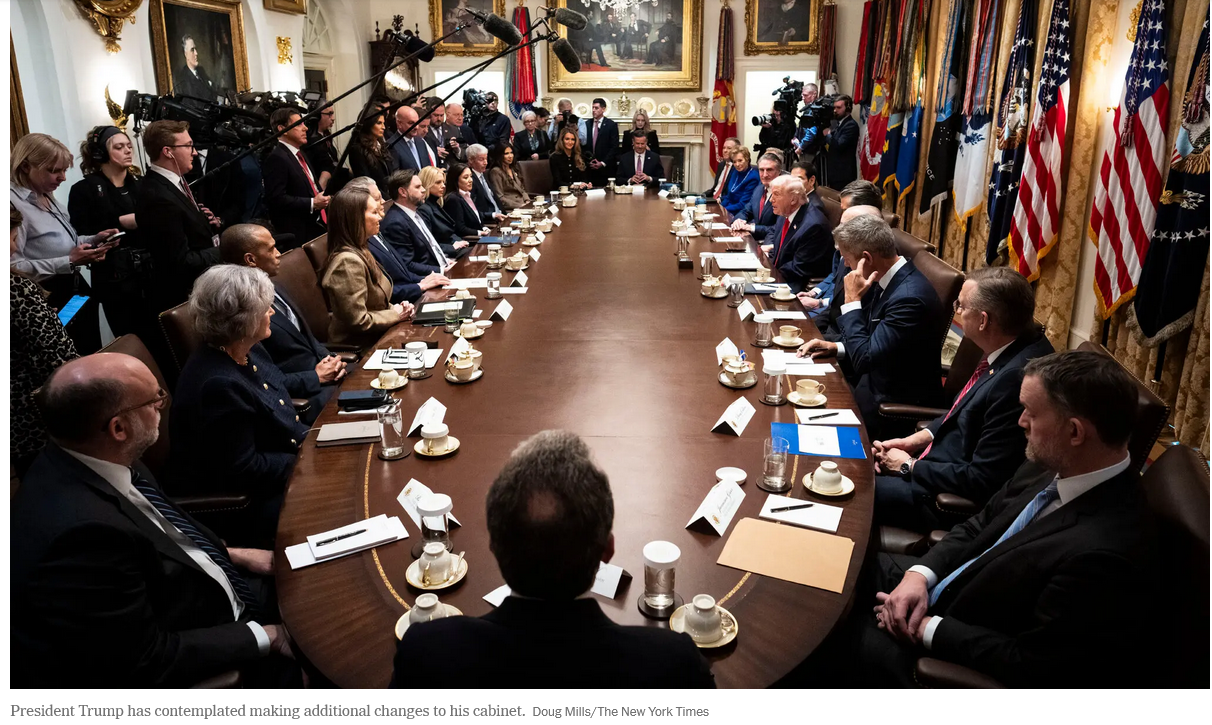
This situation reduces a Republican administration to a meeting of the US chapter of the Baghdad Bob Club:

While it’s entertaining to see all the major players in the Party dancing to Trump’s tune, and seeing how adept they are when he changes the beat, how is this sustainable? The President turns 80 soon, and in any case, he has about 2 years left in the term. From top to bottom, everyone in his administration and all his political allies have shown an amazing lack of character. Fealty to Trump is all they have to offer. How does this play in 2028 and beyond? Who’s thinking about the country?

Continue reading

Gone With The Whigs

Watching both Bill Maher and Michael Smercondesh bemoaning the rise of Marxism in the Democratic Party this week caught my attention. The high visibility of Bernie Sanders and A.O.C., along with other “democratic socialists,” during our lengthy government shutdown, coupled with the likely election of one of their own as Mayor of our largest city, has caused a stir among those who consider themselves more moderate.

Their consternation reminded me of my dismay at Donald Trump’s 2016 success in the Republican Party. How could someone representing a minority of a minority suddenly become President? I thought of myself as a typical free-market, small-government, peace-through-strength Reagan Republican. Long-time Democrat Trump, with his anti-immigrant, pro-tariff positions, didn’t sound like Ronald Reagan. I voted for the libertarian ticket.

Running against one of the world’s most unpopular candidates, Hillary Clinton, Trump became President. Neither candidate had the support of even half of the American people. I sensed that a majority of the country was like me —deeply dissatisfied with the choices offered by our major parties. This lack of choice led me to begin my series on a “Future Party.”

The original idea was to establish a new party for independents and disaffected Democrats and Republicans to find a home. Independents could be comfortable not being subservient to any particular ideology. This vision led me to a brief and inconsequential association with Starbucks founder Howard Schultz’s short-lived third-party movement.

Instead of charting a course based on superior policies to those of either the Democrats or the Republicans, Schultz withdrew, fearing he would help Donald Trump by splitting the Democratic vote. We had just submitted ideas when he dropped out. Instead of staking out policies that appealed to everyone because they were better, he revealed where his heart truly resided.

Before the last election, former West Virginia Senator Joe Manchin failed to launch a third-party run on the same basis. Fear of aiding Trump dominated his thinking rather than a belief that he had a better path for America. That’s because he, like Schultz, didn’t have one.

In both instances, neither Schultz nor Manchin had anything more to offer than the promise to work across the aisle for workable compromises. In the “Future Party Series,” I concluded that for a third party to succeed, it must stand for something and make every effort to sell it.

The one successful third party, the Republicans, weren’t deterred by splitting the anti-Democratic vote in 1854. They knew what they stood for; they were against slavery. In 1860, Abraham Lincoln was elected the 16th President of the United States. The Whig Party disappeared.

People on both sides will come together on what they agree on, regardless of their existing party. A case in point is the opposition to Trump’s expansive tariff policy. Twelve Democratic state attorneys general joined forces with the libertarian free-market Liberty Justice League to bring suit against the Administration’s tariffs. Briefs supporting their case have been filed from across the spectrum, from the U.S. Chamber of Commerce to the Brennan Law Center.

Continue reading

Only The Next Rung Is Important

Successful politicians are those with an ear for what people are thinking. Recognize what’s bothering most people and let them know you hear them; if possible, offer a solution. At least, I thought I understood how it works, but I was wrong. How else can you explain why so many politicians are staking out positions with only minority support?

On the left, politicians have taken positions supporting biological men competing in women’s sports. Blue State leaders stand in the way of banning this unfair competition. Criminals here illegally get support from the same group when the federal government tries to remove them.

On the right, we have an administration levying tariffs willy-nilly against both friends and foes. The same administration berates Ukraine while asking nothing of Russia in their conflict. Neither position has majority support.

What do these positions have in common? They are highly unpopular. Sizable majorities deplore these positions, so why do supposedly intelligent politicians stand foursquare for them? The realization is that in today’s politics, you climb one rung at a time. If you don’t grab the lower rung, you have no upside.

In most cases, that lower rung is your party’s nomination. This situation means winning primaries. In my series on “The Future Party,” I noted that while primaries appear to be the democratic expression of the people’s will, the results often fall short of this ideal.

It isn’t hard to see why primaries fail to reflect the mood and concerns of the general electorate. It has to do with turnout. Primaries typically draw less than half the participation of a general election. For instance, according to the last statistics I could find, the 2022 Utah primary drew 19% of eligible voters. The General Election drew 44%. Most primaries draw less than a quarter of voters, while the General election draws 40 to 50%. Presidential elections draw over sixty percent.

Continue reading

We’ll Know Soon

With so many things coming together this week, we may be closer to a watershed movement than we knew. Many of them validate points I’ve been making. Ukraine launched well-planned attacks on military targets deep in Russia. That nation does have cards to play, much to Trump’s and others’ dismay. A bunch of expensive and irreplaceable bombers, along with essential bridges destroyed, bring the war home to Russia in the most embarrassing way. Enhancing Ukraine’s ability to continue to hit deep into Russia is the decision by European nations to remove restrictions on how the Ukrainians use the weapons they provide.

I pointed out how foolish it is not to support Ukraine’s ability to strike back at military targets anywhere in Russia. Why should Russia give an inch in any peace talks if little of theirs is at risk, while they can attack at will, not only military targets but civilians as well?

Bolstering the ever-increasing attacks on the homeland with new sanctions with teeth that may be in Russia’s future. Sen. Linsey Graham’s bill to target Russian oil already has bipartisan support, with 67 sponsors evenly divided between the two parties. Even with Trump’s foot-dragging on anything causing Putin pain, the Russian dictator will face increasing torment. The question is whether Trump will lean even more toward Putin.

Meanwhile, Elon Musk, the world’s richest man, is homeless. By that, I mean he’s lost his last political home. Like many highly educated individuals, he began his political journey on the left, establishing his businesses in the true-blue state of California. The Democratic Party stood up for our liberty, or so he thought. Dealing with the California bureaucracy and the government’s overt interference in free social networks and free speech altered his perspective. The migration of his enterprises to Texas followed. He bought Twitter and exposed the government agencies that distorted the flow of information.

It made sense for him to gravitate away from the big government Democrats to the party of small government and free trade.

He produced Autos both here and abroad, and his products required worldwide supply chains. He craved less regulation and interference. When the Democrats didn’t align with his needs, he moved to the only other choice, the Republicans.

Continue reading

Homeless

Seven Years ago, I started the series on the “Future Party.” The two-party system had increasingly become captive to its most extreme elements, and the situation becomes more divisive daily. During this time, we’ve experienced a mishandled pandemic, the most significant inflation in four decades, conflicts threatening a new Cold War, if not a hot one, and an upheaval in the world’s trading system.

Both parties contributed to these situations while ignoring the sword of Damocles hanging over the nation, our out-of-control debt problem. At the same time, we’re dividing in ways we haven’t seen before. We receive information from different sources, resulting in an inability to discuss the day’s issues. Each side presents its own “facts.” Where people on the left or the right enjoyed Johnny Carson or Jay Leno, those watching Stephen Colbert would never watch Gutfeld!, and visa versa.

The division has even spread to those we choose to associate with. Some won’t even consider dating anyone with different views. Whatever happened to understanding the other person’s position sufficiently to come to a compromise?

What has caused the widening gulf between Americans? One answer is too much Democracy. By that, I mean too many elections. As I pointed out in the Future Party series, national presidential elections get our attention and participation. Off-year elections and primaries have much lower turnouts. They appeal to partisans and those most directly affected. Government employees will turn out because local elections hit their wallets, but others can’t always devote the time.

Continue reading