Dump Primaries?

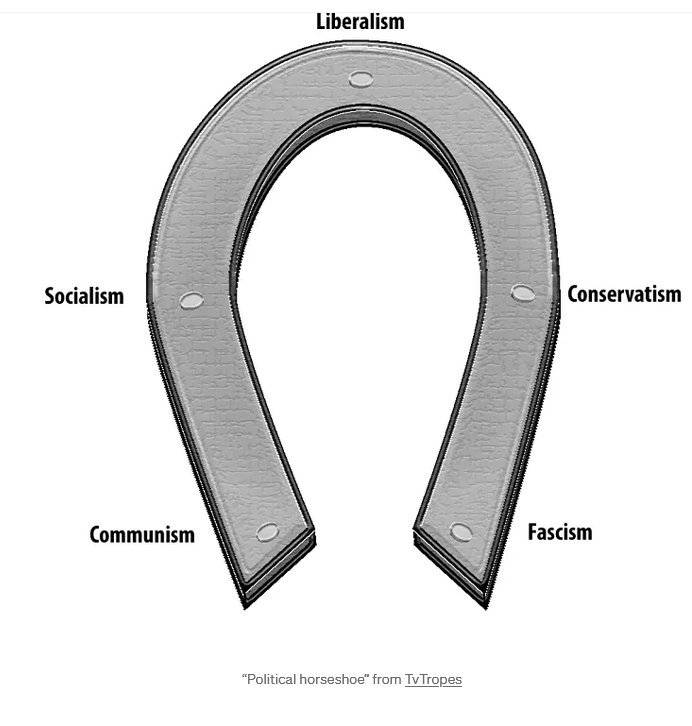
Some recent events point to our need to reflect on what our nation is about. Primaries in both parties produced candidates appealing to the extremes of the electorate. Longtime Senators John Cornyn of Texas and Bill Cassidy of Louisiana lost their reelection bids due to a perceived lack of loyalty to Donald Trump. He endorsed their primary challengers, and his loyal base did his bidding. While these were the most prominent, the President also prompted other Republicans to retire amid primary challenges or the threat of one.

Democratic Socialists challenged more moderate Democrats with solid results in such Blue Strongholds as New York, Maine, and the District of Columbia. In one-party areas, the primary is the election.

No one believes either the Trump-backed or the Democratic Socialists’ nominees are stronger general-election contenders. In fact, in the Texas Senate race, Trump backed Ken Paxton in what is a safe seat with Cornyn, now in jeopardy.

If the actions of Donald Trump and the Democratic Socialists result in weaker general election candidates, why would you back the less electable? Power! If you’re contemplating a career in elective politics, you must win a place on the general election ballot by winning a primary. If you fail to tow the extreme line, you may have little or no chance of advancing.  

Primaries attract far fewer voters than general elections. Even the contested House seats in New York State failed to draw many people. These small turnouts allow the dedicated minorities to determine winners. For instance, Public employees and their Unions are directly affected by who employs them and have every reason to turn out. The average voter, not so much.

If you don’t bow towards Trump on the right or bend your message towards Marxists on the left, you’ll likely face a competitor who does. Even if you manage to win the nomination, you’ve expended so much and are so bruised that you’re weakened in the general election.

In my series, The Future Party,” I predicted the homelessness of prospective candidates espousing policies similar to those of Ronald Reagan or Bill Clinton. I pointed to primaries as a major culprit.

Continue reading

AI In The Crosshairs

While we await the umpteenth peace that Trump has promised since the Iran ceasefire, it might be a good time to address the rising calls to impose controls on Artificial Intelligence (AI) and to reduce the power and wealth of the leaders of the enterprises leading the technology. After all, bringing concentrated knowledge and computing power to the masses can overturn the social order and threaten humanity.

Leaders in both parties appear to be tripping over each other, demanding that the Government take control now before it’s too late. From GOP Senator Josh Hawley to Democratic socialists, Sen. Bernie Sanders (I-Vt.) and Rep. Alexandria Ocasio-Cortez (D-N.Y.), there is pressure to go much further with government intervention.

None of this is new, as I’ve pointed out in my series, “The Long Journey to More.” At the start of the Industrial Age, the handicraftsmen known as  Luddites destroyed weaving machinery. Farm mechanization provoked a mass migration away from farm work. More recently, Computers connected to the internet caused an upheaval in how we do almost everything. The great economist Joseph Schumpeter called this process “Creative Destruction.”

Continue reading

A Multi-Party US?

A two-party system has long dominated politics in both the U.S.A. and the UK, but the UK has recently evolved into a multi-party system. Public disillusionment with the Conservatives and Labor opened the door for Reform UK and the Green Party. Could this political change cross the pond and expand US ballots?

Donald Trump’s longtime friend, Nigel Farage, heads Reform U.K. Both men share a dislike of immigration and the establishment, as well as a love of media attention. A major backer of the UK leaving the European Union, Farage left the Conservative Party over Prime Minister John Major’s signing the Maastricht Treaty, which he felt was too pro-European Union. He formed a new party in protest.

Reform UK now leads the polls at 24-27%, followed by the Conservatives at 17-20%, Labor at 17-20%, the Greens at 14-16%, and the Liberals at 12-14%. The Conservatives and Labor can no longer count on passing their programs whenever they win. Coalitions loom in the future as they are in other multi-party nations.

How did the dominant parties lose their hold? People didn’t know what they stood for. Margaret Thatcher undid much of the Labor Party’s failed socialist policies with great success. After privatizing entire industries, capitalism returned to the forefront.

Yet conservatives dumped her. One of the main reasons the old-guard conservatives acted was Thatcher’s wholehearted opposition to joining the European Union (EU). The born-to-rule class old-guard conservatives went on to join the EU. With Farage at the forefront, the Brexit vote later pulled the UK out of the EU. Conservatives failed to listen to the people.

When Liz Truss, as Prime Minister, tried to return to the classical Liberalism of Thatcher and her good friend, Ronald Reagan, the same old guard sabotaged her with a phony bond crisis. The Conservatives appeared to stand for nothing except their own power.

Like Bill Clinton in the US, Tony Blair, Labor’s leader around the turn of the century, accepted many of the Reagan-Thatcher reforms. As Clinton said, “‘The Era of Big Government is over.”

Not for long. After a time in the wilderness, Labor is back in control, but it seems lost. Going back to failed Socialist policies isn’t promising. An expensive transition to renewables has left the UK with an inadequate, costly energy sector. Yet a large part of the Party still wanted to return to socialism and continue heavy spending on renewables. Adding in a good deal of anti-semitism, this bunch broke off as the Green Party.

Today, Tony Blair offers Labor a way back, touting a radical center prescription. Boost productivity by treating business more kindly, adopting realistic energy policies, and enacting welfare reform.

Why is the proliferation of parties in the UK important to us? Many of the same problems that broke up the Tories and Labor are present in our two main parties. To many in our country, the parties aren’t even presenting a viable choice. The Republicans are devoid of ideals or a consistent policy. It has deteriorated into a cult of personality. The Republicans are for whatever Trump puts out in the middle of the night on Truth Social. If it conflicts with what he posted yesterday, no matter, everyone falls in line with the new direction.

Disagreeing with the President, especially in public, results in the end of your political career. Just ask Senator Bill Cassidy or Representative Thomas Massie. Because Trump has approximately a third of the electorate, and that’s enough to dominate the Republican primaries, Trump only has to endorse a challenger, and you’re on the outside looking in. If you’re in the executive branch, you’re out the door if you’re lucky as an ambassador to Lower Slobovia. In most cases, you’re just gone.

This situation reduces a Republican administration to a meeting of the US chapter of the Baghdad Bob Club:

While it’s entertaining to see all the major players in the Party dancing to Trump’s tune, and seeing how adept they are when he changes the beat, how is this sustainable? The President turns 80 soon, and in any case, he has about 2 years left in the term. From top to bottom, everyone in his administration and all his political allies have shown an amazing lack of character. Fealty to Trump is all they have to offer. How does this play in 2028 and beyond? Who’s thinking about the country?

Continue reading

A Timely Address

Supreme Court Justice Clarence Thomas delivered an important address at the University of Texas and, in light of Progressivism becoming the face of the Democratic Party, a needed contrast with the Declaration of Independence. Not only are there more progressives running as Democrats, but supposedly moderate Democrats such as Joe Biden and newly elected Virginia Governor Abigail Spanberger run as moderates, yet once in office, govern as committed Progressives.

Even the Republicans exhibit progressive tendencies. Using tariffs to restructure not only the U.S. economy but the whole world’s trading system is classic top-down industrial policy. The government taking an interest in certain companies isn’t free enterprise.

Justice Thomas paints a picture of how the Declaration holds that we are endowed with rights by our maker rather than whatever elite government “experts” deem to grant us. To the Progressive, our founding documents pertain to a bygone era and are irrelevant in the modern world. The Declaration and Constitution are quaint, but ill-suited to tackle today’s problems, such as Climate Change. They only impede necessary progress.

Thomas shows us the facts point in the other direction. Limited government with protections of person and property, even if they conflict with a government seeking the “greater good,” hasn’t ushered in the great wars and famines killing millions that top-down governments have spawned. Instead, they have fostered free markets to allocate resources more effectively, spurring innovation and enabling far more people to live longer, better lives.

Our 250th birthday is a good time to compare the route offered by what Pulitzer Prize-winning historian Gordon S. Wood termed the “Most Radical Revolution in History” with the progressive, top-down path. Before the American Revolution, dictates flowed from the top downward, while obligations moved only upward almost everywhere in the world.

Continue reading

Remember the “Horns”

War is an awful business. Once started, all sorts of things can go wrong. That’s why no one should ever go into it lightly. Yet, there are circumstances where you come to the conclusion you have no real choice but to attack.

Before you move, those who studied war, from Sun Tzu, Clausewitz, to B.H. Liddell Hart cautioned that you need a clear objective—one that eliminates the problem or problems causing your decision to go to war. In the present case, the administration determined that as long as the mullahs ruled Iran, we faced intolerable threats, from nuclear war, attacks by Iran or its allies on others in the Mideast, or disruption of major trade routes.

The timing seems right. Thanks to mainly Israeli actions, we control the air over Iran. Sanctions and the Mullahs’ mismanagement have weakened the Iranian economy to a point where businesspeople have joined the young in longing for change.

Having determined that the mullahs in power pose an existential threat, anything short of regime change won’t solve the problems. The mullahs must go.

With the objective in place, what’s our strategy for success? We pay all those military people with all those medals and ribbons to show us the path to victory. Having studied the art of war all their lives, they should know what works and what to avoid.

I didn’t spend a lifetime in the military, but I did go to a military school, where our dedicated commandant taught the required military science courses. We studied what worked, or didn’t work, throughout the ages. Using your superior numbers or resources to overpower, frankly, is wasteful and may result in a “Pyrrhic victory,” named after the King who lost so much in winning that he couldn’t continue his war against the Romans.

Continue reading