Anatomy of a Failure

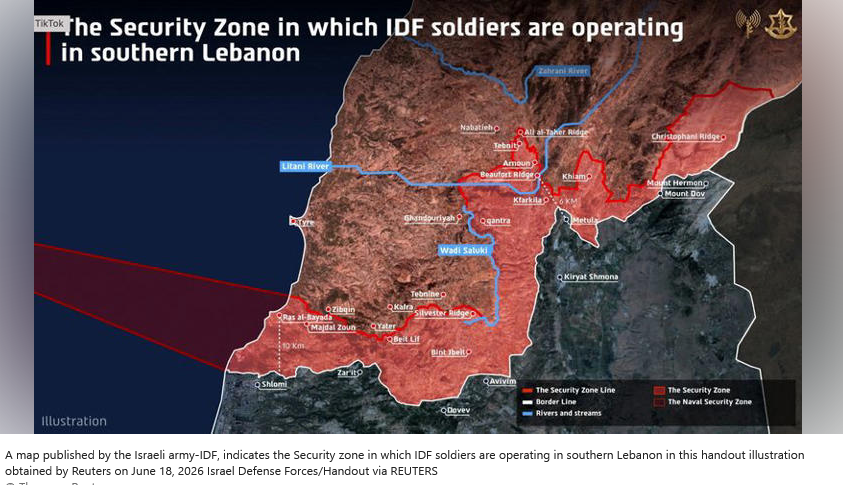
We’ve ceased our offense against Iran, while the same Regime controls the vital Strait of Hormuz. Our Gulf allies are increasingly at the mercy of this ruthless gang. Israel is off bombing Hezbollah in Lebanon, trying to salvage something from this fiasco. Our other allies in Europe and Asia wonder why they’re suffering from this mess when nobody asked them. Yet the Trump administration expects them to clean it up.

How did the most powerful nation on earth end up behind the eight-ball? By breaking every rule for success. Presumably, we had an objective. We had already bombed Iran’s nuclear facilities, putting that program back, maybe for years. We controlled the skies over that nation. Having already mowed their capabilities, there is no need to mow again now.

\What was present was an Iran in dire straits. Sanctions, mismanagement of water resources, and the economy had sparked mass protests. The vast majority of Iranians demanded change. Other than those directly benefiting from the Regime, support evaporated. The Mullahs had never been in a weaker position. What was here was the chance to free the people to form a government that didn’t threaten their neighbors.

The Trump administration took notice. The President told the Iranian protesters we had their back. No question what our goal was, toppling the Regime. We started sending our forces to the area. The head Mullah and many of the key players in his government were killed from the air.

In the meantime, the Iranian government slaughtered in excess of 40,000 protesters. The streets went quiet. This result shouldn’t surprise anyone. We’ve seen this movie many times before. Ruthless dictatorial governments use their monopoly of weapons to trounce unarmed protestors. No matter how bad the government is, it stays in power because nobody can shoot back. Cubans have lived at the subsistence level for decades. Does it even have an economy? Still, the communists persist.

Oil-rich Venezuela has followed the same path. When faced with losing power, there is no limit to the pain the absolute rulers will inflict on their defenseless citizenry. The picture of an unarmed Tiananmen Square protester standing in front of massive tanks illustrates the imbalance.

The only successful revolutions in history took place where armed people existed from the start, or military units refused to fire on the people, and changed sides. Imagine how poorly our forefathers would’ve fared if only the redcoats had arms. Instead, we turned them back at Lexington and Concord. To have a “shot heard round the world, ” you have to have a gun. The minutemen had guns and knew how to use them. The rest is history.

Other revolutions, such as the French and Russian, saw military units refuse to fire on the people and turn against their rulers. No matter how great the air superiority, only armed resistance on the ground can drive out the despots.

Continue reading

Minority Positions Won’t Win

We finally bombed Iran’s nuclear facilities. Without opposition, the Israelis and then the U.S. hit the major sites. At this point, we don’t know the extent of the damage. An earlier leaked assessment said it might have only set the program back for a few months, while others have said it had done such damage that Iran will need years to get back on track. Without people on the ground, a definitive answer is impossible, but if and when Israel goes in again, it will tell us what the nation at existential risk has determined.

A decade ago, I proposed bombing Iran’s nuclear facilities. If they revive the program, we should strike back. Living in a real version of the Myth of Sisyphus, the Mullahs would eventually tire of pushing the boulder up the mountain, only to start again. So long as Israel controls the skies over Iran, follow-up attacks will take place as needed. It was a good plan then, and it remains so now.

Stopping religious fanatics from possessing weapons of mass destruction removes a grave threat not only to Israel but also from Iran’s long-range missile development to everyone else on Earth. If we denied North Korea and Pakistan nuclear weapons, we’d all sleep better. Iran is much scarier—every day, it’s death to America and death to Israel, and they mean it.

One might think we’d have a national sigh of relief, knowing Iran isn’t about to have nuclear warheads topping Intercontinental Ballistic Missiles (ICBMs) aimed at us, but some aren’t cheering. Some Democratic leaders alluded to the leaked study.

The information is preliminary and labeled as having low confidence. Yet, the left-leaning legacy media pounced on it and spread it far and wide. Instead of lauding our military for its work, publicizing a possible Trump failure took precedence. Democratic politicians joined in.

This response seems to reinforce the perception of an anti-Israel bias by the left in its conflict with Iran. Support for pro-Hamas, an Iranian ally, and protesters who harassed Jews by the progressive wing of the Democratic Party indicates the left is anti-Semitic.

Continue reading

Trump Can Do Better

Donald Trump often sees problems, but as someone who spends little time on in-depth analysis, he comes up with questionable solutions. One example is his suggestion that Jordan and Egypt take in Gazans to ease reconstruction efforts. The two nations immediately shot down the idea, and it isn’t hard to see why. Jordan already has more Palestinian refugees than native citizens. Returning to “Black September” in 1970, their presence has been problematic. They’re not about to add to a problem they never wanted in the first place.

Egyptian President Abdel Fattah el-Sisi gained his position by disposing of the previous Muslim Brotherhood government. Hamas, which governs the Gazans, is an outgrowth of the Muslim Brotherhood’s Palestinian branch. The last thing he wants is to strengthen the Brotherhood’s numbers in his country.  

Trump should’ve known all this and avoided the negative blowback. Still, the president isn’t wrong to wonder, as a builder himself, how you can build a viable Gaza in place of the existing rubble when overrun with 2,000,000 displaced people in just 141 square miles. Gaza was overpopulated and under-employed before the war. Now, the situation is infinitely worse.

Considering Gaza’s makeup, I offered my “Solution for Gaza” posts. Rather than a full-scale invasion, designate areas to be leveled by explosives, inform everyone to leave, then blow them up. Working towards the sea and away from the Israeli border, food and other supplies are landed on the shore by ship. The ships are then required to take women, children, and infirm to safety in accepting countries. If the Arab world and other countries are concerned about these Palestinians, let them show it. International aid now supporting the Gazans would follow them, so there was little if any, increase in cost.

People were horrified, claiming it would level and depopulate Gaza. Looking at things now, with Gaza a pile of rubble and the number of women and children killed, the plan seems a lot better than what has happened.

I never thought the destruction and shipping of refugees would go on for very long before Hamas would give in. Faced with a slow but relentless low-cost action, Hamas couldn’t wait for the last Gazan civilian shipped out of a leveled Gaza. Pressure from other Arab countries faced with accepting Palestinian refugees would leave Hamas little choice.

Even though the situation is different now, with Gaza destroyed, few Gazans have left. We have to understand why there were so many Gazans. In 1948, 7000,000 Arabs fled the new nation of Israel, mainly at the urging of the Grand Mufti of Jerusalem. The U.N. established the United Nations Relief and Works Agency for Palestine Refugees in the Near East (UNWRA) 1949 to aid them. The agency set up numerous camps ringing Israel:

Why did the U.N. feel it was necessary to create a new refugee agency when the International Refugee Organization (IRO) had existed since World War II and was doing great work in resettlement? This group evolved into the Office of the United Nations High Commissioner for Refugees (UNHCR), the primary vehicle for caring for and resettling refugees worldwide. It has accomplished the resettlement of tens of thousands of refugees annually.

Continue reading

Donald the Great?

Having already written about some things to look for in the New Year, I’d like to take a new approach. Donald Trump’s talk about making Canafda the 51st state, buying Greenland, and repossessing the Panama Canal caused me to think of how leaders who see themselves as bigger than life seem focused on the past rather than charting a future that benefits those they lead.

Our major adversaries, Russia, Iran, and China, are centered on recreating old empires. Turkey may be poised to join this group. Putin in Russia regrets the loss of the Empire, created through centuries of Russian expansion culminating in the vast Soviet Empire, which collapsed under Cold War pressure. Setting up stooges in some adjoining territories and continuing to attack Ukraine, the Russian strongman is expending blood and treasure on a grand scale to reestablish the Empire.

The Histories of Empires from the Persian through the Sasanian, centered in Iran, fuel the Mullahs’ desire to widen their reach across the Middle East. They may, as Shites, even see themselves as rightful ones to bring back the Moslem Empire of the early caliphs.

No nation has a more extended History of Empire than China, going at least back to the Shang Dynasty (221 B.C.). Before the communists, the Ming Dynasty (1368 to 1644) was the last to attempt expansion, sending fleets and armies to gain control of both the land and maritime Silk Roads. However, reversals such as the Tummu crisis caused China to look inward. While Chinese fleets reached the east coast of Africa in the 15th century, they never rounded the Cape of Good Hope. Later in the century, the Portuguese did, and the direction of the history of the world changed. I covered this outcome in my “The 15th Century Came and nothing would ever be the same” post in “The Long Journey to More” series.

Xi Jinping seems intent on succeeding where the Ming Dynasty failed. His Belt & Road Initiative intends to recreate the land and maritime Silk Roads under Chinese control.

Continue reading

Trump vs. Trump?

Recent events have added credibility to some of my posts. Not long ago, I cautioned that the Federal Reserve’s (Fed) series of interest rate cuts might be at odds with the actual inflation outlook. The Biden spending spree adds to our high national debt, while the Social Security (S.S.) Trust Fund runs dry at best in ten years, with both parties adding to the program woes. Medicare may be in even worse shape.

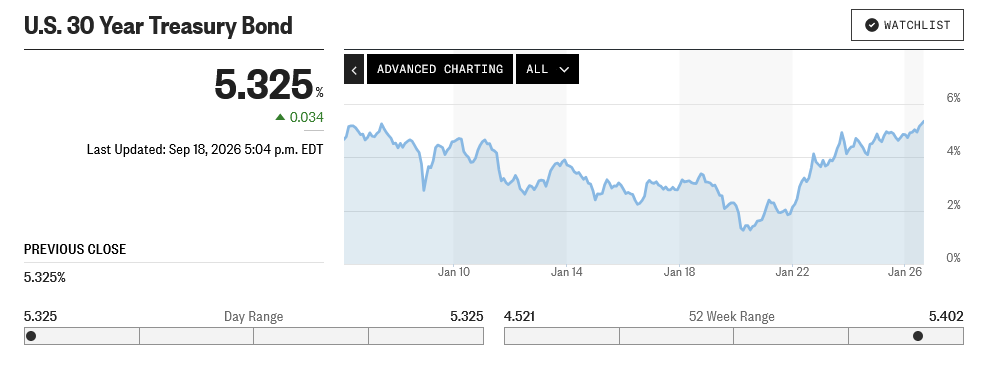
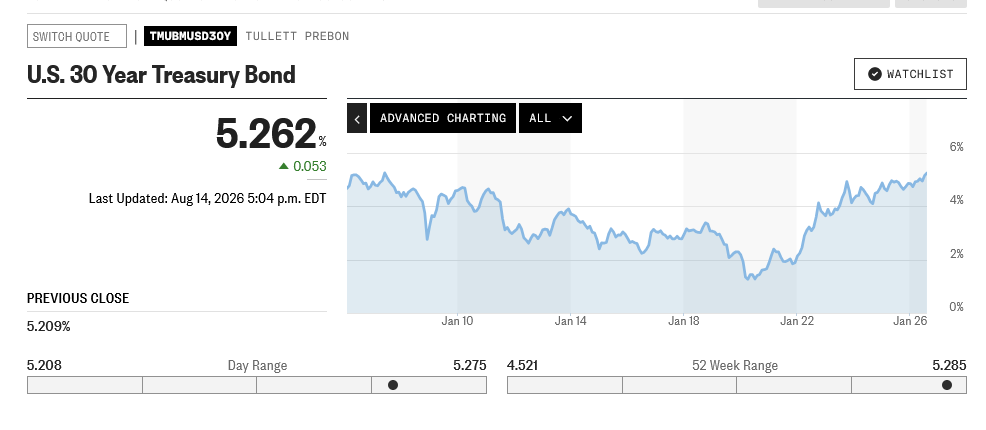
Biden’s proposals will increase S.S. payouts to government retirees, and with Trump’s plan not to tax any S.S. income, retiree checks could face cuts even sooner. Maintaining the current level of payments will mean even more government borrowing. Already expected to lend trillions more, bond buyers must absorb more extensive offerings in the future. In the face of increasing interest rate risk, they’ll want more upfront.

The first chart is the inflation rate, showing it is still above the 2 % target:

This chart shows the Fed’s interest rate cuts:

While the U.S. 10yr Bond interest rate returned to near its highs:

Mortgage rates stay high:

This week, the Fed cut short-term rates another quarter point but said it would probably cut two times next year instead of the signaled four. The Dow dropped over 1,100 points. Confusion is the only explanation.

Continue reading