Choosing to Lose

Unless we’re willing to inflict enormous pain on those we were supposed to help, the Iranian people, or put boots on the ground, or some combination of the two, we have a lost war with the Iranian theocracy. Awishy-washy nuclear deal, akin to, but maybe not as good as the one Obama negotiated, will end our involvement.

This conclusion leaves our Gulf allies in a precarious situation. Iran illustrated how it can hit their infrastructure anytime with rockets and drones. Closing the Strait of Hormuz or changing tolls remains subject to Iran’s whims. Spending billions on this outcome, we expected much better. Faith in America’s ability to protect our friends and allies is now questionable.

A recent feel-good story in the Wall Street Journal (WSJ) shows both a possible path to right the war’s trend and exposes the lack of proper action that put us in this situation in the first place. Going into the war, the different radars that alert troops to incoming drones and missiles, and the interceptors used to shoot them down, didn’t talk to one another. This situation required a large number of personnel to monitor many monitors. This lack of integration may have contributed to the loss of six soldiers in Kuwait.

On a trip to Europe. Army Secretary Dan Driscoll became aware of the incompatibility issue and how the Ukrainians resolved it using proper software. The secretary got the Dense Contractors and bureaucrats to waive objections, and the engineers got together and came up with a Google Maps-type single screen, allowing for the proper response to any threat. After demonstrating it worked, we are now achieving the needed integration.

While we have now solved a major battlefield problem, it raises the question: why wasn’t it done before we went to war? Didn’t we wargame before we committed? Drone warfare has been a key feature of the Ukraine war for years. We’re just now finding out how they handle them. We actually reverse-engineered the key Iranian drone for our use, so we should know all about them. Yet we lack drone dominance to control the area.

The Administration and Iran Hawks can loudly claim success in the war all they want, but the facts on the ground say otherwise. Giving statistics on how many ships we sunk, or bombs we dropped, sounds reminiscent of the Vietnam War body counts. If we sunk their Navy, why are we looking for mines in the Strait, and why are so few ships risking leaving? Hawks such as Condoleezza Rice can claim, “It has achieved enough to produce a far better Middle East.”

Our Gulf friends and allies turning to the Ukrainians for answers to Iran’s drone and rocket capabilities threatening them doesn’t sound like they feel the area is “more stable.” Can we assure them of safe passage of the Strait, now and into the future? The Strait was open before the war. How are they better off?

Continue reading

The Majority Leader Must Lead

John Thune is on the hot seat. Most Americans would ask, Who is that? He’s the Republican majority leader of the Senate, one of the most powerful positions in the U.S. He replaced the long-serving Mitch McConnell, the brilliant political strategist who dominated much of the Senate’s actions for decades. Thune is responsible for moving legislation and appointments through the Senate.

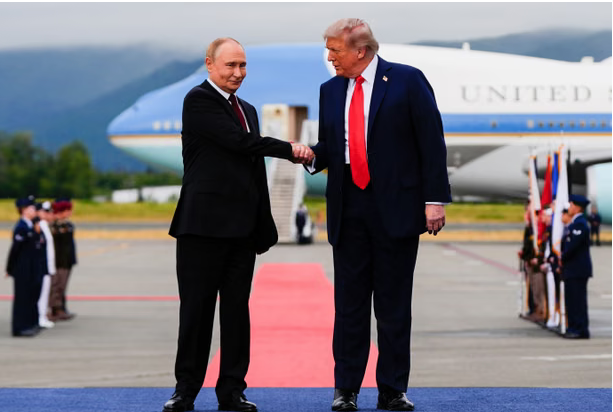
While he did yeoman work shepherding President Trump’s “Big Beautiful Bil” through the Senate, he has thwarted the will of the Senate to please the President. Eighty-five members signed onto the Graham-Blumenthal Russian sanctions bill, yet the Republican leadership under Thune has not brought the legislation to the floor. After the failure of the Alaska summit to achieve a ceasefire due to Putin’s intransigence, it’s time to apply maximum pressure on Russia.

As I’ve pointed out, the Trump administration has been visibly tougher on Ukraine than Russia. The administration’s theory was to bring the latter to the negotiating table. Well, Trump met with Putin, and Putin came away with enhanced prestige while giving up nothing. The Russian attacks on civilians have intensified. If there was ever a time to deal Russia pain, it’s now.

What we are getting from the administration is, at best, mixed signals. Instead of blaming the continued fighting on Putin, the Trump administration holds both countries equally to blame. While acknowledging Russian attacks on civilians, Caroline Leavitt, the presidential press secretary, pointed out that Ukraine had taken out 20% of Russia’s fuel capacity. This equivalence is an apples-and-oranges comparison. Oil refineries and pipelines have always been legitimate war targets, while direct civilian targeting is a war crime.

Even stranger is the recent disclosure that Exxon is in talks with Russians regarding the development of Russian oil assets. Why would the largest American oil company be cleared to work with the Russians to increase output? Russia pays for this ugly war with oil sales. How is it in our interest to help Russia?

Continue reading

…Full Of Sound And Fury, Signifying Nothing

In his 2024 presidential campaign, Donald Trump claimed he would end the Ukraine war in 24 hours. He won, but the first 24 hours came and went with Ukrainian civilians still targeted and killed—no action taken against Russia. In February, President Trump and Vice President Vance bullied Zelenskyy in the Oval Office to consider what he would offer for a ceasefire. Ukrainian civilians are still being targeted and killed, and no U.S. action against Russia.

In July, Trump temporarily halted arms shipments to Ukraine. Later in the month, he gave Putin 50 days to agree to a ceasefire, which he then shortened to 10-12 days. Ukrainian civilians continued to be targeted and killed, with no U.S. action taken against Russia.

In early August, the U.S. agreed to sell a billion dollars of weapons to Europeans to give to Ukraine. President Trump arranged to meet Putin in Alaska on August 15th to negotiate a ceasefire. Putin being seen as a great national leader rather than an international pariah, forestalling any severe sanctions, while the war continues, underlay his attendance.

As the two Presidents returned home, it was clear that Trump had failed to secure a ceasefire, whereas Putin had achieved all his objectives. Ukrainian civilians continued to be targeted and killed, with no U.S. action taken against Russia.

Somewhere, Trump got the idea that Putin was open to a NATO-like force on the ground and in the air that would keep Ukraine safe, even if it gave Russia vital defensive territory. European leaders descended on Washington on Monday to discuss the details of the peacekeeping force and to praise Trump.

Russia claims it went into Ukraine to prevent Western troops stationed on its borders, so it’s fanciful to believe it is suddenly OK now. Then all the attendees went home. Ukrainian civilians continued to be targeted and killed, with no U.S. action taken against Russia.

Now that a few days have elapsed, it’s clear Russia agreed to nothing, saying that Ukraine’s guarantors should include Russia and China, each with a veto. Any further meeting, either between Putin and Zelenskyy or one that also includes Trump, would require extensive prior groundwork. Ukrainian civilians continued to be targeted and killed, with no action taken against Russia.

Continue reading

Demand Answers Now

The Russian summer offensive in Ukraine is in full swing. Heavy attacks along the front lines join heavy drone and missile attacks pounding that valiant nation. It stands to reason that the US and its NATO allies are rushing all the help they can. On Monday, we were surprised to find this isn’t the case. The Wall Street Journal (WSJ) reported that the US is not only not increasing its support, but is also holding up already approved armaments, some of which are already in Poland.

With all the attention focused on the President’s “Big Beautiful Bill,” this situation is being overlooked. It shouldn’t be. Russian control of Ukraine brings it right up to NATO’s borders. Unless we withdraw from the organization, a Russian attack on a NATO nation will directly involve us. Why would anybody want that? Right now, we only have to provide material support to fend off Russian aggression. An attack on a NATO nation means Americans are in harm’s way. Whatever we’ve spent supporting Ukraine is cheap compared to direct conflict.

This action is the second time the Trump administration has halted arms to Ukraine. Last March, we halted shipments while the Russians were pounding Ukraine, including civilians, to pressure that nation to agree to a ceasefire. They agreed and are still open to the idea.

Russia has agreed to nothing except some prisoner exchanges. Yet the administration has refrained from exerting any real pressure on Putin. Why are we putting more pressure on Ukraine in the middle of a battle, when they’re not the holdup?

Elbridge Colby, the Defense Department undersecretary for policy, appears to be the point person on the arms pause. The excuse given is low stockpiles. What an odd reason. The wars in Ukraine and the Middle East didn’t start yesterday; they’ve been going on for a long time. If we hadn’t ramped up production, it would be our mistake—Produce more rather than taking the bullets out of our friends’ guns. Some are questioning whether the stockpiles are, in fact, low.

Continue reading

Trump Returns To Yesteryear

The recent call between Trump and Putin confirms the U.S. president’s pro-Putin stance, as outlined in my “What is Trump Thinking” post. Meanwhile, Ukrainian President Zelinski agreed to a complete ceasefire. Russian President Putin agreed to a ceasefire only on energy sites and some U.S.-Russia hockey games. Zeroing in on only energy is a giveaway of where Putin is feeling the pain. Ukraine has developed its long-range capabilities, enabling it to hit oil and gas facilities in Russia. Diminished oil shipments reduce Russia’s ability to stay afloat.

Remember, for most of Biden’s term, Ukraine was forbidden from using U.S. weapons deep in Russia, while Putin was free to hit anything anywhere in Ukraine. I and others recommend letting Ukraine return fire anywhere in Russia launched attacks or war necessities produced. If Russia felt the pain, it would change its tune. Putin’s counter-proposal proves us correct.

Suppose Trump is serious about preserving Ukraine’s independence. In that case, he should’ve told Putin he either made real concessions or would supply Ukraine with everything it needs to put Russia in a world of pain. He didn’t, showing he favors Putin.

In the post, I pointed out Trump’s position was unworkable. Russia can’t break with China. Turning his back on Europe to cuddle up with Putin makes no sense.

Continue reading