Unless we’re willing to inflict enormous pain on those we were supposed to help, the Iranian people, or put boots on the ground, or some combination of the two, we have a lost war with the Iranian theocracy. Awishy-washy nuclear deal, akin to, but maybe not as good as the one Obama negotiated, will end our involvement.
This conclusion leaves our Gulf allies in a precarious situation. Iran illustrated how it can hit their infrastructure anytime with rockets and drones. Closing the Strait of Hormuz or changing tolls remains subject to Iran’s whims. Spending billions on this outcome, we expected much better. Faith in America’s ability to protect our friends and allies is now questionable.
A recent feel-good story in the Wall Street Journal (WSJ) shows both a possible path to right the war’s trend and exposes the lack of proper action that put us in this situation in the first place. Going into the war, the different radars that alert troops to incoming drones and missiles, and the interceptors used to shoot them down, didn’t talk to one another. This situation required a large number of personnel to monitor many monitors. This lack of integration may have contributed to the loss of six soldiers in Kuwait.
On a trip to Europe. Army Secretary Dan Driscoll became aware of the incompatibility issue and how the Ukrainians resolved it using proper software. The secretary got the Dense Contractors and bureaucrats to waive objections, and the engineers got together and came up with a Google Maps-type single screen, allowing for the proper response to any threat. After demonstrating it worked, we are now achieving the needed integration.
While we have now solved a major battlefield problem, it raises the question: why wasn’t it done before we went to war? Didn’t we wargame before we committed? Drone warfare has been a key feature of the Ukraine war for years. We’re just now finding out how they handle them. We actually reverse-engineered the key Iranian drone for our use, so we should know all about them. Yet we lack drone dominance to control the area.
The Administration and Iran Hawks can loudly claim success in the war all they want, but the facts on the ground say otherwise. Giving statistics on how many ships we sunk, or bombs we dropped, sounds reminiscent of the Vietnam War body counts. If we sunk their Navy, why are we looking for mines in the Strait, and why are so few ships risking leaving? Hawks such as Condoleezza Rice can claim, “It has achieved enough to produce a far better Middle East.”
Our Gulf friends and allies turning to the Ukrainians for answers to Iran’s drone and rocket capabilities threatening them doesn’t sound like they feel the area is “more stable.” Can we assure them of safe passage of the Strait, now and into the future? The Strait was open before the war. How are they better off?
I shared the Iran hawks’ belief that Iran is ripe for real regime change, but as I’ve stated, I’m appalled by the lack of planning. This deficiency compromised the endeavor from the beginning. Rather than a real strategy, and providing the means to the goal, we got the decapitation of top Iranian leaders, and a lot of munitions expended trying to destroy Iran’s military capabilities.
Instead of the Iranian people moving towards control of their country, we have, if anything, a nastier bunch in control. With the Kuwait airport hit with numerous casualties, and the Strait closed, what have we accomplished? The GOP Hawks, like Senators Ted Cruz, Roger Wicker, and former Secretary of State Mike Pompeo, realize the great harm done if we bail and make a flakey peace, but offer no realistic plan to reverse the negative course.
Of course, none of them were directly part of the war planning, so they probably were just as surprised as I at how badly the project turned out. There is no excuse for all the cabinet secretaries, Generals, admirals, and our intelligence agency heads who were in on it all the way. The same with their Israeli counterparts. Did no one speak up and ask, ” What’s the goal? How do we get there, how will the enemy react, and do we have the means to do the job?
Carping over someone else’s failure is easy, but this mess affects all of us. Rather than continue down this path to defeat, I’d think you have to offer a new plan, even if it’s now a long shot. Maybe Army Secretary Driscoll showed us where there’s the will, there’s a way. He saw a need, banged heads, cut red tape, and solved the problem in weeks rather than years.
The war exposed our weakness in modern drone warfare. We can neither defend nor dominate. Luckily, we don’t have to start from scratch. Ukraine offered successful designs, organization, and experience. Yet, there is no sense of urgency. The Hill reports the US still hasn’t signed the drone accord with Kyiv. Joining US AI with Ukraine’s hardware, systems, and experience could be a big winner. Ukraine plans to produce more than 7 million military drones this year. Presently, the US plans only 3000,000 by 2027. Get to work.
Despite all the carping about our manufacturing decline, our capacity is many times theirs. Take those Ukrainian designs and software to our companies with a tight schedule, without red tape and obstruction. I think you’ll be surprised by how fast we’re swimming in these flyers. In the meantime, train and organize. Replicate the same sense of purpose that produced a Covid vaccine in record time.
At the same time, we have many promising weapon systems in the pipeline. Now is the time to push them into reality.
Once we have reached the desired capacity, our marines seize the Qeshm and Larak Islands in the Strait of Hormuz. Yes, there will be casualties, but we will have an unsinkable platform to dominate the area:
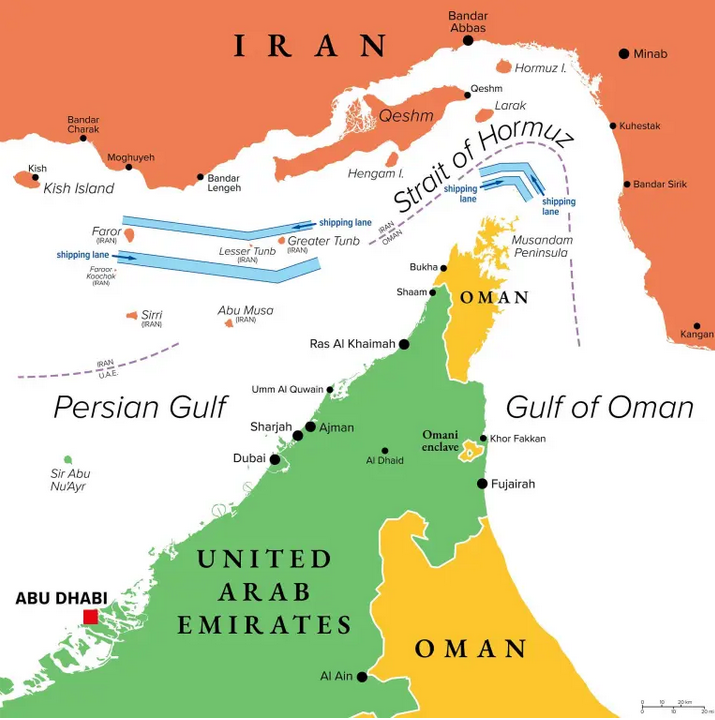
The Navy must have entertained the need for this kind of action. Why else send an Amphibious Ready Group (ARG) to the area? Holding the Islands provides a leg up now and the ability for the US or an International group to keep the waterway open in the future.
At the same time, resume blasting, regme drone, and rocket plants. Our growing drone capabilities and their diminishing production should give us an ever-growing advantage over an ever-larger part of Iran. We can then provide dissident elements with the cover they need anywhere in Iran. Instead of the unanswered incoming Kurds and others experienced early in the war, we can give them the measure of protection that gives them faith in us. This idea may have been part of the Israeli Plan from the beginning. A revolt that leads to real regime change can take place. A war won and our prestige restored.
What if Iran gets wind of our intention and tries to counter? Moving makes them vulnerable to air attack. Knowing what’s coming may change their attitude, greatly improving our bargaining position without ever doing anything. Just knowing we’re serious about winning can pay big dividends.
As I’ve said, having a workable plan right from the start was better than this long shot, but with the will to succeed, it’s doable. No one expects us to summon the willpower and organization to accomplish this turnaround in a matter of months. That’s why it’s a winning strategy. Why choose to lose?

