Anatomy of a Failure

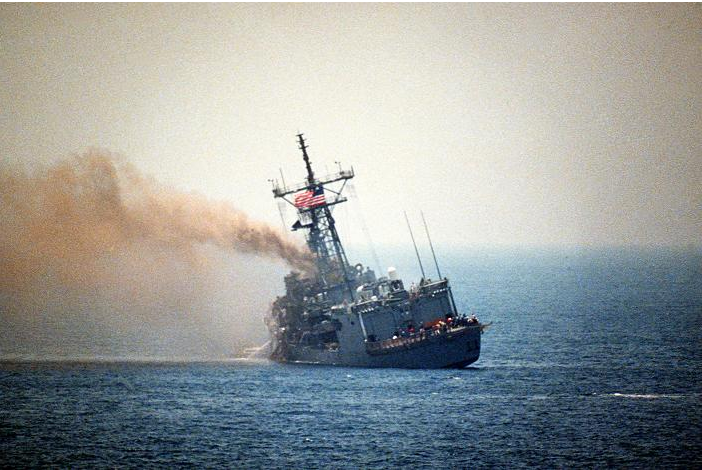
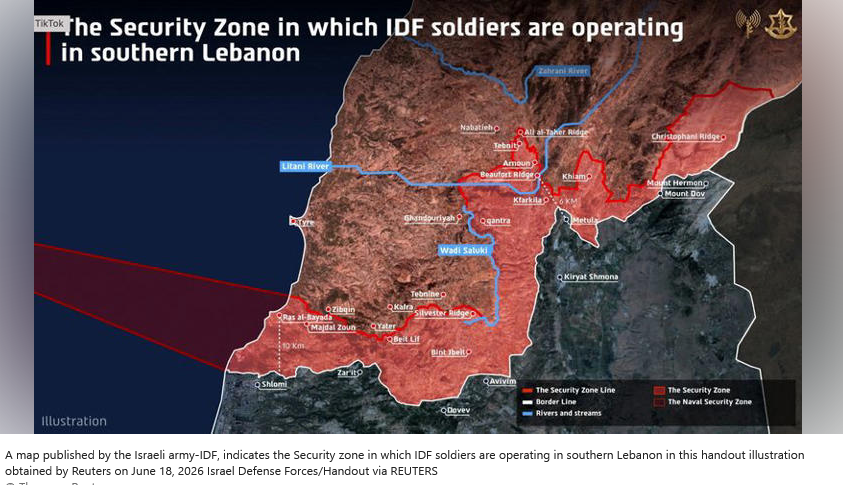
We’ve ceased our offense against Iran, while the same Regime controls the vital Strait of Hormuz. Our Gulf allies are increasingly at the mercy of this ruthless gang. Israel is off bombing Hezbollah in Lebanon, trying to salvage something from this fiasco. Our other allies in Europe and Asia wonder why they’re suffering from this mess when nobody asked them. Yet the Trump administration expects them to clean it up.

How did the most powerful nation on earth end up behind the eight-ball? By breaking every rule for success. Presumably, we had an objective. We had already bombed Iran’s nuclear facilities, putting that program back, maybe for years. We controlled the skies over that nation. Having already mowed their capabilities, there is no need to mow again now.

\What was present was an Iran in dire straits. Sanctions, mismanagement of water resources, and the economy had sparked mass protests. The vast majority of Iranians demanded change. Other than those directly benefiting from the Regime, support evaporated. The Mullahs had never been in a weaker position. What was here was the chance to free the people to form a government that didn’t threaten their neighbors.

The Trump administration took notice. The President told the Iranian protesters we had their back. No question what our goal was, toppling the Regime. We started sending our forces to the area. The head Mullah and many of the key players in his government were killed from the air.

In the meantime, the Iranian government slaughtered in excess of 40,000 protesters. The streets went quiet. This result shouldn’t surprise anyone. We’ve seen this movie many times before. Ruthless dictatorial governments use their monopoly of weapons to trounce unarmed protestors. No matter how bad the government is, it stays in power because nobody can shoot back. Cubans have lived at the subsistence level for decades. Does it even have an economy? Still, the communists persist.

Oil-rich Venezuela has followed the same path. When faced with losing power, there is no limit to the pain the absolute rulers will inflict on their defenseless citizenry. The picture of an unarmed Tiananmen Square protester standing in front of massive tanks illustrates the imbalance.

The only successful revolutions in history took place where armed people existed from the start, or military units refused to fire on the people, and changed sides. Imagine how poorly our forefathers would’ve fared if only the redcoats had arms. Instead, we turned them back at Lexington and Concord. To have a “shot heard round the world, ” you have to have a gun. The minutemen had guns and knew how to use them. The rest is history.

Other revolutions, such as the French and Russian, saw military units refuse to fire on the people and turn against their rulers. No matter how great the air superiority, only armed resistance on the ground can drive out the despots.

Continue reading

Remember the “Horns”

War is an awful business. Once started, all sorts of things can go wrong. That’s why no one should ever go into it lightly. Yet, there are circumstances where you come to the conclusion you have no real choice but to attack.

Before you move, those who studied war, from Sun Tzu, Clausewitz, to B.H. Liddell Hart cautioned that you need a clear objective—one that eliminates the problem or problems causing your decision to go to war. In the present case, the administration determined that as long as the mullahs ruled Iran, we faced intolerable threats, from nuclear war, attacks by Iran or its allies on others in the Mideast, or disruption of major trade routes.

The timing seems right. Thanks to mainly Israeli actions, we control the air over Iran. Sanctions and the Mullahs’ mismanagement have weakened the Iranian economy to a point where businesspeople have joined the young in longing for change.

Having determined that the mullahs in power pose an existential threat, anything short of regime change won’t solve the problems. The mullahs must go.

With the objective in place, what’s our strategy for success? We pay all those military people with all those medals and ribbons to show us the path to victory. Having studied the art of war all their lives, they should know what works and what to avoid.

I didn’t spend a lifetime in the military, but I did go to a military school, where our dedicated commandant taught the required military science courses. We studied what worked, or didn’t work, throughout the ages. Using your superior numbers or resources to overpower, frankly, is wasteful and may result in a “Pyrrhic victory,” named after the King who lost so much in winning that he couldn’t continue his war against the Romans.

Continue reading

Fixing Upheavals

Funny how things sometimes unfold in line with your thoughts. In my post two weeks ago, I pointed out that Trump’s reimposition of broad tariffs, taking effect, isn’t a sure thing. The administration promised speedy interest-bearing refunds to obtain a stay of the Court of International Trade’s (CIT) decision declaring the bulk of the president’s tariffs unconstitutional if the Government lost its appeals. Having lost in the Supreme Court, the administration now finds itself in an impossible situation.

You can bomb the hell out of the country, but you need forces on the ground to effect regime change. Nazi Germany was militarily superior to the British in WWII, but an all-out air campaign never broke them, without troops on the ground.

Last week, I wrote that the best bet to foster an armed Iranian uprising lay with the support of the Kurds on both sides of the Iran-Iraq border. However, our spotty treatment of this put-upon group might make them reluctant to bail us out:

In both cases, the administration appears not to have thought things through. Trying to slow down or block the refunds amounts to admitting it misled the courts. Now the refund case is back in the CIT, and Judge Richard Eaton has ordered the refunds. As the sole judge in charge of the refund cases, he has issued a straightforward ruling, leaving the Government no alternative but to do what it promised the courts.

Judge Eaton refused to issue a stay of his order pending the Government’s appeal. The Appeals Court has already delegated the CIT to handle the refunds, so it is unlikely to intervene. On Friday, the judge granted the Government more time after it admitted it had misled the courts and could not process the refunds immediately.

Given the Government’s history of promising speedy refunds if it loses, and then claiming it’s too difficult to issue quickly when the Supreme Court ruled against it, staying an adverse ruling in the CIT on the new 122 tariffs is anything but certain. Two dozen states are already filing suit against the new tariffs, and businesses are likely to be joined by those still suffering from the previous illegal tariffs. An injunction against their implementation is only just while awaiting a final decision.

Continue reading

In Need Of A Friend

While the media concentrates on the mystery of a celebrity’s mother’s disappearance, some important things are going on with little recognition. I have long advocated for U.S. support of the Kurds, one of the world’s largest ethnic groups without a nation, because of their strategic location:

Long friendly with America, the Kurds were the key to the destruction of ISIS’s Caliphate. They supplied the forces on the ground at great cost, which led to victory. However, our treatment of these friends since then hasn’t been very ally-like. Since the victory, the U.S. has allowed its overlords in Turkey, Iraq, and Syria to inflict damage on it. Recently, the Turkish-backedSyrian Revolutionary government has crushed the Kurds in that country while the U.S. stood by.

Why is this important right now? When protests broke out over Iran’s plummeting currency, our President urged them on, telling them “he had their back,” only to have the protesters mowed down by the thousands. Trump drew his red line, telling Iran’s leader not to crush his own people. The Mulahs ignored him. Now, Trump’s credibility is on the line. To keep his word, regime change seems the only solution.

While we and maybe with the Israelis can pound the Mullah’s forces from the air, Trump knows that committing large American ground forces is a non-starter, repeating the nation-building that Trump lambasted George W. Bush over.

Continue reading

Trump vs. Trump?

Recent events have added credibility to some of my posts. Not long ago, I cautioned that the Federal Reserve’s (Fed) series of interest rate cuts might be at odds with the actual inflation outlook. The Biden spending spree adds to our high national debt, while the Social Security (S.S.) Trust Fund runs dry at best in ten years, with both parties adding to the program woes. Medicare may be in even worse shape.

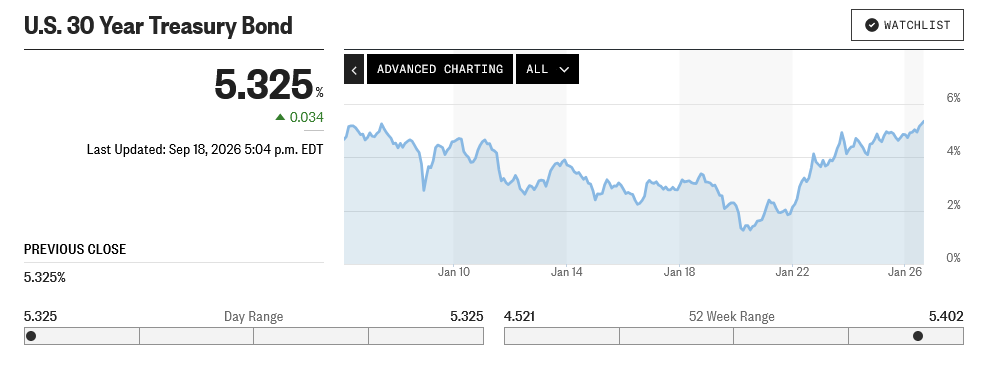
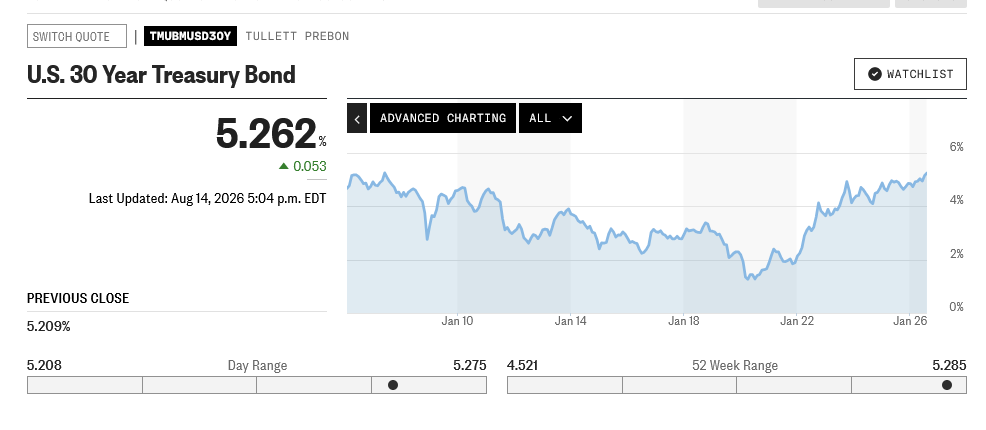
Biden’s proposals will increase S.S. payouts to government retirees, and with Trump’s plan not to tax any S.S. income, retiree checks could face cuts even sooner. Maintaining the current level of payments will mean even more government borrowing. Already expected to lend trillions more, bond buyers must absorb more extensive offerings in the future. In the face of increasing interest rate risk, they’ll want more upfront.

The first chart is the inflation rate, showing it is still above the 2 % target:

This chart shows the Fed’s interest rate cuts:

While the U.S. 10yr Bond interest rate returned to near its highs:

Mortgage rates stay high:

This week, the Fed cut short-term rates another quarter point but said it would probably cut two times next year instead of the signaled four. The Dow dropped over 1,100 points. Confusion is the only explanation.

Continue reading