It is widely reported that Socialism is more popular than ever in the U.S. and is gaining on Capitalism as our preferred economic system. This shift is most prominent among young people, many of whom claim that Capitalism just hasn’t delivered for them. Because of Capitalism’s failures, we are in the middle of an affordability crisis.
While this may make some sense on the surface, a closer look is warranted. Affordability is just another way of saying prices are too high and rising. In other words, Inflation. Economist Milton Friedman famously stated that “inflation is always and everywhere a monetary phenomenon,” arguing it results from the money supply growing faster than economic output—too much money chasing too few goods.
Capitalism means the least government interference in the economy. Private enterprise has no control over the money supply. Only the Government, through the Federal Reserve (FED), has that power. The FED is a 1913 progressive creation with a poor record on Inflation:
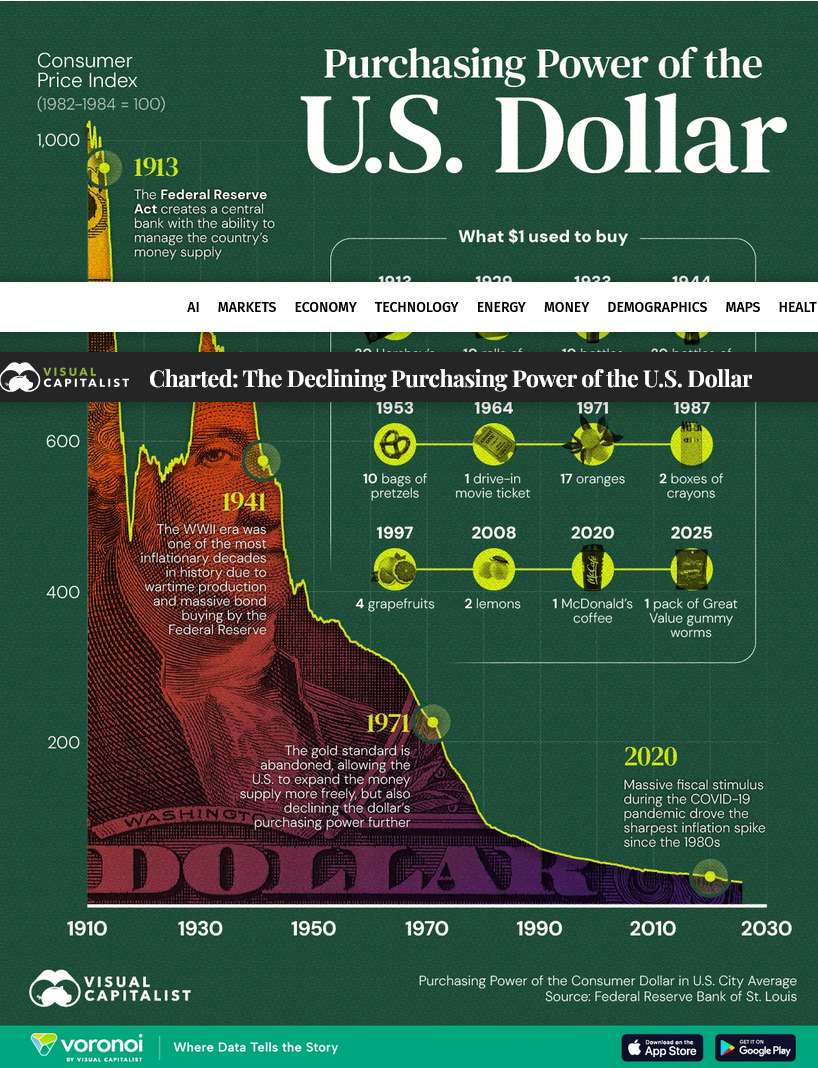
Except for wars, sustained rising prices were virtually unknown before the FED. In fact, during the Gilded Age, a period with little government interference but amazing growth, prices consistently fell, increasing real wages. Inflation, then, is a government phenomenon. Blaming Capitalism is misplaced. Looking to the Government for solutions flies in he face of experience.
This situation led me to look more closely at the other prevalent criticisms of Capitalism. The first thing you find is this: Adam Smith and his followers, moving away from the government-controlled mercantilist and feudal systems then in existence, never used the term Capitalism. Instead, they used free markets or free enterprise. Smith himself called it a “system of natural liberty.” French socialist Louis Blanc used the word capitalisme around 1850 to mean “the appropriation of capital by some to the exclusion of others.” He obviously meant it as a pejorative.
Maybe this explains why the media and academia use Capitalism rather than free market or free enterprise when referring to an economic system relying on markets to direct investment and set prices?
The Gallup poll shows Socialism’s favorability rising to 43% vs. Capitalism at 53%, while Free Enterprise in the same poll sits at 77%. Yet Capitalism and Free Enterprise are considered synonyms in every dictionary, meaning essentially the same.
Curious, I asked AI what the major failures of Capitalism were touted. They centered on five general n deficiencies. Unequal distribution of Wealth, market failures, prioritizing demand over morality, environmental degradation, and labor exploitation make for quite an indictment.
Since we aren’t gods and aren’t perfect, a reasonable inquiry into this bill of particulars should ask: compared to what? Has any other system done a better job in these areas?
Continue reading
