Why Fauci Matters

With the publishing of the diary Dr. Anthony Fauci kept on a government computer, many people who are still struggling with economic setbacks, their kids’ learning loss, mental problems, and the failure to see loved ones before they passed away, among other things, are calling for the Doctor’s head. While I share their dismay at the unnecessary detrimental actions Fauci favored that cost so many so much, I think we need to look at how these failures came about so we never repeat them.
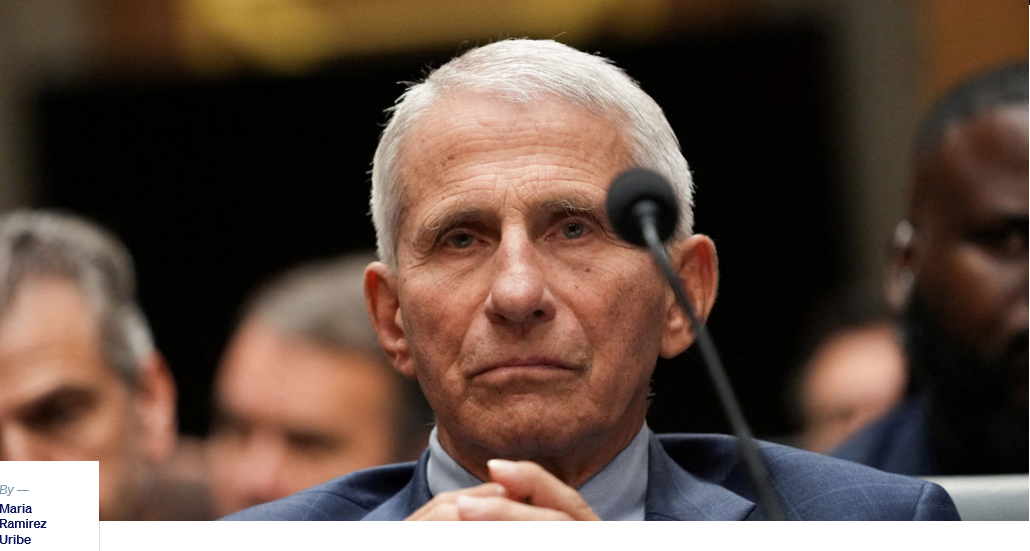
Pandemics have occurred throughout history and likely will continue in the future. It stands to reason that institutions such as the World Health Organization (WHO) and our Centers for Disease Control and Prevention (CDC) should create guidance on how to proceed when one raises its ugly head. By developing their responses before a crisis and coolly analyzing the data during calm times, we could avoid hasty, even panic-driven actions likely to make matters worse. Maybe much worse.

So why didn’t these esteemed organizations have a plan when COVID hit? It may come as a surprise to many, but both WHO and the CDC did have well-developed, thoughtful guidance. It was the Trump administration that decided to appoint a new board to guide our response, rather than follow the CDC plan already in place. It’s as if a school had a well-developed fire plan, but at the first sign of smoke the principal appointed a committee to work out a new plan rather than just following the existing one. Makes no sense and is likely dangerous, but that’s what we did.

Vice President Mike Pence, Alex Azar, the Health and Human Services Secretary, Dr. Deborah Birx, coordinator, Dr. Antony Fauci, infectious diseases; Dr. Robert Redfield, CDC director; and Jerome Adams, Surgeon General, made up the board. Maybe impressive on paper, but why would any plan this bunch came up with be as well thought out as the existing CDC plan? If Redfield had the CDC plan, and he did, why did he go along with this ad hoc committee?

The answer is Donald Trump didn’t trust or care for the CDC. He chose to bring the COVID response into the White House, making it impossible not to be political. In a sharply divided nation, this made certain the partisan backbiting that followed.

Like all committees or boards, someone becomes the spokesperson. The Committee face. After reading Fauci’s diary, is it any wonder this publicity-seeking narcissist grabbed the limelight? If Birx was supposed to be the coordinator, does anybody remember her other than her scarves?

Continue reading

Recalling a Failed Test

A cruise ship reporting an outbreak of Hantavirus, with a loss of life, brought back memories of COVID and how we responded. Lockdowns, needless nursing home deaths, school closures, isolation, and all the rules, such as distancing and mask requirements. Not a pleasant memory.

Then we have the recent Senate Homeland Security & Governmental Affairs Committee receiving testimony from a CIA whistleblower on the cover-up of the likely Wuhan Lab Covid origin. Dr. Anthony Fauci used his government position to intervene in a CIA report on the lab’s origins, which was connected to funding for the Wuhan Lab. That establishment was conducting “Change of Function” research that could have resulted in the Covid virus.

Shining a light on how misinformation and government actors led to actions we’re still suffering from, it made clear that the top-down government response failed on a massive scale. Yet, this is the type of crisis progressives claim government experts handle best.

To understand how we ended up on this Covid response road, we have to recall the history of top-down government dominance. As I’ve pointed out in “Long Journey to More”, for thousands of years, settled agricultural societies divided people into classes, with an educated ruling class at the top (up to 10%), an illiterate mass, and a smaller artisan-merchant class in between.

The masses lacked the knowledge to dispute what the government told them, and the artisan-merchant class, though often literate, was too dependent on the ruling class’s good graces to offer much dissent—human progress was glacial.

Continue reading

Rooted in Obamacare

The government shutdown is brought on by Senate Democrats refusing to sign on to a clean continuing resolution because of exploding Obamacare premiums. Without an extension of the COVID-19 era coverage expansion subsidies, many people will see their premiums more than double. The heartless Republicans will consign people to lose their healthcare. Of course, some of those losing their subsidy make 600%0f of the poverty level, but everyone is entitled to healthcare, right?

None of this mess should come as a surprise. When the original Obamacare bill squeaked through, President Obama and the Democrats told us this was a way to get close to universal medical care at a reasonable cost.

Obamacare, at the forefront of the shutdown, brought back the memory of why I started this blog. At the time, I, along with a slew of others, disputed these claims. We said the projected costs would prove much higher and would leave many people uncovered. Of course, we’re correct:

Even with the COVID-19 expansion, 27.2 million Americans, or 8.7%, remained uninsured in 2024. Coupling with this failure are rapidly rising costs. Contributing to these costs is widespread fraud.

After the Affordable Care Act (ACA, Obamacare) narrowly passed and went into effect, I happened to inveigh against it at a family dinner, pointing out its numerous flaws and how to improve healthcare. My stepdaughter challenged me to come up with a better plan. In other words, put up or shut up, though she said more nicely.

This reasonable dare prodded me to start this blog to air my public policy ideas, beginning with healthcare. Dave’s Healthcare Plan went online in 2014. Anyone can read it here.

The difference between my Plan and others, including the ACA, is that it integrates health insurance with savings and portability. This view of a person’s financial picture is standard for a financial advisor assessing a person’s economic needs. Without health insurance, you could wipe out your savings overnight. Your savings could make healthcare more affordable.

Continue reading