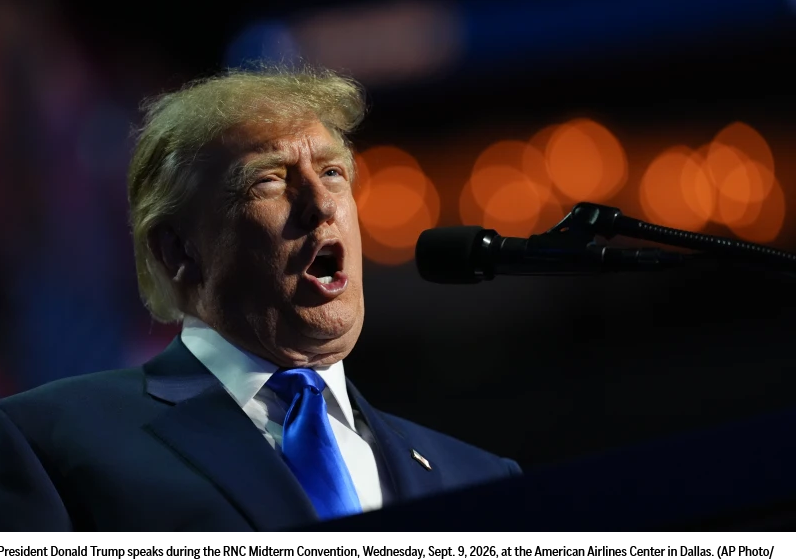
“If the Republicans win the House of Representatives and the United States Senate, both of them,” President Donald Trump said at his midterm convention, “I will issue a dividend to every adult citizen in the United States of America for $5,000.” As the New York Times (NYT) tells us, in 2020, Democrats in Georgia pointed to $2,000 coronavirus relief checks if their party took control of the Senate. Politicians always promise more cash or other monetary benefits if you’ll vote their way:
The Socialist Party of America (DSA), which exerts more and more influence on the Democratic Party, promises either lots of free stuff or more cash in your pocket through things like greatly expanding the minimum wage. All these promises come against the backdrop of “The Affordability Crisis.”
The crisis is just a way of saying prices are rising faster than our ability to pay them. Both parties point to putting more dollars in everyone’s pockets as the answer. But does this make sense? Say ten people are in line to buy one of the ten parcels of necessities needed to survive. Each has $100; the necessities, to no one’s surprise, cost $100. Now President Trump, or Mayor Mandami, comes along and gives each $50. Everyone has more money in their pockets, but now the price of necessities has risen to $150. Unless supply increases, this is the only outcome.
Donald’s or Zohan’s largesse runs aground because of the Law of Supply and Demand. It still rules, as it has through the ages. Simply put, if Demand exceeds supply, prices will rise. Increasing Demand without more supply keeps prices rising.
Increasing supply to meet or exceed Demand stops inflation. However, this solution requires capital investment. Planting more acreage, building a factory, drilling wells, ships to bring in imported goods, or opening a mine- whatever is needed to increase supply demands capital.
Capital is forgone consumption, or put another way, savings, and the positive returns on them. If you lend at interest or invest directly in assets that grow in value, you have more capital, but you also face the risk of loss. Not every well finds oil, gas, or even water.
Continue reading Detour on the Road