A little over a month ago, I pointed out two crises that aren’t getting the kind of scrutiny one might expect in an election year. Just because we’re talking far less about them than we are about hating Trump or socialism doesn’t mean our debt crisis and a losing war aren’t churning just below the surface. Like all impending crises, they can’t be ignored forever.
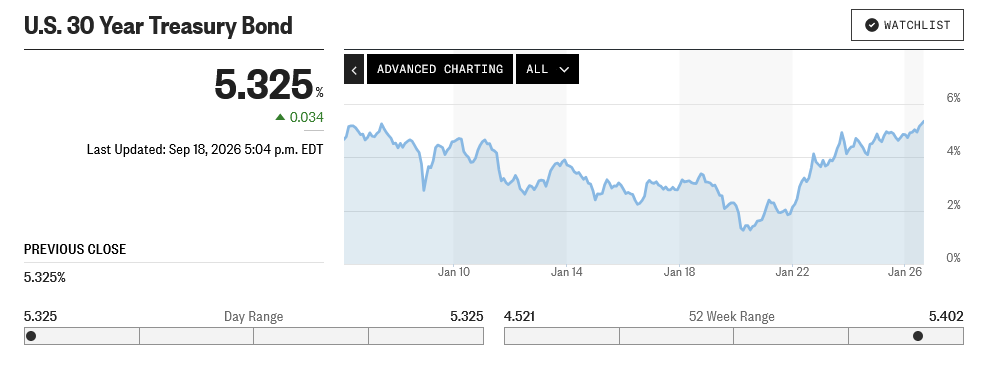
The Federal Reserve Board (FED) finally took minimal action, acknowledging the government’s longer-term bonds were yielding more than at any time in the last thirteen years. More than in 2022, when inflation was above 9%.-in fact, higher than at any time in the last 13 years. The Fed raised short-term rates by a whopping quarter point. While this is the first rise in years and shows a change of direction, it is the least it could do:
By reducing the amount of credit available, the Fed makes buying even more painful. In some cases, some consumers and businesses can’t borrow at all. Rather than increasing supply to arrest or lower rising prices, raising interest rates reduces demand. Less demand means less economic activity, slower growth, or, worse, a recession.
The quarter-point rise alone won’t change much. The rise in 10-year and 30-year government bond yields had already pushed up rates on mortgages and auto loans. The FED is just playing catch-up.
Still, President Trump has blasted the raise. He rightly sees it will only raise prices, and that further rises might slow the economy. No politician wants that, and Trump has always demanded lower rates no matter the conditions. He sent his trade advisor, Peter Navarro, to argue that rates should be down to one percent.
The problem is that the President tells us this is the best economy ever, but we will still run a two-trillion-plus-dollar deficit. If we run big deficits in good times, our $40 trillion deficit will keep growing rapidly. This situation means more and more Government debt on the market. With the looming shortfalls in Social Security and Medicare, the market can only see expanding supply, putting downward pressure on bond prices. Lower prices mean higher rates—plain old supply and demand.
These deficits come at a time when the Artificial Intelligence Revolution (AI) is consuming large amounts of capital, adding to pressure on the capital markets. AI will likely lower the cost of goods and services in the future, but right now, it uses gobs of capital.
In any case, the FED’s ability to affect the bond market is limited by its still-huge underwater portfolio of longer-term bonds accumulated through its previous actions. At the same time, interest payments continue to grow, adding to the deficit.
Continue reading Detour on the Road