A little over a month ago, I pointed out two crises that aren’t getting the kind of scrutiny one might expect in an election year. Just because we’re talking far less about them than we are about hating Trump or socialism doesn’t mean our debt crisis and a losing war aren’t churning just below the surface. Like all impending crises, they can’t be ignored forever.
The Federal Reserve Board (FED) finally took minimal action, acknowledging the government’s longer-term bonds were yielding more than at any time in the last thirteen years. More than in 2022, when inflation was above 9%.-in fact, higher than at any time in the last 13 years. The Fed raised short-term rates by a whopping quarter point. While this is the first rise in years and shows a change of direction, it is the least it could do:
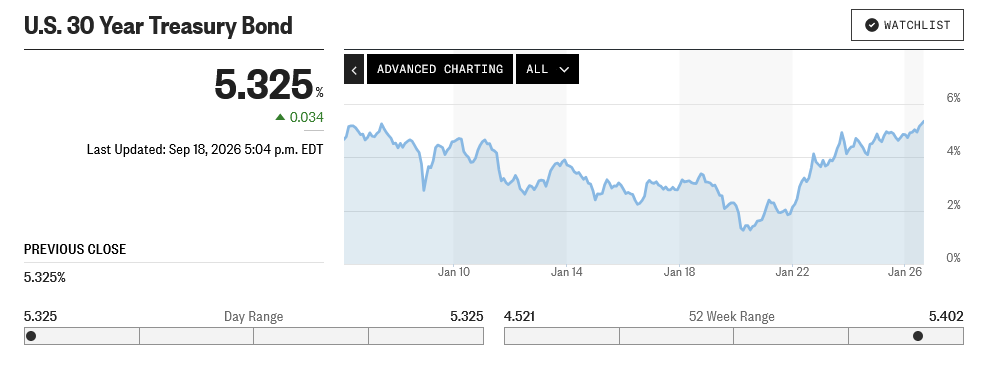
By reducing the amount of credit available, the Fed makes buying even more painful. In some cases, some consumers and businesses can’t borrow at all. Rather than increasing supply to arrest or lower rising prices, raising interest rates reduces demand. Less demand means less economic activity, slower growth, or, worse, a recession.
The quarter-point rise alone won’t change much. The rise in 10-year and 30-year government bond yields had already pushed up rates on mortgages and auto loans. The FED is just playing catch-up.
Still, President Trump has blasted the raise. He rightly sees it will only raise prices, and that further rises might slow the economy. No politician wants that, and Trump has always demanded lower rates no matter the conditions. He sent his trade advisor, Peter Navarro, to argue that rates should be down to one percent.
The problem is that the President tells us this is the best economy ever, but we will still run a two-trillion-plus-dollar deficit. If we run big deficits in good times, our $40 trillion deficit will keep growing rapidly. This situation means more and more Government debt on the market. With the looming shortfalls in Social Security and Medicare, the market can only see expanding supply, putting downward pressure on bond prices. Lower prices mean higher rates—plain old supply and demand.
These deficits come at a time when the Artificial Intelligence Revolution (AI) is consuming large amounts of capital, adding to pressure on the capital markets. AI will likely lower the cost of goods and services in the future, but right now, it uses gobs of capital.
In any case, the FED’s ability to affect the bond market is limited by its still-huge underwater portfolio of longer-term bonds accumulated through its previous actions. At the same time, interest payments continue to grow, adding to the deficit.
While the belated quarter-point rise suggests the Fed may be aware of the impending risk, it has little it can do to stave off a crisis. Only the whole of government agreeing on reform can do that. Time is running short, and baby steps won’t do the job.
A month ago, I also pointed out our war in the Middle East was deteriorating into a possible crisis. Losing the free flow of shipping through the Strait of Hormuz and our inability to fully protect our bases and allies had tipped the war in Iran’s favor. Going to war without proper planning, up-to-date equipment, and enough munitions put us in a hole.
Having fought us to nearly a standstill, I thought Iran would pull off an October surprise to turn U.S. public opinion against the Trump administration and secure an anti-war consensus in our Congress. Sinking a major U.S. ship, or a heavy attack on our bases and allies. Maybe a strategic surprise.
Iran didn’t even wait until October. Not content to restrict the flow through Hormuz, its Houthi allies have taken Yemen’s Red Sea coastline, giving them the ability to restrict movement at another chokepoint:
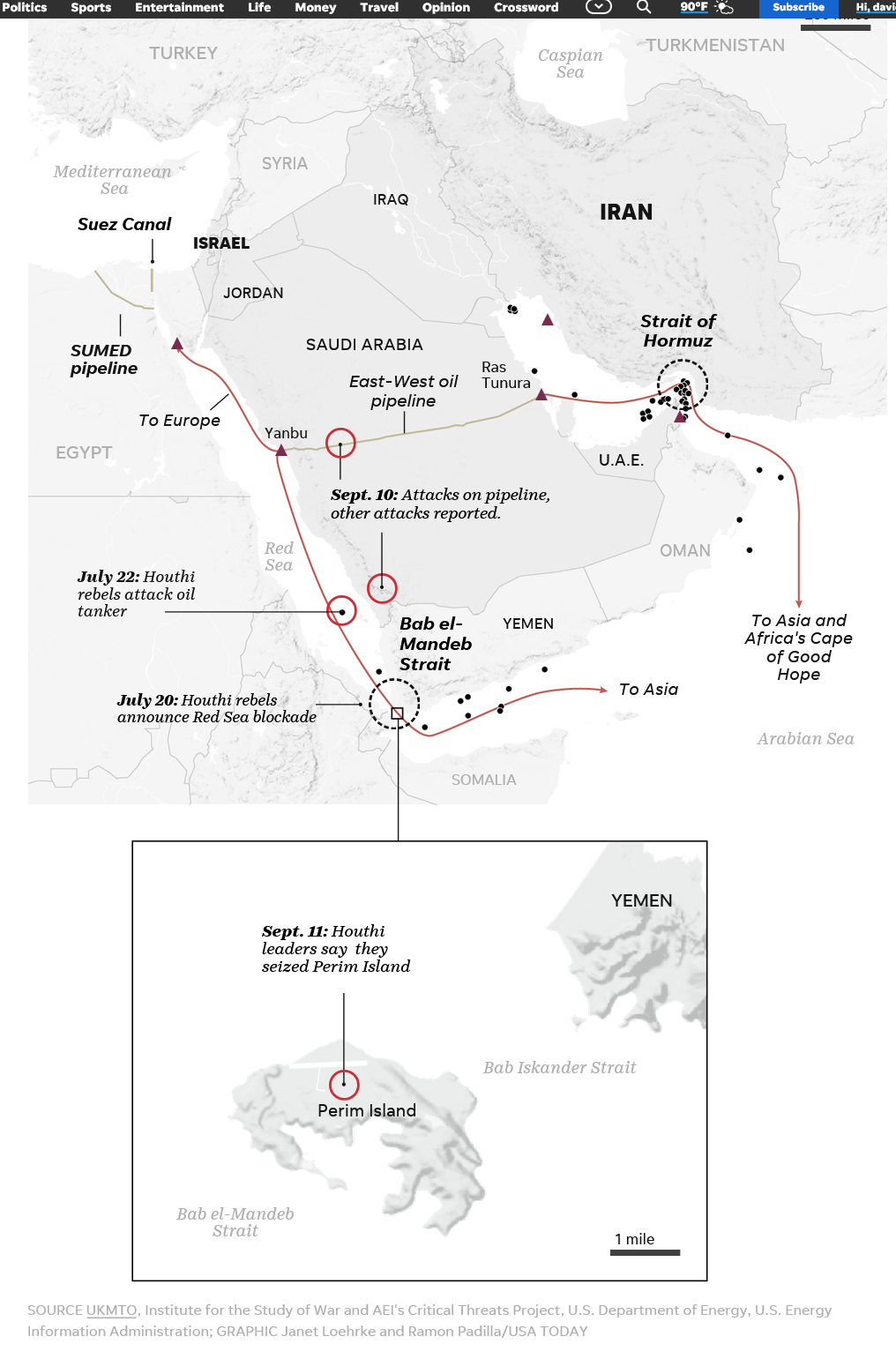
Also, the Saudi’s pipeline that avoids Hormuz, which allowed them to continue to put millions of barrels of oil on the market, was attacked and is offline. While it can be repaired, can it be protected from further attack?
The pipeline attack came from pro-Iranian Iraqi militias. This came at a time when we are withdrawing the last of our troops from Iraq, including those in the Kurdish area of that country. This includes our base in Erbil, the autonomous region’s capital. This action leaves our one-time friends and allies, successfully fighting ISIS, at the mercy of Iran and its supporters. Can anyone explain our actions?
Unfortunately, it’s now us on the Horns of the Dilemma. The strategic move that leaves the opponent a choice between two undesirable outcomes, I had hoped we could do to Iran. Opening access to the Red Sea means moving assets to the area. Sending ships there weakens our position at Hormuz. Can we maintain the blockade and shepherd some ships through with fewer assets?
Even if we do, do we have enough munitions? Again, can we have success without boots on the ground? So far, we haven’t put any of our ground troops in the war. Would we do it here just before an election?
Can we convince the Saudi’s and the Emirates to put ground troops in Yemen to support Yemenis fighting against the Houthis? Maybe the Saudis’ new allies, Turkey and Pakistan, can supply the help needed. Will anybody send troops in without direct American support?
In short, where do we go from here? It seems our only plan is to use the blockade and sanctions to squeeze Iran’s economy so hard the regime will give in or fall. Unfortunately, this idea will cause untold pain to the Iranian people before it affects those in power.
To understand how this works, the regime confiscated the property of the Baháʼí minority. That’s right: minorities and others will lose everything before those in power feel real pain. Rather than arming those opposed to the regime and giving them a chance at a better life, at peace with their neighbors, we only increase their suffering. Is this even ethical?
Remember, it’s not October yet. Iran may still have a surprise or two. Even if Congress flips and continuing the war becomes impossible, things will only get worse. Israel faces utter destruction from a nuclear-armed Iran. The whole Middle East under the thumb of terrorists. Key trade routes become toll booths. Running away will be worse than Afghanistan or South Vietnam.
We’re almost at the midterm election, and we hardly hear anything about how to face these impending crises. Something is very wrong, and we will pay the price for ignoring what is clearly there to see.
 Detour on the Road