The Real Trump

We finally have the Supreme Court tariff decision. Even though they took too long in a faster-moving world, it is as predicted. The Court ruled that all tariffs imposed under the International Emergency Economic Powers Act (IEEPA) were illegal in a 6-to-3 decision. The majority acknowledged what the first article of our Constitution clearly states: that duties (tariffs), like all taxes, are the exclusive province of Congress.

Predictably, the President threw a hissy fit. His main ire fell on two of the justices he appointed, Neil Gorsuch and Amy Coney Barrett,, even going so far as saying their families are ashamed of them or should be. At the same time, he praised the three conservative judges who backed the tariffs, Clarence Thomas, Samuel Alito, and Brett Kavanaugh. The latter wrote the key dissenting opinion. He made three points: the statute gives unlimited tariff power, the linking tariff power to the ability to conduct foreign affairs, and refunding the money would be “messy.

All three justices claim to be Scalia originalists, meaning simply applying the original intent of the law. What is confusing about the original intent of the first article of the Constitution that gives the power of the purse, including duties, exclusively to Congress? The thinking behind this traces back through British history and law, and the framers’ intent is crystal clear. What part of “no taxation without representation” don’t they understand? The majority in Chief Justice’s opinion stated the obvious.

The contention that the President needs the power to impose a punishing tax on U.S. citizens to conduct foreign affairs would be news to the Founding Fathers. This idea is like a child demanding his way, or he’ll hurt himself. As two recent studies have shown, Americans, not foreigners, pay 90% of the tariffs.

Continue reading

In Need Of A Friend

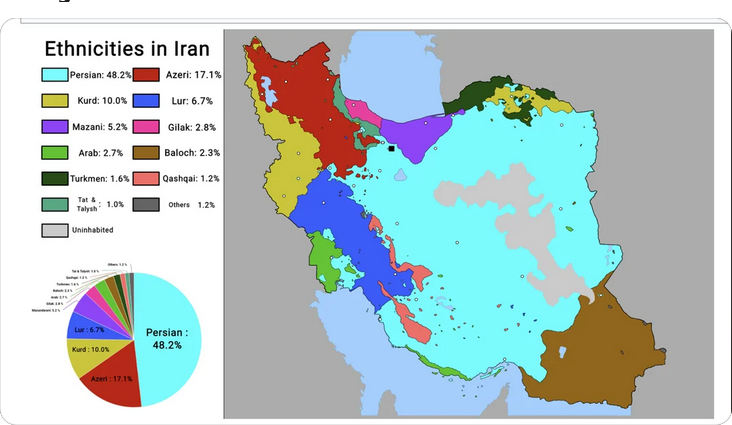
While the media concentrates on the mystery of a celebrity’s mother’s disappearance, some important things are going on with little recognition. I have long advocated for U.S. support of the Kurds, one of the world’s largest ethnic groups without a nation, because of their strategic location:

Long friendly with America, the Kurds were the key to the destruction of ISIS’s Caliphate. They supplied the forces on the ground at great cost, which led to victory. However, our treatment of these friends since then hasn’t been very ally-like. Since the victory, the U.S. has allowed its overlords in Turkey, Iraq, and Syria to inflict damage on it. Recently, the Turkish-backedSyrian Revolutionary government has crushed the Kurds in that country while the U.S. stood by.

Why is this important right now? When protests broke out over Iran’s plummeting currency, our President urged them on, telling them “he had their back,” only to have the protesters mowed down by the thousands. Trump drew his red line, telling Iran’s leader not to crush his own people. The Mulahs ignored him. Now, Trump’s credibility is on the line. To keep his word, regime change seems the only solution.

While we and maybe with the Israelis can pound the Mullah’s forces from the air, Trump knows that committing large American ground forces is a non-starter, repeating the nation-building that Trump lambasted George W. Bush over.

Continue reading

Head-scratchers

Confusion rules. Has there been a time when, other than wars or economic reversals, everything was so up in the air? In just the last couple of weeks, we’ve had a meltdown over frozen Greenland, a fleet racing to the Middle East for possible military action against Iran, and the appointment of a Federal Reserve chairman philosophically at odds with the President, who appointed him. All with worldwide implications. What can we make of all this?

We’ve gone from giving the U.S. Greenland or else, to we’ll work things out—no big deal. Wait, wasn’t our need to possess Greenland a necessity for national defense? As I pointed out in the last post, we already had access to everything in Greenland that we would ever need. We antagonized our allies for no discernible end. Will Trump return to his demands again down the road?

The administration is correct in acknowledging the Arctic’s rapidly increasing importance. Still, as others and I pointed out, China has more to fear from us regarding the new Arctic trade routes than we do from it. This map makes it obvious where the choke point for both routes lies, and it isn’t Greenland. It is already part of the U.S., our state of Alaska:

As you can see, both new shorter routes run through the Bering Strait, which Alaska dominates. A reasonably strong Alaska military position could close the strait to China’s trade, and China would have to pay hell to regain passage there, even if they could. After all, China would have to move its forces a great distance under to attack, only to find a well-positioned enemy. If we take the proper military steps in Alaska, we, not China, possess the leverage in the Arctic.

Given this strategic fact, Trump’s campaign to grab Greenland was about his legacy, rather than national defense. We’ll determine the cost of his vanity later.

Continue reading

Trumpland

President Trump has loudly demanded ownership of Greenland as a matter of crucial national defence. Highlighting Greenland’s role in Arctic trade routes and national defense, he drew a dire picture.

Our U.N. ambassador, Mike Waltz, made the administration’s case on several TV shows by claiming that, in the event of problems in the Arctic, the Island doesn’t even have an icebreaker—no wonder they need us.

To understand the situation, we need to know why the Arctic is becoming so important. This map should help:

With warming temperatures, two significant new trade routes are emerging. The Northern Sea Route, which mainly runs through Russian waters, and the Northwest Passage, which runs by Greenland, Canada, and the U.S. (Alaska). As I pointed out in my post, “What’s Trump Thinking,” The Former is of the utmost importance to China. A shorter route to Europe, accessible to Russian resources, is the future. That’s why China isn’t about to allow Russia to change alliances without a painful response.

The search for a Northwest Passage dates back centuries, driven by obvious commercial advantages. Now it’s happening. As with any critical trade route, it needs protection. It’s still the Arctic, so commercial and military vessels will need icebreaker support. As NATO allies, Denmark, Canada, and the U.S. should have no problem establishing bases and patrols as required.

Of course, Ambassador Waltz is correct in highlighting the need for Icebreakers. Still, you can’t look to the U.S. We have two or three ancient icebreakers that may or may not be available in a time of need. We’ve ordered a couple from Finland, hopefully for delivery in 2028. Presently, the Northwest Passage depends on Canada’s 18 capable ships, with even more modern ones on the way. With the increasing importance of icebreakers, note that Denmark has more than the U.S.:

With the safety of the Northwest Passage more dependent on Canada than the U.S., let’s look at Trump’s other military arguments for U.S. ownership of Greenland. We need the Island for the Golden Dome defence system, but that’s just an upgrade to the North American Aerospace Defense Command (NORAD), which includes bases across the frozen north of the U.S., Canada, and Greenland.

Continue reading

The Pursuit Of Happiness

While waiting for the long-overdue Supreme Court Tariff ruling, I’ve had time to reflect on why so many Americans have either a dim view or little knowledge of our capitalist economic system. How can a simple, common-sense system be misunderstood by so many?

I’ve been reading Zhang Weiying’s “The Logic of the Market: An Insider’s View of Chinese Economic Reform” to better understand how the Chinese economy compares to our own. Most economists talk in jargon, but the Author explains capitalism in terms of happiness rather than marginal returns and GDP.

In capitalism, people engage in consensual exchange. Consumers and suppliers freely exchange a wide range of goods. As each gets what they asked for, both are happy. You go to the supermarket, you get what you want, and the store gets paid. Both of you win.

However, if goods or cash change hands with only one party happy and the other sad, it’s robbery. Think about that. Someone points a gun at you, demanding your stuff. The thief is happy, but you’re really sad. The point of human interaction is shared satisfaction, rather than gloom.

The gauging of happiness and sadness in society to determine whether an action is successful or just a thief. can be applied to both governance and economics. Most commercial transactions in free-market economies result in happiness for all the participants. You go to Costco, get a hot dog, and fill your cart with goods you value. At checkout, both you and Costco are happy.

Continue reading