Doomed

In our neighborhood, or on our way to grade school, we couldn’t miss the stars in so many windows. We were told the blue ones showed a family member serving in the war. The gold ones meant they had lost a family member. Even at our young age, we were no strangers to crisis and loss.

Even after WWII ended, the sense of crisis and fear didn’t end. The Russians had the atomic bomb, and the Cold War was on. We all had seen pictures and movies of mushroom clouds. Our school, like the rest, brought it home with “Duck and Cover” drills. It seemed we were likely doomed:

Fortunately, the Cuban Missile Crisis showed the Russians, like us, had no interest in mutual destruction. The bombs never dropped, but the memories stayed.

At summer camp, spraying areas and the cabins with DDT was a normal ritual. Mosquitoes were nasty and spread all sorts of bad things. The good news then was we had almost eradicated Malaria, one of the world’s major killers. Then came Rachael Carson’s book, “The Silent Spring,” which told us in no uncertain terms that DDT was deadly to birds and probably to humans. Exposed repeatedly, we were doomed.

Later, our fears proved overblown. DDT wasn’t going to kill us after all. The chemical that had Malaria, which cost millions of lives worldwide yearly, on the run wasn’t so bad after all. Unfortunately, millions DDT might’ve saved were lost when most of the world, including us, took Carson’s overblown warnings to heart and banned DDT. Children were at the forefront of the deaths.

It wasn’t long before we faced the distinct possibility that, because there were too many of us, we would face famine. Even those who survived would face shortages of everything. A “Population Bomb” awaited us because Stanford Biologist Paul Ehrlich showed in his 1968 book that the Earth couldn’t sustain the massive population growth since the Industrial Revolution. Ehrlich became a fixture on TV, and the fear spread worldwide. We were doomed.

Continue reading →
Of Data Centers & Democracy

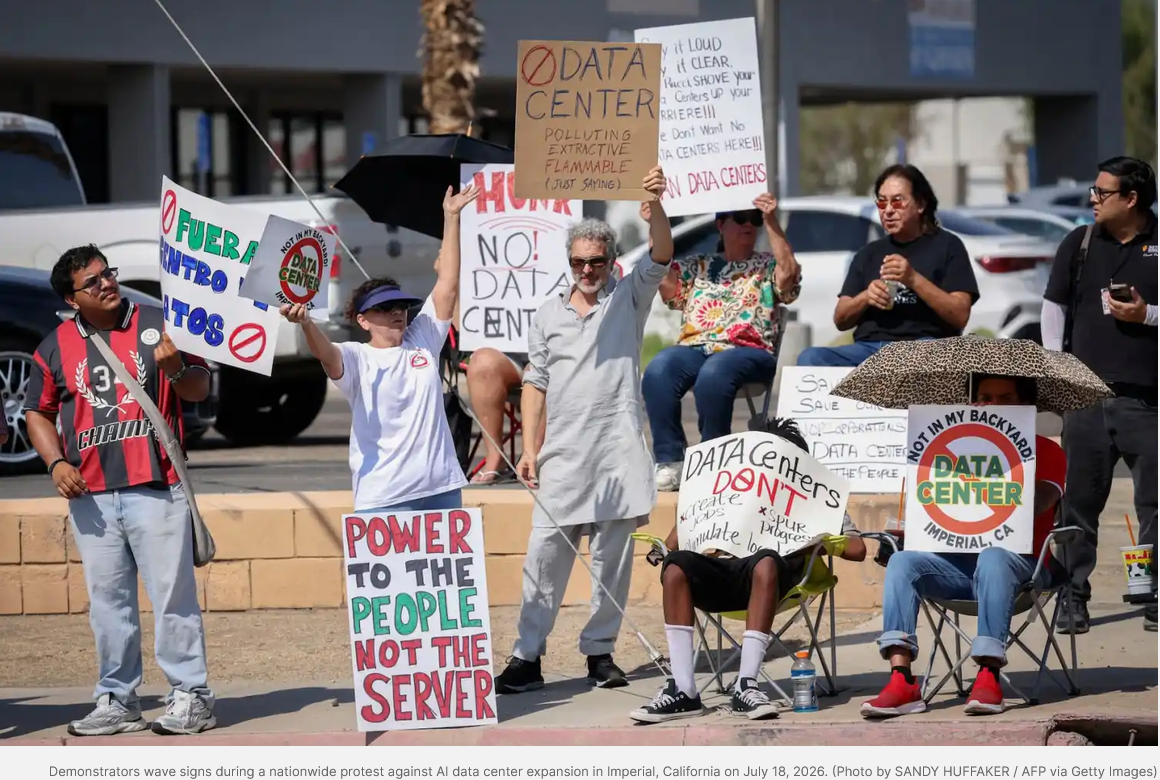
The current hysteria over AI data centers highlights how smart the Founding Fathers were to put hurdles in the way of popular Democracy. Rash actions were discouraged, while individual and minority rights were protected against the tyranny of the majority. Historically, momentary popularity of leaders or positions has too often been a fad. However, it has still led to the rule of tyrants. Whipping up the populace to demand moratoria on centers already in the works, as well as future ones, could do the Nation irreparable harm if implemented.

Not long ago, politicians such as Texas Governor Greg Abbott and Pennsylvania Governor Robert Shapiro were touting their states as data center friendly. Many local governments competed for them, often offering incentives. Thousands were built without much notice. All of a sudden, we were hearing horror stories about skyrocketing energy bills, water shortages, and a mind-numbing hum. So much agricultural land is taken out of production; we may starve:

Now Abbott and Shapiro have joined the moratorium chorus. Politicians across the Nation are running over each other to get out in front of the “no AI data centers in my backyard” army. Polls show a wide majority are against the centers.

This revolt against the “monster centers” came home to me over dinner with some Utahns. Somehow our conversation turned to a Mega AI data center development north of the Great Salt Lake. Situated in Box Elder County, the Kevin O’Leary-organized project is truly a mega project on 40,000 acres, consuming 9 gigawatts of power at completion.

The Shark Tank “Mr. Wonderful” investor group secured support from the County, landowners, and the Military Installation Development Authority (MIDA), which fast-tracks Utah developments. How did the celebrity businessman put this energy- and water-consuming Monster over on the good people of Utah? Get ready for skyrocketing energy bills, and say goodbye to the Great Salt Lake. Get ready for the hum. The Oligarchs strike again.

The Stratos Proposal isn’t hard to find. It shows O’Leary and Company are well aware of the problems of putting data centers in the water-deficient West, in a state not known for abundant energy. They make a case that this is a great location for the Mega Centers.

Continue reading →

Allow People To Interact

All the noise about the Elon Musk-led Department of Government Efficiency (DOGE) lopping off unneeded chunks of the Federal Government and the horrified response by the big government-favoring progressive left got me thinking about what the purpose of Government is in the modern world and how we can match it to those goals.

My take on the question will shock and horrify others, but hear me out. The purpose of modern Government is to provide the structure for free and open markets to thrive. These markets are another way of saying people can freely and safely interact.

Markets are the best way to allocate resources to better the human condition. Nothing, including the various forms of socialism, mercantilism, feudalism, or tribalism, has lifted humanity more than free and open markets. If you don’t accept this, I urge you to read “Super Abundance.” As the structures necessary for markets to thrive expanded, humanity’s living standards have dramatically improved, even as its numbers have grown.

The reasons for market superiority aren’t hard to find. Billions of people using the latest information will arrive at better decisions and make them quicker than the relatively few elites in Government. In the information age, this advantage only grows.

Markets are the most democratic form of choice. People vote for their preferences. These are hard choices because their money is involved rather than theoretical. We are all human, so markets make mistakes momentarily but self-correct as new information enters the continuous exchange. We invest funds to receive a proper return. If the profit potential leaves, so do we.

Continue reading →

Rethinking World Energy

Trump’s energy policies are far more practical and less costly than Biden’s. Relying on natural gas as a competitive, lower-emitting fuel source while we seek even lower or non-emitting sources at a competitive price is a good fit for the U.S. Unlike the Biden Troika, the supply line is all domestic.

Where the Trump policy may fall short is on the global stage. If natural gas is our transition fuel, it makes even more sense to promote it worldwide. In my last post, I drew attention to the coal boom in Asia. As we know, emissions will never fall worldwide until we rein in coal use. We’re doing it here with Natural Gas. With sensible policies, the same is possible globally.

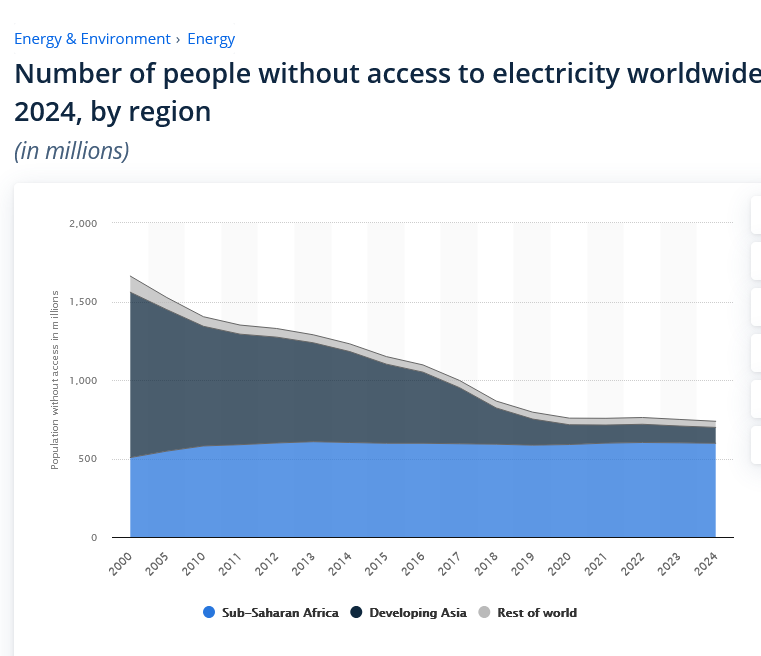
Delivering lots of stable energy is crucial for providing better lives enjoyed by more advanced nations. Look around your abode and count everything you plug in without a thought that makes your life better. For three-quarters of a billion people, this is just a dream.

While Asia has made great strides in providing electricity, albeit using a lot of coal, Sub-Sahara Africa has the most people without power and the fastest-growing population:

The area isn’t bereft of natural gas—just the opposite. There is plenty of gas to exploit, but the problem is attracting the capital and expertise to exploit the deposits—financial institutions in the developed world, like Biden, favor windmills and solar panels.

This mindset has resulted in bizarre projects like Rift Valley windmills. The magnificent area in East Africa is a major migratory route for birds and animals, and we all know windmills and birds don’t mix. They detract from an area’s beauty. Would we stand for windmills at the Grand Canyon? Yet this project gets financing.

Continue reading →