Remember the “Horns”

War is an awful business. Once started, all sorts of things can go wrong. That’s why no one should ever go into it lightly. Yet, there are circumstances where you come to the conclusion you have no real choice but to attack.

Before you move, those who studied war, from Sun Tzu, Clausewitz, to B.H. Liddell Hart cautioned that you need a clear objective—one that eliminates the problem or problems causing your decision to go to war. In the present case, the administration determined that as long as the mullahs ruled Iran, we faced intolerable threats, from nuclear war, attacks by Iran or its allies on others in the Mideast, or disruption of major trade routes.

The timing seems right. Thanks to mainly Israeli actions, we control the air over Iran. Sanctions and the Mullahs’ mismanagement have weakened the Iranian economy to a point where businesspeople have joined the young in longing for change.

Having determined that the mullahs in power pose an existential threat, anything short of regime change won’t solve the problems. The mullahs must go.

With the objective in place, what’s our strategy for success? We pay all those military people with all those medals and ribbons to show us the path to victory. Having studied the art of war all their lives, they should know what works and what to avoid.

I didn’t spend a lifetime in the military, but I did go to a military school, where our dedicated commandant taught the required military science courses. We studied what worked, or didn’t work, throughout the ages. Using your superior numbers or resources to overpower, frankly, is wasteful and may result in a “Pyrrhic victory,” named after the King who lost so much in winning that he couldn’t continue his war against the Romans.

Continue reading

Fixing Upheavals

Funny how things sometimes unfold in line with your thoughts. In my post two weeks ago, I pointed out that Trump’s reimposition of broad tariffs, taking effect, isn’t a sure thing. The administration promised speedy interest-bearing refunds to obtain a stay of the Court of International Trade’s (CIT) decision declaring the bulk of the president’s tariffs unconstitutional if the Government lost its appeals. Having lost in the Supreme Court, the administration now finds itself in an impossible situation.

You can bomb the hell out of the country, but you need forces on the ground to effect regime change. Nazi Germany was militarily superior to the British in WWII, but an all-out air campaign never broke them, without troops on the ground.

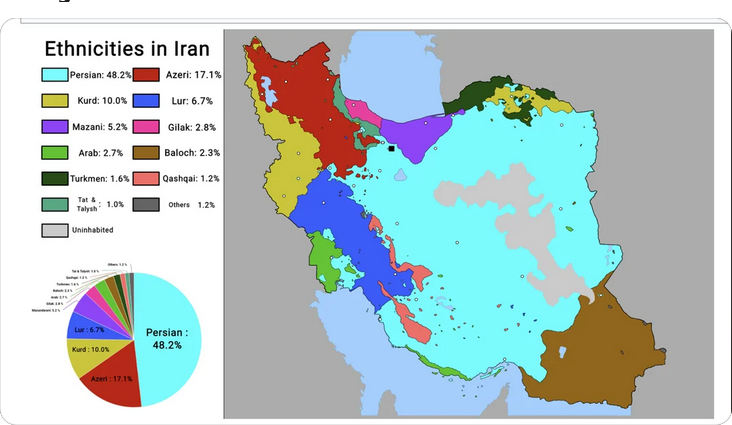
Last week, I wrote that the best bet to foster an armed Iranian uprising lay with the support of the Kurds on both sides of the Iran-Iraq border. However, our spotty treatment of this put-upon group might make them reluctant to bail us out:

In both cases, the administration appears not to have thought things through. Trying to slow down or block the refunds amounts to admitting it misled the courts. Now the refund case is back in the CIT, and Judge Richard Eaton has ordered the refunds. As the sole judge in charge of the refund cases, he has issued a straightforward ruling, leaving the Government no alternative but to do what it promised the courts.

Judge Eaton refused to issue a stay of his order pending the Government’s appeal. The Appeals Court has already delegated the CIT to handle the refunds, so it is unlikely to intervene. On Friday, the judge granted the Government more time after it admitted it had misled the courts and could not process the refunds immediately.

Given the Government’s history of promising speedy refunds if it loses, and then claiming it’s too difficult to issue quickly when the Supreme Court ruled against it, staying an adverse ruling in the CIT on the new 122 tariffs is anything but certain. Two dozen states are already filing suit against the new tariffs, and businesses are likely to be joined by those still suffering from the previous illegal tariffs. An injunction against their implementation is only just while awaiting a final decision.

Continue reading

In Need Of A Friend

While the media concentrates on the mystery of a celebrity’s mother’s disappearance, some important things are going on with little recognition. I have long advocated for U.S. support of the Kurds, one of the world’s largest ethnic groups without a nation, because of their strategic location:

Long friendly with America, the Kurds were the key to the destruction of ISIS’s Caliphate. They supplied the forces on the ground at great cost, which led to victory. However, our treatment of these friends since then hasn’t been very ally-like. Since the victory, the U.S. has allowed its overlords in Turkey, Iraq, and Syria to inflict damage on it. Recently, the Turkish-backedSyrian Revolutionary government has crushed the Kurds in that country while the U.S. stood by.

Why is this important right now? When protests broke out over Iran’s plummeting currency, our President urged them on, telling them “he had their back,” only to have the protesters mowed down by the thousands. Trump drew his red line, telling Iran’s leader not to crush his own people. The Mulahs ignored him. Now, Trump’s credibility is on the line. To keep his word, regime change seems the only solution.

While we and maybe with the Israelis can pound the Mullah’s forces from the air, Trump knows that committing large American ground forces is a non-starter, repeating the nation-building that Trump lambasted George W. Bush over.

Continue reading

Minority Positions Won’t Win

We finally bombed Iran’s nuclear facilities. Without opposition, the Israelis and then the U.S. hit the major sites. At this point, we don’t know the extent of the damage. An earlier leaked assessment said it might have only set the program back for a few months, while others have said it had done such damage that Iran will need years to get back on track. Without people on the ground, a definitive answer is impossible, but if and when Israel goes in again, it will tell us what the nation at existential risk has determined.

A decade ago, I proposed bombing Iran’s nuclear facilities. If they revive the program, we should strike back. Living in a real version of the Myth of Sisyphus, the Mullahs would eventually tire of pushing the boulder up the mountain, only to start again. So long as Israel controls the skies over Iran, follow-up attacks will take place as needed. It was a good plan then, and it remains so now.

Stopping religious fanatics from possessing weapons of mass destruction removes a grave threat not only to Israel but also from Iran’s long-range missile development to everyone else on Earth. If we denied North Korea and Pakistan nuclear weapons, we’d all sleep better. Iran is much scarier—every day, it’s death to America and death to Israel, and they mean it.

One might think we’d have a national sigh of relief, knowing Iran isn’t about to have nuclear warheads topping Intercontinental Ballistic Missiles (ICBMs) aimed at us, but some aren’t cheering. Some Democratic leaders alluded to the leaked study.

The information is preliminary and labeled as having low confidence. Yet, the left-leaning legacy media pounced on it and spread it far and wide. Instead of lauding our military for its work, publicizing a possible Trump failure took precedence. Democratic politicians joined in.

This response seems to reinforce the perception of an anti-Israel bias by the left in its conflict with Iran. Support for pro-Hamas, an Iranian ally, and protesters who harassed Jews by the progressive wing of the Democratic Party indicates the left is anti-Semitic.

Continue reading

There Is A Great Deal of Ruin In A Nation

Adam Smith argued, “There is a Great Deal of Ruin in a Nation,” acknowledging that our political leaders must do a lot of bungling to bring down a powerful and prosperous country. Given the administrations we’ve had since the turn of the century, I wonder if we are about to find out just how much ruin we can take before the fall.

Rather than following his father’s example, George W. Bush invaded and conquered Iraq. After crushing Iraq’s military in Kuwait, George H.W. Bush refused to invade that nation to get rid of Saddam Hussain. The elder Bush realized this would upset the balance of power in the Mideast. Getting rid of one bloodthirsty leader would only empower the murderous mullahs in Iran at a significant cost to us. The younger Bush went ahead anyway with dire results.

Saddam Hussein had nothing to do with 9/11, so why focus our efforts on him? Afghanistan harbored the organization carrying out the attacks, which needed our attention so it wouldn’t happen again.

On the domestic front, the younger Bush administration was asleep at the switch while the housing crisis brought us the “Great Recession.” Others warned that the combination of cheap money and sub-par lending is combustible, but the powers ignored the signs.

Continue reading