Almost Over

We’re approaching the end of the strangest election season of my lifetime, and I’ve been around a long time. The majority of Americans would never pick either of the presidential candidates. One of which they never even had a chance to express themselves. One bad debate and the powers in the Democratic Party dumped a sitting president and appointed a new candidate. Why spend all that money and time on primaries, when you can just anoint someone who never won a single primary vote?

The other candidate won the nomination because the Democrats kept him in the limelight with constant lawfare. The cases were so bad they made Trump an object of Republisn sympathy, while preventing others having any space. As I have pointed out, the Democrats picked their opposition.

Instead of a thorough discussion of all our pressing problems, we get superficial jabs about the border, the economy, and abortion. Wars abroad continue to expand, a budgetary meltdown gets closer, and our kids fall further behind without any plans offered by the candidates.

Continue reading

Working Towards Decline

Two happenings this week show how far we’ve traveled from reality. The vice-presidential debate and the East Coast Longshoreman Strike may have little in common, but both evidence an archaic way of thinking. The idea that we can stand in the way of progress in a way that saves everyone’s present job has never worked out in practice. Pursuing such a program with an expanding wage scale is madness.

From Diocletion’s Roman Empire to China’s Qing Dynasty, stopping time by government fiat only resulted in decline. Yet both vice presidential candidates claim they can preserve and bring back manufacturing jobs. J.D. Vance hews to Trump’s tariffs to protect otherwise unprofitable businesses. At the same time, Tim Walz would continue massive subsidies and tariffs to do the same.

The East Coast longshoreman demanded a considerable wage increase and banned further automation. With its potentially severe economic consequences, this strike is a stark reminder of the dangers of resisting technological progress. The Luddites in the U.K. in the early 19th century, who violently opposed technological change and rioted over the introduction of new machinery in the wool industry, would seem to be a strange model to follow. There appears to be a settlement with a significant wage increase, but we don’t know about automation. It’ll be interesting to see the final draft.

Both presidential tickets employ industrial policy methods of protection and subsidies, disregarding the fundamental economic concepts of “Comparative Advantage” and “Opportunity Cost.” Some countries possess advantages that enable them to produce goods more economically. Understanding these concepts is not just important; it’s empowering. It’s the key to making informed economic decisions and fostering growth.

Understanding and applying the principles of comparative advantage is crucial for economic growth; it’s a beacon of hope. Canada could grow dates in greenhouses, but countries with a favorable climate can send them to Canada at a much lower price. On the other hand, wooded Canada has lumber unavailable in date-producing desert nations. Dates for the lumber trade leave everyone with more. Adhering to these principles has allowed billions of people to live better than ever, and continuing to do so can lead to even more prosperity.

Continue reading

Inflation Hurts And The Pain Will Continue

Democratic Politicians and allied media, echoing some economists like Paul Krugman, paint a rosy picture of our economy. They question why we’re less content while supposedly outperforming other nations. Catherine Rampall, the Washinton Post economics columnist, tells us, “Nearly everything Americans believe about the economy is wrong, according to a recent Harris-Guardian poll. And that’s pretty much everyone’s fault.” This narrative implies that our dissatisfaction is unfounded. But is this the whole truth? Are there no deeper economic issues that we need to address?

After a lifetime of talking to people about their finances, I have gained a profound understanding of how people assess their financial well-being. In most cases, having a growing amount left over at the end of each month tells them whether they’re just subsisting or can think of the things that make life worth living—a vacation, maybe with your family, or a better house. Whatever your dream, it always requires money. Unless you have discretionary income, you can’t fulfill it, whatever it is.

When every basic bill, from rent to utilities and insurance, elicits a gasp, even a raise can’t alleviate the feeling of being trapped. The necessities of life, like food, transportation, and clothing, become burdens, and dreams start to fade. This situation is actual for many hardworking Americans struggling to make ends meet.

While economists discuss prices and wages, the reality is far more complex. Your pay may rise, but your grandpa’s and grandma’s income may be more fixed. Where they could pay their way in the past, now they need help to meet their rising bills. You thought you had the kid’s education covered, only to find a widening gap. These stark realities are not just isolated incidents but the daily norm for more people. No wonder those telling us how well we’re doing only get blank stares.

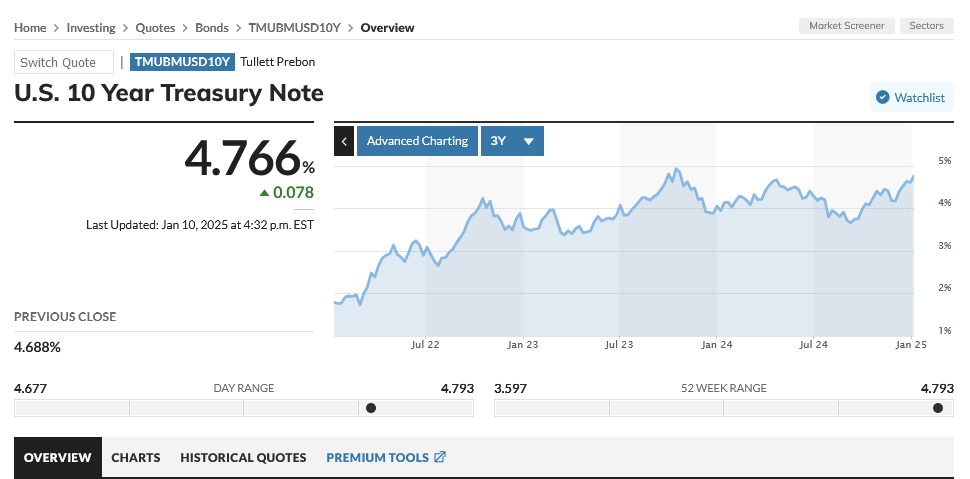
Inflation is the source of most of our angst, but if you feel future inflation isn’t dangerous, steps to rein it aren’t topping your to-do list. Everybody seems to be waiting for the Federal Reserve to lower interest rates, which presupposes inflation is under control. How likely is this situation to be accurate in the future?

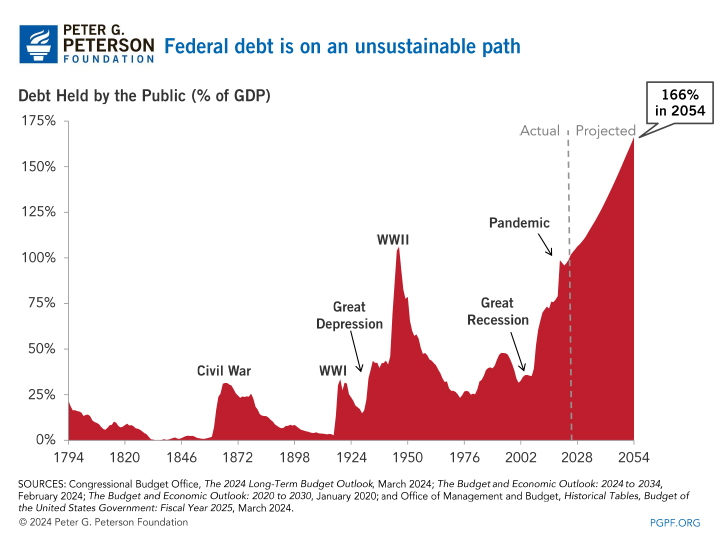
The classic definition of inflation is “too much money chasing too few goods.” We have to borrow when revenues don’t cover our government’s expenditures. If we dump ever-growing amounts of debt on the market and the Federal Reserve fails to intervene, ever-rising interest rates will be required to find buyers. Already, we pay more on our debt than on defense. In the future, the payments will crush the entire budget. This crisis is not a distant possibility but a potential economic catastrophe that we must address:

Of course, the Federal Reserve can buy the debt with money created out of thin air. This course of action is how we get runaway inflation: one way or another, overspending results in the unkindest tax inflation.

Continue reading