Fixing Upheavals

Funny how things sometimes unfold in line with your thoughts. In my post two weeks ago, I pointed out that Trump’s reimposition of broad tariffs, taking effect, isn’t a sure thing. The administration promised speedy interest-bearing refunds to obtain a stay of the Court of International Trade’s (CIT) decision declaring the bulk of the president’s tariffs unconstitutional if the Government lost its appeals. Having lost in the Supreme Court, the administration now finds itself in an impossible situation.

You can bomb the hell out of the country, but you need forces on the ground to effect regime change. Nazi Germany was militarily superior to the British in WWII, but an all-out air campaign never broke them, without troops on the ground.

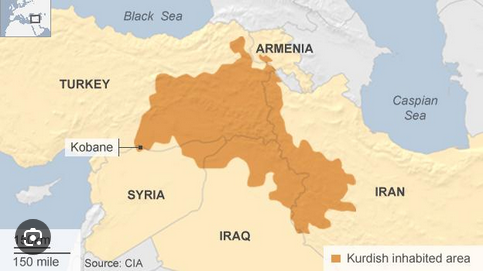
Last week, I wrote that the best bet to foster an armed Iranian uprising lay with the support of the Kurds on both sides of the Iran-Iraq border. However, our spotty treatment of this put-upon group might make them reluctant to bail us out:
In both cases, the administration appears not to have thought things through. Trying to slow down or block the refunds amounts to admitting it misled the courts. Now the refund case is back in the CIT, and Judge Richard Eaton has ordered the refunds. As the sole judge in charge of the refund cases, he has issued a straightforward ruling, leaving the Government no alternative but to do what it promised the courts.

Judge Eaton refused to issue a stay of his order pending the Government’s appeal. The Appeals Court has already delegated the CIT to handle the refunds, so it is unlikely to intervene. On Friday, the judge granted the Government more time after it admitted it had misled the courts and could not process the refunds immediately.

Given the Government’s history of promising speedy refunds if it loses, and then claiming it’s too difficult to issue quickly when the Supreme Court ruled against it, staying an adverse ruling in the CIT on the new 122 tariffs is anything but certain. Two dozen states are already filing suit against the new tariffs, and businesses are likely to be joined by those still suffering from the previous illegal tariffs. An injunction against their implementation is only just while awaiting a final decision.

Continue reading
In Need Of A Friend

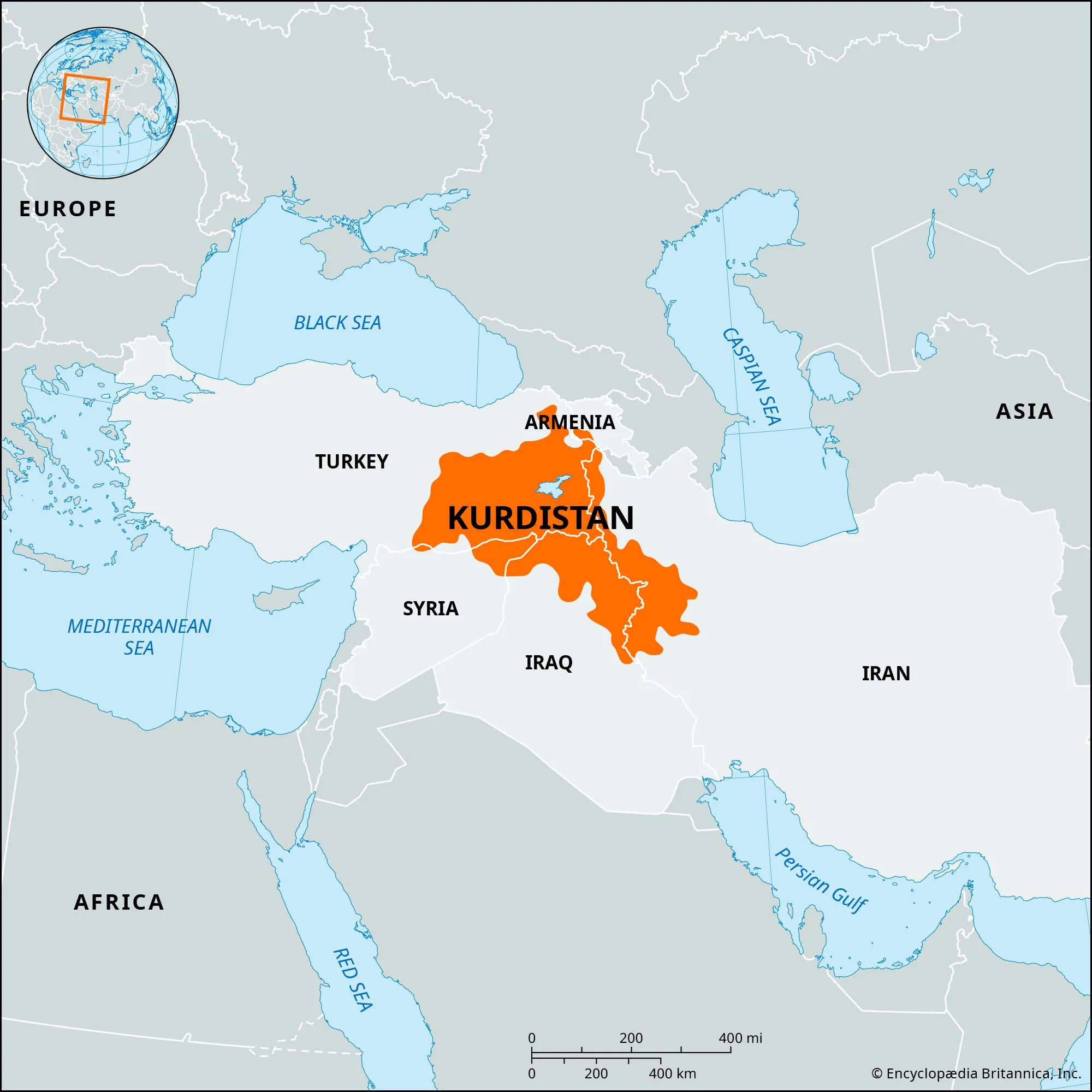
While the media concentrates on the mystery of a celebrity’s mother’s disappearance, some important things are going on with little recognition. I have long advocated for U.S. support of the Kurds, one of the world’s largest ethnic groups without a nation, because of their strategic location:

Long friendly with America, the Kurds were the key to the destruction of ISIS’s Caliphate. They supplied the forces on the ground at great cost, which led to victory. However, our treatment of these friends since then hasn’t been very ally-like. Since the victory, the U.S. has allowed its overlords in Turkey, Iraq, and Syria to inflict damage on it. Recently, the Turkish-backedSyrian Revolutionary government has crushed the Kurds in that country while the U.S. stood by.

Why is this important right now? When protests broke out over Iran’s plummeting currency, our President urged them on, telling them “he had their back,” only to have the protesters mowed down by the thousands. Trump drew his red line, telling Iran’s leader not to crush his own people. The Mulahs ignored him. Now, Trump’s credibility is on the line. To keep his word, regime change seems the only solution.

While we and maybe with the Israelis can pound the Mullah’s forces from the air, Trump knows that committing large American ground forces is a non-starter, repeating the nation-building that Trump lambasted George W. Bush over.

Continue reading

Hans Christian Andrson Told It Right

In my August 1, blog post, I wondered if Donald Trump’s second term was “Topping Out”? The President looked like the King of the Hill. The Stock Market hitting new highs and tariff-induced deals seemed to promise a manufacturing boom that would take us to untold prosperity, or at least that’s what Trump endlessly told us.

The passage of the Great Big Beautiful Bill, which allows businesses to write off capital investments immediately, is expected to contribute to the upcoming boom. Trump trumpeted his imminent settling of the world’s wars. What’s not to like? I warned of shoals ahead. One problem is that Trump has never had Reagan’s widespread appeal:

The cornerstone of Trump’s economic policy is his ability to use tariffs as a bludgeon to extract concessions from the rest of the world and force American businesses to plead their cases on bended knee, some even giving the Government an ownership stake. The world awaited Trump’s next action.

Yet, the majority of the tariffs had already been deemed illegal by two courts. The appeals court has upheld those verdicts, and we’re awaiting the Supreme Court’s final decision after just hearing oral arguments. If the High Court had only wanted to nullify the tariffs imposed under the single subject law, it could have refused to take the case. That action would’ve avoided prolonging the pain while ending most tariffs.

It’s too horrifying to think that the court wants to take the power to tax away from Congress and award it to the President, so it may wish to clarify how narrow the executive power is in this area, defining what actually constitutes an emergency, setting limits as to the time before you have to go to Congress. The bludgeon may become a twig, and Trump’s economic policy, domestic and foreign, evaporates.

While the President has had some success in fostering peace in some places, the two most significant areas of conflict, Israel and Ukraine, have received vastly different responses from Trump.

Both featured an unprovoked attack seeking to destroy these states ultimately. Israel and Ukraine seek to embrace Western values, while Russia and Hamas profess the opposite. Both Ukraine and Israel have waged truly brave and intelligent innovative wars, much to the shock of their enemies. America should know what the right side is to support, given our values.

While Israel has received the utmost Trump administration support, including direct defensive support and the bombing of a common enemy, Iran, the U.S. only provides arms bought and paid for by others and intermittent intelligence to Ukraine. Trump fetes Israel’s Netenyhu, but treats Ukraine’s Zelensky like a pariah.

Given the similarities of the two wars, what accounts for Trump’s differing positions? The administration, and even the special envoys, are mostly the same. The scientific method seeks to isolate and identify a single, distinct factor that explains a phenomenon.

Vice President Vance’s distaste for Ukraine is hardly a secret, given his part in humiliating Zelensky in the Oval Office. His and his supporters’ views dominate the administration of Ukraine policy. The same people are present in discussions of Middle East policy, but with two notable additions: Trump’s daughter, Ivanka, and his son-in-law, Jared Kushner, both Orthodox Jews, have also taken part in this area. During the previous Trump administration, they played a significant role in facilitating the Abraham Accords, arguably one of Trump’s most notable foreign policy achievements.

Continue reading

Minority Positions Won’t Win

We finally bombed Iran’s nuclear facilities. Without opposition, the Israelis and then the U.S. hit the major sites. At this point, we don’t know the extent of the damage. An earlier leaked assessment said it might have only set the program back for a few months, while others have said it had done such damage that Iran will need years to get back on track. Without people on the ground, a definitive answer is impossible, but if and when Israel goes in again, it will tell us what the nation at existential risk has determined.

A decade ago, I proposed bombing Iran’s nuclear facilities. If they revive the program, we should strike back. Living in a real version of the Myth of Sisyphus, the Mullahs would eventually tire of pushing the boulder up the mountain, only to start again. So long as Israel controls the skies over Iran, follow-up attacks will take place as needed. It was a good plan then, and it remains so now.

Stopping religious fanatics from possessing weapons of mass destruction removes a grave threat not only to Israel but also from Iran’s long-range missile development to everyone else on Earth. If we denied North Korea and Pakistan nuclear weapons, we’d all sleep better. Iran is much scarier—every day, it’s death to America and death to Israel, and they mean it.

One might think we’d have a national sigh of relief, knowing Iran isn’t about to have nuclear warheads topping Intercontinental Ballistic Missiles (ICBMs) aimed at us, but some aren’t cheering. Some Democratic leaders alluded to the leaked study.

The information is preliminary and labeled as having low confidence. Yet, the left-leaning legacy media pounced on it and spread it far and wide. Instead of lauding our military for its work, publicizing a possible Trump failure took precedence. Democratic politicians joined in.

This response seems to reinforce the perception of an anti-Israel bias by the left in its conflict with Iran. Support for pro-Hamas, an Iranian ally, and protesters who harassed Jews by the progressive wing of the Democratic Party indicates the left is anti-Semitic.

Continue reading

Trump Can Do Better

Donald Trump often sees problems, but as someone who spends little time on in-depth analysis, he comes up with questionable solutions. One example is his suggestion that Jordan and Egypt take in Gazans to ease reconstruction efforts. The two nations immediately shot down the idea, and it isn’t hard to see why. Jordan already has more Palestinian refugees than native citizens. Returning to “Black September” in 1970, their presence has been problematic. They’re not about to add to a problem they never wanted in the first place.

Egyptian President Abdel Fattah el-Sisi gained his position by disposing of the previous Muslim Brotherhood government. Hamas, which governs the Gazans, is an outgrowth of the Muslim Brotherhood’s Palestinian branch. The last thing he wants is to strengthen the Brotherhood’s numbers in his country.  

Trump should’ve known all this and avoided the negative blowback. Still, the president isn’t wrong to wonder, as a builder himself, how you can build a viable Gaza in place of the existing rubble when overrun with 2,000,000 displaced people in just 141 square miles. Gaza was overpopulated and under-employed before the war. Now, the situation is infinitely worse.

Considering Gaza’s makeup, I offered my “Solution for Gaza” posts. Rather than a full-scale invasion, designate areas to be leveled by explosives, inform everyone to leave, then blow them up. Working towards the sea and away from the Israeli border, food and other supplies are landed on the shore by ship. The ships are then required to take women, children, and infirm to safety in accepting countries. If the Arab world and other countries are concerned about these Palestinians, let them show it. International aid now supporting the Gazans would follow them, so there was little if any, increase in cost.

People were horrified, claiming it would level and depopulate Gaza. Looking at things now, with Gaza a pile of rubble and the number of women and children killed, the plan seems a lot better than what has happened.

I never thought the destruction and shipping of refugees would go on for very long before Hamas would give in. Faced with a slow but relentless low-cost action, Hamas couldn’t wait for the last Gazan civilian shipped out of a leveled Gaza. Pressure from other Arab countries faced with accepting Palestinian refugees would leave Hamas little choice.

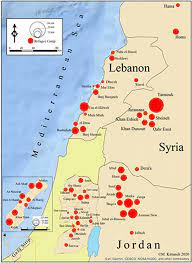
Even though the situation is different now, with Gaza destroyed, few Gazans have left. We have to understand why there were so many Gazans. In 1948, 7000,000 Arabs fled the new nation of Israel, mainly at the urging of the Grand Mufti of Jerusalem. The U.N. established the United Nations Relief and Works Agency for Palestine Refugees in the Near East (UNWRA) 1949 to aid them. The agency set up numerous camps ringing Israel:

Why did the U.N. feel it was necessary to create a new refugee agency when the International Refugee Organization (IRO) had existed since World War II and was doing great work in resettlement? This group evolved into the Office of the United Nations High Commissioner for Refugees (UNHCR), the primary vehicle for caring for and resettling refugees worldwide. It has accomplished the resettlement of tens of thousands of refugees annually.

Continue reading