Minority Positions Won’t Win

We finally bombed Iran’s nuclear facilities. Without opposition, the Israelis and then the U.S. hit the major sites. At this point, we don’t know the extent of the damage. An earlier leaked assessment said it might have only set the program back for a few months, while others have said it had done such damage that Iran will need years to get back on track. Without people on the ground, a definitive answer is impossible, but if and when Israel goes in again, it will tell us what the nation at existential risk has determined.

A decade ago, I proposed bombing Iran’s nuclear facilities. If they revive the program, we should strike back. Living in a real version of the Myth of Sisyphus, the Mullahs would eventually tire of pushing the boulder up the mountain, only to start again. So long as Israel controls the skies over Iran, follow-up attacks will take place as needed. It was a good plan then, and it remains so now.

Stopping religious fanatics from possessing weapons of mass destruction removes a grave threat not only to Israel but also from Iran’s long-range missile development to everyone else on Earth. If we denied North Korea and Pakistan nuclear weapons, we’d all sleep better. Iran is much scarier—every day, it’s death to America and death to Israel, and they mean it.

One might think we’d have a national sigh of relief, knowing Iran isn’t about to have nuclear warheads topping Intercontinental Ballistic Missiles (ICBMs) aimed at us, but some aren’t cheering. Some Democratic leaders alluded to the leaked study.

The information is preliminary and labeled as having low confidence. Yet, the left-leaning legacy media pounced on it and spread it far and wide. Instead of lauding our military for its work, publicizing a possible Trump failure took precedence. Democratic politicians joined in.

This response seems to reinforce the perception of an anti-Israel bias by the left in its conflict with Iran. Support for pro-Hamas, an Iranian ally, and protesters who harassed Jews by the progressive wing of the Democratic Party indicates the left is anti-Semitic.

Continue reading

There Is A Great Deal of Ruin In A Nation

Adam Smith argued, “There is a Great Deal of Ruin in a Nation,” acknowledging that our political leaders must do a lot of bungling to bring down a powerful and prosperous country. Given the administrations we’ve had since the turn of the century, I wonder if we are about to find out just how much ruin we can take before the fall.

Rather than following his father’s example, George W. Bush invaded and conquered Iraq. After crushing Iraq’s military in Kuwait, George H.W. Bush refused to invade that nation to get rid of Saddam Hussain. The elder Bush realized this would upset the balance of power in the Mideast. Getting rid of one bloodthirsty leader would only empower the murderous mullahs in Iran at a significant cost to us. The younger Bush went ahead anyway with dire results.

Saddam Hussein had nothing to do with 9/11, so why focus our efforts on him? Afghanistan harbored the organization carrying out the attacks, which needed our attention so it wouldn’t happen again.

On the domestic front, the younger Bush administration was asleep at the switch while the housing crisis brought us the “Great Recession.” Others warned that the combination of cheap money and sub-par lending is combustible, but the powers ignored the signs.

Continue reading

Trump vs. Trump?

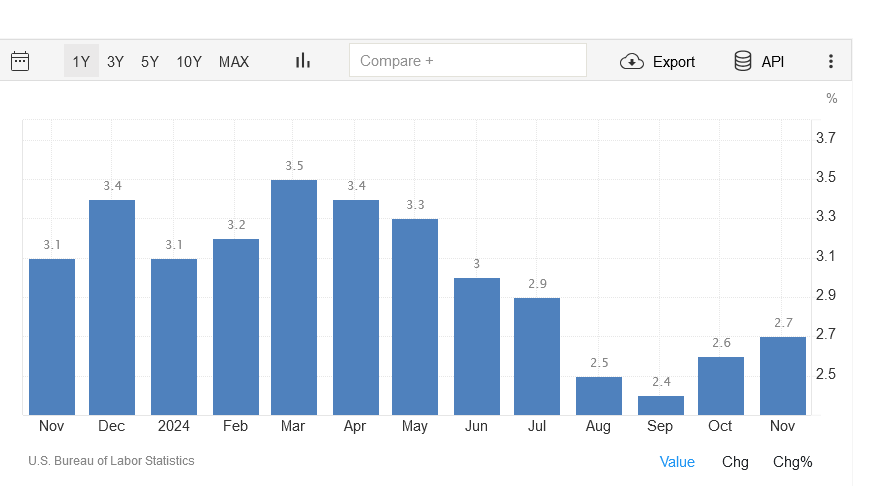
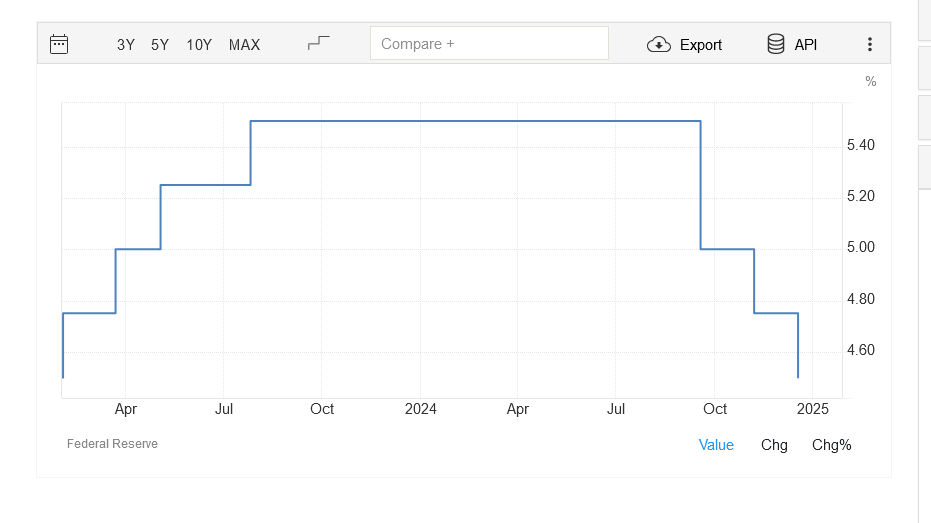
Recent events have added credibility to some of my posts. Not long ago, I cautioned that the Federal Reserve’s (Fed) series of interest rate cuts might be at odds with the actual inflation outlook. The Biden spending spree adds to our high national debt, while the Social Security (S.S.) Trust Fund runs dry at best in ten years, with both parties adding to the program woes. Medicare may be in even worse shape.

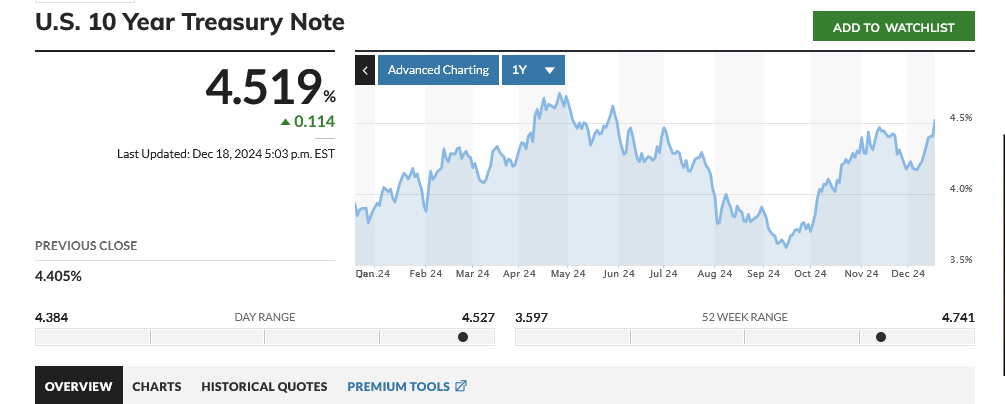
Biden’s proposals will increase S.S. payouts to government retirees, and with Trump’s plan not to tax any S.S. income, retiree checks could face cuts even sooner. Maintaining the current level of payments will mean even more government borrowing. Already expected to lend trillions more, bond buyers must absorb more extensive offerings in the future. In the face of increasing interest rate risk, they’ll want more upfront.

The first chart is the inflation rate, showing it is still above the 2 % target:

This chart shows the Fed’s interest rate cuts:

While the U.S. 10yr Bond interest rate returned to near its highs:

Mortgage rates stay high:

This week, the Fed cut short-term rates another quarter point but said it would probably cut two times next year instead of the signaled four. The Dow dropped over 1,100 points. Confusion is the only explanation.

Continue reading