Where Has Competence Gone

Years of heavier-than-usual rains, followed by dry and hot weather, left vast fuel for fires. Winter brings the dangerous and unpredictable Santa Ana winds. Thank goodness California Governor Gavin Newsome had the foresight to call an emergency legislative session to fund preparations to handle the threatening situation.

Realizing what could be coming to vulnerable areas, successful governors get out in front and ensure everything is ready and working. Even though Florida suffered from severe hurricanes, Governor Ron DeSantis and his crew minimized problems and returned things to normal quickly.

Florida set the standard of preparedness for California to follow, and with overwhelming Democratic majorities, getting the needed funds and authorizations to be ready to meet the dangers presented no problem for Governor Newsome.

Oh, wait a minute. , the emergency legislative session wasn’t to prepare for a severe fire season; it was to appropriate funds to thwart Trump from expelling illegal aliens from California. The danger Newsome foresaw wasn’t from out-of-control wildfires; it was the federal Government initially deporting the illegal alien criminal element.

The result of this lack of preparation is likely to be the worst wildfire disaster in history. Fire hydrants without water are incompressible, as is a key reservoir without any water. Does this sound like preparation?

This absence of competence isn’t due to Californians not being taxed enough to measure up. They pay a lot more than Floridians. So why does Florida do so much better in crisis? The Sunshine State may spend more wisely.

It isn’t global warming. Both states are equally affected—after all, it’s one planet. No state has invested more and taken more action in combating Global warming than California. Of course, all of it has had zero effect. The truth is that nothing California or even the United States can do will change the direction of global temperatures. It could be a simple difference in competence.

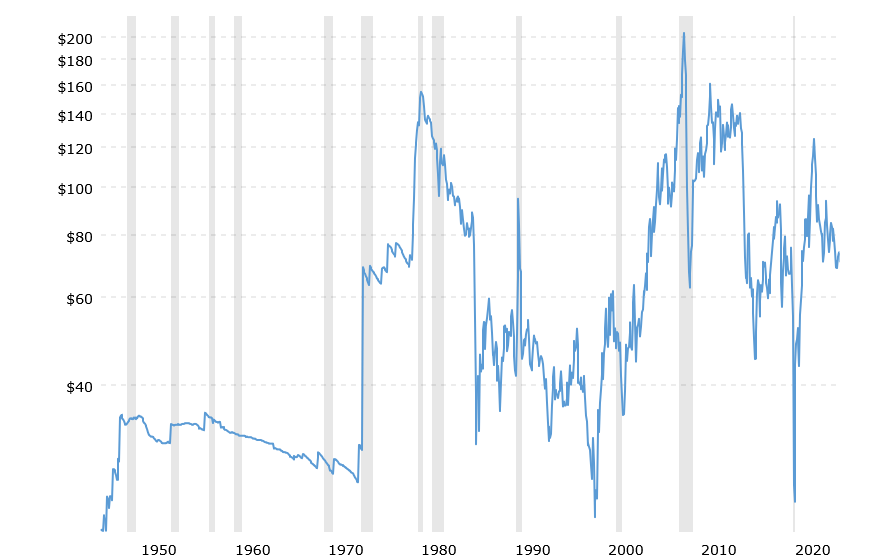
Yes, I’ve shown this chart before, but it bears watching:

While the Federal Reserve has been lowering rates, longer rates are approaching levels reached when inflation was 9%. What is it the market sees the Fed is ignoring? Could higher inflation be in our future? Could the brilliant minds at that institution be missing the signals again? Remember, a few years ago, they told us not to worry; the price rise was transitory.

Continue reading

’24’s Leftover Mysteries

As we enter 2025, some ’24 mysteries remain unresolved. Donald Trump ran his successful campaign with a variety of seemingly contradictory positions. I was reminded of these when the Cafe Hayek blog pointed to economist Mark Perry’s illustration:

This contradiction made me think of other Trump contradictions. Peace and safety while withdrawing our troops from the Middle East. Without our support, the Kurds overseeing tens of thousands of ISSIS followers may face an attack by Turkish forces, rendering them unable to prevent a resurgence of the deadly group. Remember, Turkish leader Erdogan has territorial ambitions of his own. This possibility doesn’t sound peaceful to me.

We all know that politicians make all sorts of claims that step on each other, but now it’s time to introduce legislation, and conflicts remain unresolved. The idea is to write one or two big reconciliation bills containing the whole Trump program.

Inflation is a paramount issue that accounts for Trump’s victory, yet many of the president-elect’s promises are likely to raise prices. Besides tariffs that, like sales taxes, increase what you’re paying, lower taxes for favored groups, such as those working for tips or retirees, will likely result in higher interest rates or printing money. As I’ve pointed out, either will raise prices.

Unquestionably, the Biden Administration’s wild spending on the Green New Deal, infrastructure, and chips led to the highest inflation in forty years, but will Trump attempt to repeal all of this legislation? Taken together, these acts are an enormous industrial policy. Repeal all since state-directed economies have no record of success.

The question is whether Trump will tackle the problems wholeheartedly or simply piecemeal. The latter will be conflict on conflict. For instance, will Trump’s buddy, Elon Musk, stand still for eliminating his electric vehicle incentives and green tax credit sales? Will members of Congress allow the scrapping of big projects scheduled for their districts? Many businesses have sunk big money based on the Biden-era legislation. Can they continue without the promised subsidies and credits, or must they swallow significant losses on sunk costs? Even major oil companies put big bucks into green projects.

Continue reading

Donald the Great?

Having already written about some things to look for in the New Year, I’d like to take a new approach. Donald Trump’s talk about making Canafda the 51st state, buying Greenland, and repossessing the Panama Canal caused me to think of how leaders who see themselves as bigger than life seem focused on the past rather than charting a future that benefits those they lead.

Our major adversaries, Russia, Iran, and China, are centered on recreating old empires. Turkey may be poised to join this group. Putin in Russia regrets the loss of the Empire, created through centuries of Russian expansion culminating in the vast Soviet Empire, which collapsed under Cold War pressure. Setting up stooges in some adjoining territories and continuing to attack Ukraine, the Russian strongman is expending blood and treasure on a grand scale to reestablish the Empire.

The Histories of Empires from the Persian through the Sasanian, centered in Iran, fuel the Mullahs’ desire to widen their reach across the Middle East. They may, as Shites, even see themselves as rightful ones to bring back the Moslem Empire of the early caliphs.

No nation has a more extended History of Empire than China, going at least back to the Shang Dynasty (221 B.C.). Before the communists, the Ming Dynasty (1368 to 1644) was the last to attempt expansion, sending fleets and armies to gain control of both the land and maritime Silk Roads. However, reversals such as the Tummu crisis caused China to look inward. While Chinese fleets reached the east coast of Africa in the 15th century, they never rounded the Cape of Good Hope. Later in the century, the Portuguese did, and the direction of the history of the world changed. I covered this outcome in my “The 15th Century Came and nothing would ever be the same” post in “The Long Journey to More” series.

Xi Jinping seems intent on succeeding where the Ming Dynasty failed. His Belt & Road Initiative intends to recreate the land and maritime Silk Roads under Chinese control.

Continue reading

Trump vs. Trump?

Recent events have added credibility to some of my posts. Not long ago, I cautioned that the Federal Reserve’s (Fed) series of interest rate cuts might be at odds with the actual inflation outlook. The Biden spending spree adds to our high national debt, while the Social Security (S.S.) Trust Fund runs dry at best in ten years, with both parties adding to the program woes. Medicare may be in even worse shape.

Biden’s proposals will increase S.S. payouts to government retirees, and with Trump’s plan not to tax any S.S. income, retiree checks could face cuts even sooner. Maintaining the current level of payments will mean even more government borrowing. Already expected to lend trillions more, bond buyers must absorb more extensive offerings in the future. In the face of increasing interest rate risk, they’ll want more upfront.

The first chart is the inflation rate, showing it is still above the 2 % target:

This chart shows the Fed’s interest rate cuts:

While the U.S. 10yr Bond interest rate returned to near its highs:

Mortgage rates stay high:

This week, the Fed cut short-term rates another quarter point but said it would probably cut two times next year instead of the signaled four. The Dow dropped over 1,100 points. Confusion is the only explanation.

Continue reading

Is Trump Looking for The Union Label?

Trump’s choice of Oregon’s U.S. Rep. Lori Chavez-DeRemer as labor secretary got me thinking about organized Labor. The prospective Secretary voted for the highly favorable organized Labor PRO Act. This wide-ranging labor law would rein in the so-called gig economy and boost workers’ organizing rights. Along with Donald Trump inviting the Teamster union’s president to speak at the Republican convention, you have a picture of a party looking to wear the “union label.”

This turn of events made me wonder if unions are a force for good or politized entities that do more harm than good. I grew up in organized Labor’s heyday, the 1940s and ’50s, when 1 in 3 belonged. Unions enjoyed their highest favorability. One not so happy with organized Labor was my father, a part owner in a Chicago manufacturing company; he had to deal with wage demands, work rules, and strikes in his industry and those in the supply chain.

A successful furniture company listed on the American Stock Exchange was in an industry that had it with unions and moving to “right-to-work” states. My father felt the company should follow and head south, but his partners refused. Fearing the worst, he sold out his shares and comfortably retired. A decade later, the company was bankrupt. It could not compete against lower labor costs and looser work rules that allowed automation.

The migration from the unionized north had already been underway long before China opened up, so they’re not to blame. Once the class of the world, our most heavily unionized industries lost out. We used to think of U.S. steel and General Motors the way we think of Apple and Microsoft today. The government baled out G.M. and U.S. Steel for sale, maybe to a Japanese company.

Continue reading