President Trump has loudly demanded ownership of Greenland as a matter of crucial national defence. Highlighting Greenland’s role in Arctic trade routes and national defense, he drew a dire picture.
Our U.N. ambassador, Mike Waltz, made the administration’s case on several TV shows by claiming that, in the event of problems in the Arctic, the Island doesn’t even have an icebreaker—no wonder they need us.
To understand the situation, we need to know why the Arctic is becoming so important. This map should help:
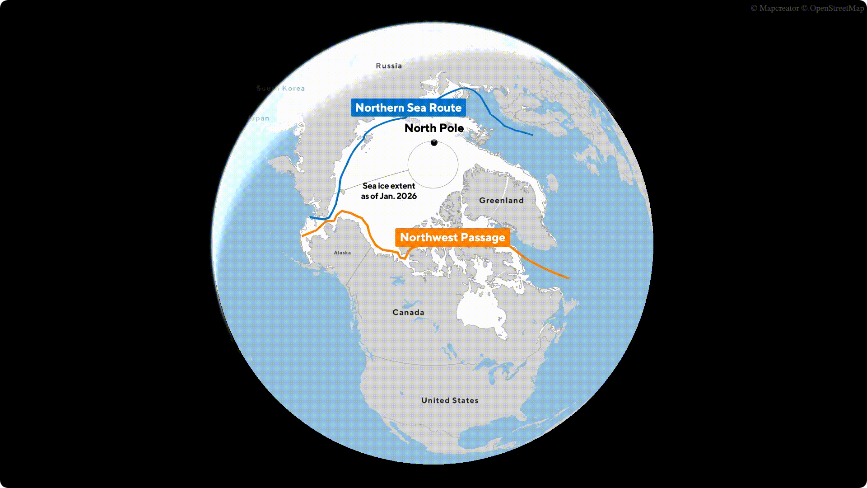
With warming temperatures, two significant new trade routes are emerging. The Northern Sea Route, which mainly runs through Russian waters, and the Northwest Passage, which runs by Greenland, Canada, and the U.S. (Alaska). As I pointed out in my post, “What’s Trump Thinking,” The Former is of the utmost importance to China. A shorter route to Europe, accessible to Russian resources, is the future. That’s why China isn’t about to allow Russia to change alliances without a painful response.
The search for a Northwest Passage dates back centuries, driven by obvious commercial advantages. Now it’s happening. As with any critical trade route, it needs protection. It’s still the Arctic, so commercial and military vessels will need icebreaker support. As NATO allies, Denmark, Canada, and the U.S. should have no problem establishing bases and patrols as required.
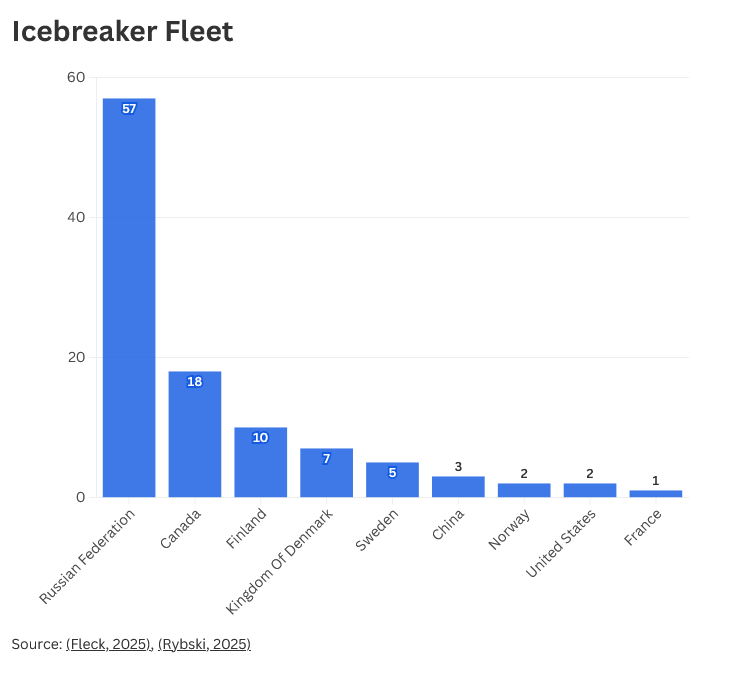
Of course, Ambassador Waltz is correct in highlighting the need for Icebreakers. Still, you can’t look to the U.S. We have two or three ancient icebreakers that may or may not be available in a time of need. We’ve ordered a couple from Finland, hopefully for delivery in 2028. Presently, the Northwest Passage depends on Canada’s 18 capable ships, with even more modern ones on the way. With the increasing importance of icebreakers, note that Denmark has more than the U.S.:
With the safety of the Northwest Passage more dependent on Canada than the U.S., let’s look at Trump’s other military arguments for U.S. ownership of Greenland. We need the Island for the Golden Dome defence system, but that’s just an upgrade to the North American Aerospace Defense Command (NORAD), which includes bases across the frozen north of the U.S., Canada, and Greenland.
Continue reading Detour on the Road