The Washington Post reports that President Trump is considering attending the Supreme Court’s oral arguments in the tariff cases scheduled for November 5. It’s hard to see this threat as anything other than an attempt at intimidation. No president ever did this. Something about this executive branch’s effort to menace another branch made me think of another leader’s actions along these lines against another coequal branch of government.
At loggerheads with Parliament over its refusal to fund his endeavors, Charles I of the U.K. raised money through forced loans in defiance of that body and even threatened it. He entered Parliament with soldiers in an attempt to arrest some members. The idea was to wrest the Power of the purse — Parliament’s basic Power — from that body. The result was the English Civil War, where Parliament prevailed. Charles didn’t fare so well:
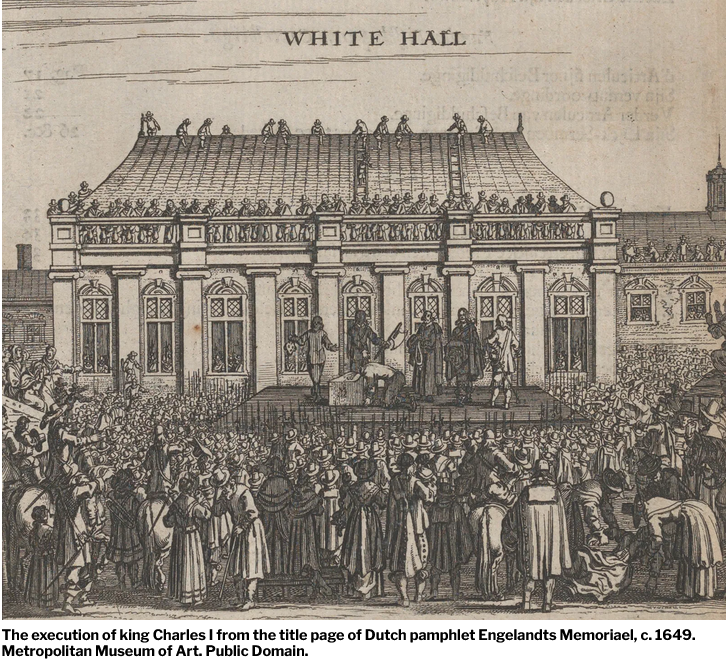
With the Power of the purse firmly embedded in the legislative branch, the principle migrated to the English colonies, where the Crown appointed the Governors. Still, the colonists elected the legislature that controlled funding. It’s no surprise that the legislative Power of the purse appears in the very first article of our Constitution.
Trump vs. V.O.S Selections —the official case name —is the most important separation-of-powers case since Truman seized the steel mills. To my mind, Trump’s tariffs are so expansive that they dwarf Truman’s action. Suppose a President can proclaim an emergency, which he can solely define, and usurp a revenue source expressly delegated to the legislative branch. In that case, the executive can neuter that branch and destroy our foundational system of checks and balances.
Continue reading Detour on the Road