We’ve ceased our offense against Iran, while the same Regime controls the vital Strait of Hormuz. Our Gulf allies are increasingly at the mercy of this ruthless gang. Israel is off bombing Hezbollah in Lebanon, trying to salvage something from this fiasco. Our other allies in Europe and Asia wonder why they’re suffering from this mess when nobody asked them. Yet the Trump administration expects them to clean it up.
How did the most powerful nation on earth end up behind the eight-ball? By breaking every rule for success. Presumably, we had an objective. We had already bombed Iran’s nuclear facilities, putting that program back, maybe for years. We controlled the skies over that nation. Having already mowed their capabilities, there is no need to mow again now.
\What was present was an Iran in dire straits. Sanctions, mismanagement of water resources, and the economy had sparked mass protests. The vast majority of Iranians demanded change. Other than those directly benefiting from the Regime, support evaporated. The Mullahs had never been in a weaker position. What was here was the chance to free the people to form a government that didn’t threaten their neighbors.
The Trump administration took notice. The President told the Iranian protesters we had their back. No question what our goal was, toppling the Regime. We started sending our forces to the area. The head Mullah and many of the key players in his government were killed from the air.
In the meantime, the Iranian government slaughtered in excess of 40,000 protesters. The streets went quiet. This result shouldn’t surprise anyone. We’ve seen this movie many times before. Ruthless dictatorial governments use their monopoly of weapons to trounce unarmed protestors. No matter how bad the government is, it stays in power because nobody can shoot back. Cubans have lived at the subsistence level for decades. Does it even have an economy? Still, the communists persist.
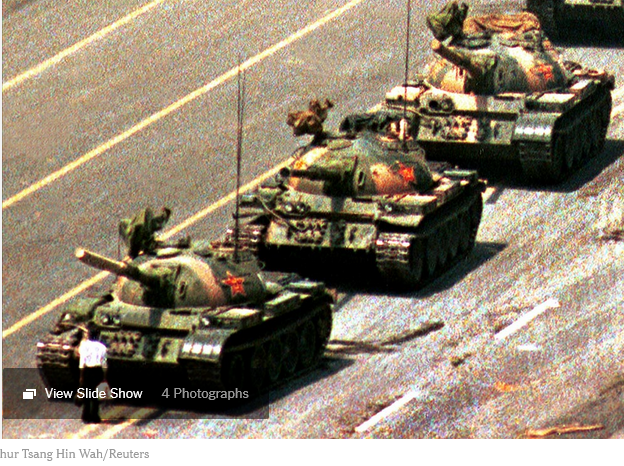
Oil-rich Venezuela has followed the same path. When faced with losing power, there is no limit to the pain the absolute rulers will inflict on their defenseless citizenry. The picture of an unarmed Tiananmen Square protester standing in front of massive tanks illustrates the imbalance.
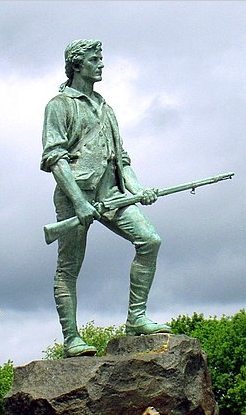
The only successful revolutions in history took place where armed people existed from the start, or military units refused to fire on the people, and changed sides. Imagine how poorly our forefathers would’ve fared if only the redcoats had arms. Instead, we turned them back at Lexington and Concord. To have a “shot heard round the world, ” you have to have a gun. The minutemen had guns and knew how to use them. The rest is history.
Other revolutions, such as the French and Russian, saw military units refuse to fire on the people and turn against their rulers. No matter how great the air superiority, only armed resistance on the ground can drive out the despots.
Given this situation, one would have to assume our attack on Iran featured a way to have someone able to shoot the bad guys on the ground. Either restive people bordering friendly areas, allowing well-armed rebels to cross into Iran to establish air-supported safe havens, or you’ve turned significant numbers of Iranian soldiers and their commanders to accomplish the same goal. Maybe a combination of the two.
Because the Iranian Kurds bordered the autonomous Kurdish area in Iraq that already harbored Iranian Kurdish resistance groups, and we have bases there, this looked like a logical place to start. Adjoining the aggrieved Azerbaijani-Iranian areas bordering the independent, Israel-friendly state of Azerbaijan, the revolt could quickly control the Iranian Northwest, home to more than a quarter of the population.
As I pointed out in a recent post, this move would put the current Regime in a dilemma. Does it send its most loyal troops to try to crush the revolt in the face of withering air power, or hold them back to protect its power centers, allowing the revolt to grow, organize, arm, and train, spread, and ultimately overwhelm?
Alas, Trump dissed the Kurds, letting them know we didn’t need or want them, so that wasn’t part of the plan. Distrust of Trump plays a role in the Kurds’ reluctance to help. That leaves a significant part of the Iranian military turning and joining the revolt. Some provinces suddenly come under rebel control, prompting people there to rally, arm, and spread the revolt—a great move by the CIA, Mossad, or both. Unfortunately, there’s no sign of that either.
There are some reports about a Mossad claim that it could bring about an Iranian uprising, being part of the decision to go to war, but if so, why is there no sign of any attempt? As history has shown, if there’s nobody on the ground to shoot the bad guys, there’s no way to win.
How could supposedly competent people go to war with no plan to succeed? Why court a failure that promised to upend our friends, allies, and world trade?
Like any enemy, Iran has cards to play. The Regime has two obvious ones. The Straits of Hormuz, and lots of drones. Knowing this, a competent military would have countermeasures at the ready.
The present isn’t the only time Iran has threatened commerce through the Strait of Hormuz. When it happened in the 1980s, President Reagan intervened militarily and kept it open.
Iran has been supplying drones to Russia to use in Ukraine for years, so there is no mystery about drone warfare, and the likelihood Iran would use it big time. We even reverse-engineered an Iranian drone to replicate it for our use. Surely we knew drones were a problem. Yet drones have greatly added to Iran’s ability to control the Strait and attack our friends and us.
Ukraine has become an expert in both using and defending against drones. Even some of our Gulf allies have turned to that nation for help, but Trump said we didn’t need any help from President Zelensky and Ukraine.
The result is that instead of masses of U.S. drones over the Strait and the adjoining Iranian areas, looking for, and destroying enemy drones, rocket launchers, and minelaying boats, the Strait remains under Iran’s control. We didn’t even have minesweepers ready to clear a passage.
There you have the structure of defeat. No clear objective. Even if we did, no strategy to achieve it. Inability to counter the enemy’s likely actions and strategy. The result has, in a matter of weeks, given Iran the upper hand and a likely victory. If Trum,p declares victory and goes home, he will serve our nation a Taco with a supersized side of humiliation.
There are those saying we should never have taken action against Iran at present, or any time. I disagree. The ruling Regime in Iran has never been weaker. Eliminating these thugs could only improve prospects in the Middle East and the world. Surely, the Iranian people’s ability to reach their potential is a worthy endeavor. Iran has been dealing us pain since this Regime took power, and will continue to endanger us unless removed.
On the other hand, I’m against restarting the war, unless we have a clear objective that promises a real victory, a strategy to achieve it, and countermeasures to Iranian control of the Strait and their drones. These actions may require bringing in new people who have some idea how to wage war, and the President listens to them.
Without some way to organize, arm, and train Iranian rebels to overthrow the Regime, victory isn’t a realistic expectation. This route will take time, but that only means we should’ve started earlier. It’s never too late to do the right thing. These Tyrants and their supporters will do anything to stay in power, and can never be trusted. Only by convincing those in the present Regime that they won’t survive unless they flee can we win. Until that happens, we’re the ones on the “horns of the dilemma.”
 Detour on the Road