With the Strait of Hormuz under the control of the Iranian Regime, and Rockets and drones raining down on our friends, without a visible objective or strategy on our part, I’ve said all I can. I lost track of where the Trump administration wanted to go with its attack when it ruled out cooperation with the Kurds. Others had a similar response.
Wall Street Journal columnist Holman Jenkins Jr, a member of that paper’s editorial board, put it this way: “The moment that gave me pause was when the administration backed away from unleashing Iran’s Kurdish rebels. Yes, if U.S. goals were limited, a certain delicacy was appropriate here. But if the U.S. means to impose maximal stress on Iran’s ruling group, if the goal is to push the Regime to the wall, then throw everything at it, including the Kurds—at least everything short of a presumably unacceptable U.S. ground invasion.”
Why not? Not only could the Kurds provide an area for the Iranian opposition to gather, arm, train, and organize, but it would also give Iran’s Azerbaijanis (AZERIAS), to the north and east of the Kurdish areas, freedom from a regime repressing them. Bordering Azerbaijan, where their ethnic brothers and sisters reside, it would allow that nation to support their brethren. Azerbaijan is friendly with Israel, and is now being attacked with drones from Iran. Together, the Kurds and Azerbaijanis constitute over 25% of Iran’s present population. A good start to any revolt.
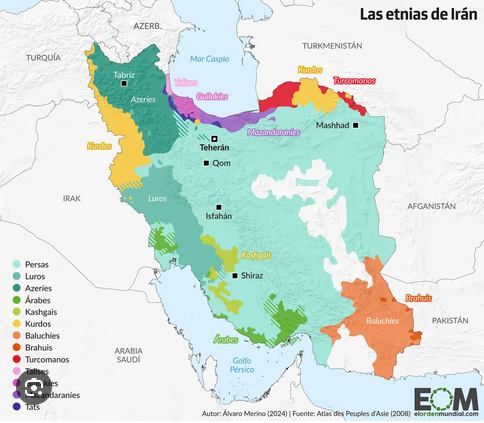
As I’ve said, maybe our administration, the Israelis, or both have something great up their sleeves. Given Trump’s performance on tariffs, confused aims are understandable, but this muddle is uncharacteristic of Israel. Maybe there is a winning master plan proving me happily foolish, but for now, I have to move on to something else for my mental health.
The administration has been proposing some interesting ideas to improve Americans’ future prospects. Certain newborns receive $1,000 seed money, 401(k)s, and Health savings accounts for anyone not covered, all of which allow savings to grow tax-free. No one favors encouraging capitalism for all or medical plans based on solid principles more than I do, but do we need more tax-sheltered accounts?
I asked Google AI how many we already have, and it said 13. I didn’t know of some of these, and I was a financial advisor. How does everyone know what’s available, or the best way to use them if you qualify? If you do take advantage of them, how do you keep them all straight?
I started this blog when, in response to my pontificating on healthcare policy, mainly Obamacare, my step-daughter challenged me to put my ideas out there on a blog. In other words, put up or shut up.
Detour on the Road was born, and its first policy recommendation was Dave’s Plan (Available here). The Plan’s premise was to combine tax-advantaged savings and medical plans into a single, universal, individual, and portable Personal Benefits Account (PBA) for everyone. Come up with a percentage of income, combining the allowable deductions of all available plans in one savings account. The first thing everyone purchases in the Plan is a catastrophic medical policy.
You pay allowable medical, including the deductible and educational expenses, out of the savings account with your associated credit card. If this sounds something like a jumbo Health Savings Account, you wouldn’t be far off, only it’s better.
Using a larger, growing savings account with an associated credit card virtually eliminates credit risk and the vast majority of third-party paperwork. Right away, we make a major dent in our bloated healthcare costs, which outpace costs anywhere in the world.
Allowing individuals to pick and choose, providers can compete on price and service. Competition drives innovation, lowering prices while improving service.
Because you own the Plan, it’s completely portable. You’re no longer dependent on your employer for basic benefits. You can move to a better situation without fear of losing coverage. You have greater leverage at work, and smaller companies can compete more effectively with big business for your services.
Well, if Dave’s Plan is so good, why hasn’t someone done something similar? Singapore, for one, has. Everyone has a catastrophic policy but pays the smaller stuff out of pocket. Universal care at a reasonable price.
There are some differences. While Singapore has mandatory savings, it’s not tied to healthcare. Dave’s Plan is superior because it allows credit card payments to be made directly from the account. However, the basic principles underlying both plans are the same.
Dave’s Plan reflects my philosophy of government. It provides a framework for people to freely interact with one another. Being free to choose is key.
The government has no business favoring anyone or any group over others. Giving 1,000 dollars to a group of newborns chosen by the government may be great for them, but not for those excluded, yet they still pay towards it.
No tax on tips helps some, but not those working maybe at the same establishment on a salary. Some on social security don’t pay taxes on it, but others do.
As Weiying Zhang informed us in “The Logic of Markets.” people interact with each other to mutual benefit. You order something from Amazon, and it arrives at your door shortly. You and Amazon benefit. Someone sticks a gun in your face and takes your valuables is theft. Only the thief benefits.
California takes your tax money to build a railroad, but never completes it; it’s theft. Government employees and their cronies get paid, but taxpayers keep paying. The government is seeding some newborns’ accounts but not others, which is unfair to those excluded.
However, if Michael Dell or the baby’s grandparents want to contribute, it’s their money, and if it gratifies them to donate, more power to you. Everyone benefits.
Even though War is bound to dominate our thoughts, we can’t ignore our other problems. Having a set of principles can help us navigate the fog to workable policies.
 Detour on the Road