While the media concentrates on the mystery of a celebrity’s mother’s disappearance, some important things are going on with little recognition. I have long advocated for U.S. support of the Kurds, one of the world’s largest ethnic groups without a nation, because of their strategic location:
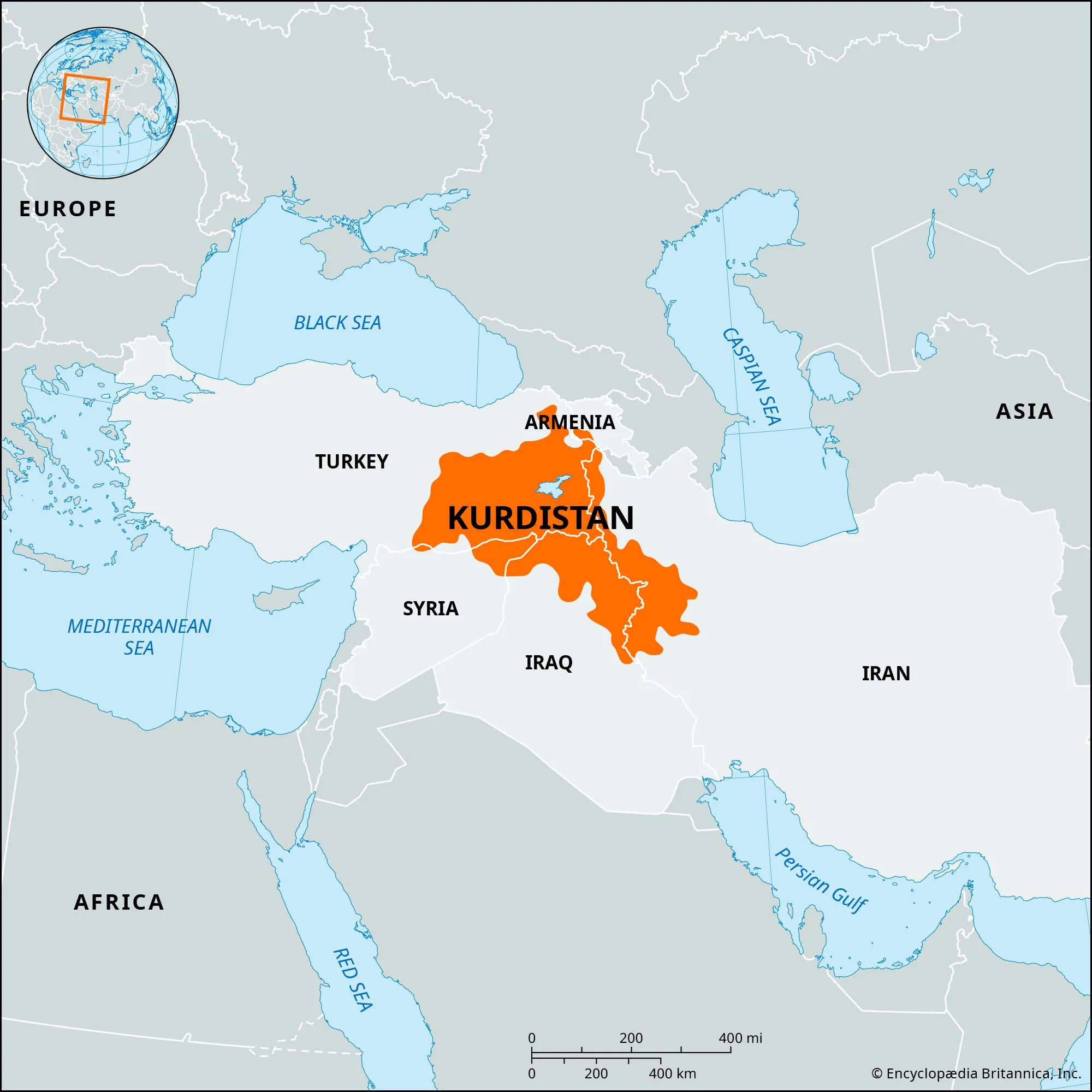
Long friendly with America, the Kurds were the key to the destruction of ISIS’s Caliphate. They supplied the forces on the ground at great cost, which led to victory. However, our treatment of these friends since then hasn’t been very ally-like. Since the victory, the U.S. has allowed its overlords in Turkey, Iraq, and Syria to inflict damage on it. Recently, the Turkish-backedSyrian Revolutionary government has crushed the Kurds in that country while the U.S. stood by.
Why is this important right now? When protests broke out over Iran’s plummeting currency, our President urged them on, telling them “he had their back,” only to have the protesters mowed down by the thousands. Trump drew his red line, telling Iran’s leader not to crush his own people. The Mulahs ignored him. Now, Trump’s credibility is on the line. To keep his word, regime change seems the only solution.
While we and maybe with the Israelis can pound the Mullah’s forces from the air, Trump knows that committing large American ground forces is a non-starter, repeating the nation-building that Trump lambasted George W. Bush over.
Yet only forces on the ground can take control of Iran. Ideally, young Iranians who wish for a better life will fill the ranks. The problem is that they have no arms or a safe place to train. The Kurds in Northwest Iran are already upset over one of their young women being killed by the government for not properly wearing a hijab, while suffering the same economic woes as the rest of the country.
If we had, as I suggested, a close relationship with the Kurds in Iraq and given them proper military support, they could give assistance to their brethren in Iran, leading to the ouster of the Iranian military from some, if not all, of the Kurdish areas, providing a place to arm and train the young Iranian revolutionaries.
The Mullahs would have no choice but to try to crush the Kurds before streams of armed and trained young warriors spread out from the Northwest to the rest of the country. Their best and most loyal troops would be needed, drawing them away from hotbeds of revolt.
On the move towards the Kurdish areas, they’d be vulnerable to air attack from planes and drones. On the horns of the dilemma, one could see support for the present government melt away, paving the way for regime change.
Unfortunately, calls for Kurdish help may fall on deaf ears. Joint efforts between the U.S. and the Kurds haven’t gone well for the Kurds. Even before the cruel reversals in Syria, collaborations with America ended up with the Kurds on the short end. They were primarily responsible for destroying the ISIS Caliphate on the ground. Still, then President Donald Trump took all the glory for himself, and paid back these erstwhile allies by leaving them open to attack by Turkey and the Iraqi government.
With this history, it’s hard to imagine the Kurds playing Charlie Brown to Trump holding the football. Iran’s government, realizing the threat from the Kurdish areas, could offer them autonomy in return for their neutrality. A proposal along this line is more attractive than trusting the unreliable Americans, especially with Trump in charge. The Kurds are probably tired of being sacrificed for our benefit.
It’s hard to see how Iranian regime change comes about without active Kurdish participation, leaving a negotiated deal with the Mullahs remaining in charge, Obama 2.0, as the only option. Given the regime’s history of cheating, all those lives lost, and the jailed heroes will have been for naught.
In life, one of the greatest assets you can possess is trust. Every day we trust Amazon to deliver, our doctors to do their best to cure, and on and on. Being seen as reliable and trustworthy allows us to transact freely with others, to our mutual benefit. Once lost, there is the devil to pay to regain it.
While the U.S. has wavered in the past, such as Obama’s red line in Syria over chemical warfare on its own people, for the most part, we’ve been seen as a reliable ally, friend, and neighbor, at least up until now. Our dilemma with the Kurds in Iran is only the tip of the iceberg of our international loss of trust under Donald Trump.
We’re now hard-pressed to name a nation that considers us a friend they can trust. Our closest neighbor, Canada, detests us. Here in Arizona, we miss our annual influx of Canadian snowbeards, but we realize why so many aren’t coming. Does anyone think Mexico considers us a friend? Mexican naval vessels just delivered aid to Cuba. In Latin America, Trump can only point to Argentina under Javier Milei as a good friend. Still, this President is a libertarian free trader whose policies will ultimately conflict with Trump’s tariff walls.
Our actions over Greenland and Ukraine have poisoned our relations with Europe. Needed allies in the Pacific region found that tariffs were raised even when they had agreements with us.
The only ones we hear Trump referring to as his good friends are the autocrats in charge of Russia, China, North Korea, Turkey, Hungary, and Saudi Arabia. Who thinks any of these as a friend of the U.S.A? Saudi Arabia told us to stay out of their airspace in any action against Iran. Some friend.
I fear that the Kurds won’t be the only ones to pass when the U.S. needs a friend. To have friends, you have to be one. Under Trump, at best, we have flatterers and rent seekers. As we all know, life is lonely without friends. It’s also a lot more difficult.
 Detour on the Road