Watching both Bill Maher and Michael Smercondesh bemoaning the rise of Marxism in the Democratic Party this week caught my attention. The high visibility of Bernie Sanders and A.O.C., along with other “democratic socialists,” during our lengthy government shutdown, coupled with the likely election of one of their own as Mayor of our largest city, has caused a stir among those who consider themselves more moderate.
Their consternation reminded me of my dismay at Donald Trump’s 2016 success in the Republican Party. How could someone representing a minority of a minority suddenly become President? I thought of myself as a typical free-market, small-government, peace-through-strength Reagan Republican. Long-time Democrat Trump, with his anti-immigrant, pro-tariff positions, didn’t sound like Ronald Reagan. I voted for the libertarian ticket.
Running against one of the world’s most unpopular candidates, Hillary Clinton, Trump became President. Neither candidate had the support of even half of the American people. I sensed that a majority of the country was like me —deeply dissatisfied with the choices offered by our major parties. This lack of choice led me to begin my series on a “Future Party.”
The original idea was to establish a new party for independents and disaffected Democrats and Republicans to find a home. Independents could be comfortable not being subservient to any particular ideology. This vision led me to a brief and inconsequential association with Starbucks founder Howard Schultz’s short-lived third-party movement.
Instead of charting a course based on superior policies to those of either the Democrats or the Republicans, Schultz withdrew, fearing he would help Donald Trump by splitting the Democratic vote. We had just submitted ideas when he dropped out. Instead of staking out policies that appealed to everyone because they were better, he revealed where his heart truly resided.
Before the last election, former West Virginia Senator Joe Manchin failed to launch a third-party run on the same basis. Fear of aiding Trump dominated his thinking rather than a belief that he had a better path for America. That’s because he, like Schultz, didn’t have one.
In both instances, neither Schultz nor Manchin had anything more to offer than the promise to work across the aisle for workable compromises. In the “Future Party Series,” I concluded that for a third party to succeed, it must stand for something and make every effort to sell it.
The one successful third party, the Republicans, weren’t deterred by splitting the anti-Democratic vote in 1854. They knew what they stood for; they were against slavery. In 1860, Abraham Lincoln was elected the 16th President of the United States. The Whig Party disappeared.
People on both sides will come together on what they agree on, regardless of their existing party. A case in point is the opposition to Trump’s expansive tariff policy. Twelve Democratic state attorneys general joined forces with the libertarian free-market Liberty Justice League to bring suit against the Administration’s tariffs. Briefs supporting their case have been filed from across the spectrum, from the U.S. Chamber of Commerce to the Brennan Law Center.
Being at odds is the political expectation for them, but on actual policy questions, all these people came together because they found themselves in agreement.
We see this affinity on the issue now showing up in Congress. The recent bipartisan vote in the Senate against the Administration’s Brazil tariffs shows that people will cross party lines on actual policies, instead of calling each other Nazis, Fascists, Marxists, and Communists. Let’s examine our problems and solutions as they are, rather than approaching them from a partisan perspective.
In the previous Administration, President Biden forgave billions of dollars of student loans to maintain favor with a prime voting group. Partisans backed his executive order, which affected vast amounts of taxpayer money. Now, President Trump imposes vast amounts of taxes through tariffs by executive order. In both cases, those benefiting from a president’s largesse, whether student debtors or companies protected from competition, have reason to be elated. However, those adversely affected. Including non-college taxpayers, those who have paid for college. Forcing consumers and businesses to pay higher prices for possibly inferior goods is a result of tariffs. Who represents us?
Just as a broad band of Americans has filed suit against tariffs, other issues will bring people together. High-handed actions by either party inevitably harm others, usually in greater numbers. For instance, steel tariffs benefit the steel industry but harm the more numerous users of steel. The jobs saved are dwarfed by those lost upstream. This situation means that there are lots of votes available to anyone who points out this fact of life.
More importantly, this favoritism is available only where the government, not the market, makes the decisions. Top-down rule leads to industrial policy, where the government picks winners or losers. This fact is significant now because both our major parties are moving in the direction of dictating who gets what.
The Mamdani platform for New York City evidences the ascendant socialist wing of the Democratic Party. Government-provided groceries, free transportation, and childcare, while capping rents, is the opposite of a market-driven approach.
Tariffs, by their nature, favor some over others. Who wants to compete against a business the government has a direct interest in? Yet, these are the policies of the Republican Party under Trump. Just as many Democrats never signed up for Marxism, the once more business-oriented Republicans now find that better products and services mean less than your standing with the government.
Skeptical of both parties to begin with, Independents are left wondering why both parties are turning away from Capitalism, the system that made us wealthy in the first place.
With both parties offering their version of top-down rule in place of Capitalism, a new party offering a return to our founding principles has plenty of room to run. It helps to campaign on what has proven to work rather than failed Marxist or mercantilist policies. Campaigning on a smaller, less intrusive, yet competent Washington, like Reagan or Clinton, is easier to sell than Marxism or Mercantilism, and that lane is now wide open.
What I propose is a group of committed National leaders in business and media who come together to found a new party. A statement of principles trumpeting its commitment to Capitalism, our market economy, with individual and property rights.
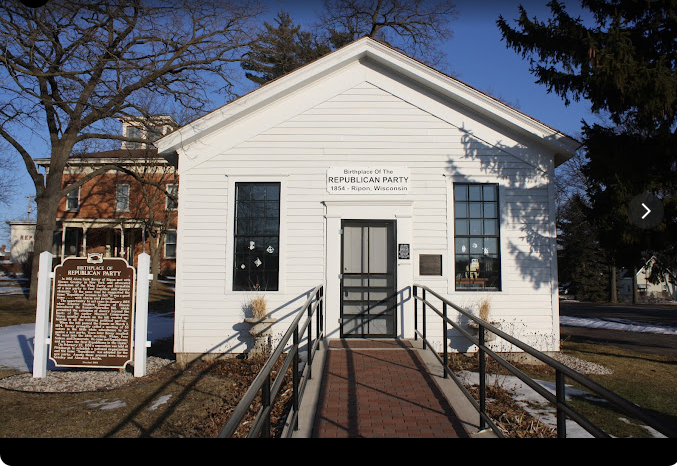
Just as important is having enough donated money to organize in every state, so that the ticket is on every state’s ballot. The amount needed might be upwards of a billion dollars. If this sounds like a small number of people appealing to businesspeople for financing, remember that the last successful birth of a political movement took place in a one-room schoolhouse in Ripon, Wis. Horace Greeley and Salmon P. Chase, among others, spread the word to businesspeople across the nation. While the party’s primary focus was slavery, it was also solidly pro-business. The result was a broad funding base, allowing the party to thrive.
A donation of $10,00 makes you a founder. $100,000 allows you to name a delegate to the party’s first convention, which might kickstart the funding.
In a departure from current practice, the founding committee would name the party’s ticket before the convention. I know, no primaries or floor votes; it doesn’t sound very democratic, but that’s the point. More Democracy like primaries is how we got into this mess. They expand the power of the extremes. This effect is how we got Donald Trump, and New York City may get Mayor Mamdani.
Any organization has the right to market its products and services as it sees fit. Apple doesn’t hold a vote on what it sells; it gives you an iPhone, and you either buy it or not. Parties have only one purpose: to win elections. To be responsible, they have every right to determine their product.
The Founding Fathers were so suspicious of Democracy that they implemented numerous checks and balances to prevent rash actions by a majority vote. The fear of a tyranny of the majority is evident in the United States Constitution and the Bill of Rights.
My ticket suggestion is Nikki Haley and Brian Kemp. Why would any Democrats vote for them? Because they’re known Capitalists exiled from Trump’s Republican Party. You know you’re not getting socialism. Many Democrats have come to realize what the Scandinavian countries have found out: you must first create wealth before redistributing it, and have returned to market economies.” Abundance Democrats” are discovering what isn’t working.
In the future, we’ll discuss a political party that, like the Whigs, disappeared, and identify which one of the two present parties it is.
 Detour on the Road