Watching both Bill Maher and Michael Smercondesh bemoaning the rise of Marxism in the Democratic Party this week caught my attention. The high visibility of Bernie Sanders and A.O.C., along with other “democratic socialists,” during our lengthy government shutdown, coupled with the likely election of one of their own as Mayor of our largest city, has caused a stir among those who consider themselves more moderate.
Their consternation reminded me of my dismay at Donald Trump’s 2016 success in the Republican Party. How could someone representing a minority of a minority suddenly become President? I thought of myself as a typical free-market, small-government, peace-through-strength Reagan Republican. Long-time Democrat Trump, with his anti-immigrant, pro-tariff positions, didn’t sound like Ronald Reagan. I voted for the libertarian ticket.
Running against one of the world’s most unpopular candidates, Hillary Clinton, Trump became President. Neither candidate had the support of even half of the American people. I sensed that a majority of the country was like me —deeply dissatisfied with the choices offered by our major parties. This lack of choice led me to begin my series on a “Future Party.”
The original idea was to establish a new party for independents and disaffected Democrats and Republicans to find a home. Independents could be comfortable not being subservient to any particular ideology. This vision led me to a brief and inconsequential association with Starbucks founder Howard Schultz’s short-lived third-party movement.
Instead of charting a course based on superior policies to those of either the Democrats or the Republicans, Schultz withdrew, fearing he would help Donald Trump by splitting the Democratic vote. We had just submitted ideas when he dropped out. Instead of staking out policies that appealed to everyone because they were better, he revealed where his heart truly resided.
Before the last election, former West Virginia Senator Joe Manchin failed to launch a third-party run on the same basis. Fear of aiding Trump dominated his thinking rather than a belief that he had a better path for America. That’s because he, like Schultz, didn’t have one.
In both instances, neither Schultz nor Manchin had anything more to offer than the promise to work across the aisle for workable compromises. In the “Future Party Series,” I concluded that for a third party to succeed, it must stand for something and make every effort to sell it.
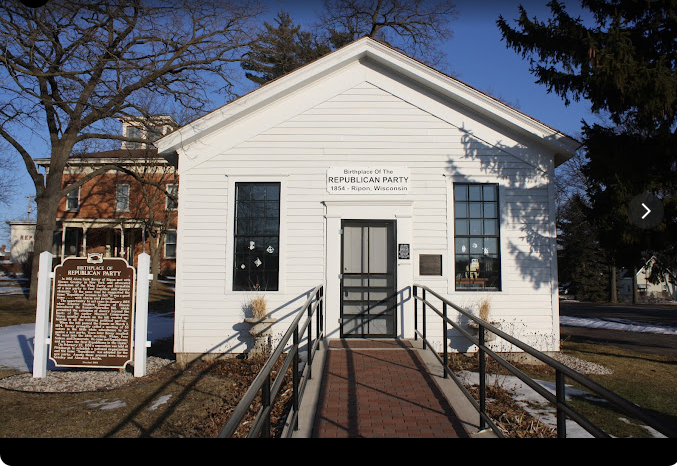
The one successful third party, the Republicans, weren’t deterred by splitting the anti-Democratic vote in 1854. They knew what they stood for; they were against slavery. In 1860, Abraham Lincoln was elected the 16th President of the United States. The Whig Party disappeared.
People on both sides will come together on what they agree on, regardless of their existing party. A case in point is the opposition to Trump’s expansive tariff policy. Twelve Democratic state attorneys general joined forces with the libertarian free-market Liberty Justice League to bring suit against the Administration’s tariffs. Briefs supporting their case have been filed from across the spectrum, from the U.S. Chamber of Commerce to the Brennan Law Center.
Continue reading Detour on the Road