Donald Trump often sees problems, but as someone who spends little time on in-depth analysis, he comes up with questionable solutions. One example is his suggestion that Jordan and Egypt take in Gazans to ease reconstruction efforts. The two nations immediately shot down the idea, and it isn’t hard to see why. Jordan already has more Palestinian refugees than native citizens. Returning to “Black September” in 1970, their presence has been problematic. They’re not about to add to a problem they never wanted in the first place.
Egyptian President Abdel Fattah el-Sisi gained his position by disposing of the previous Muslim Brotherhood government. Hamas, which governs the Gazans, is an outgrowth of the Muslim Brotherhood’s Palestinian branch. The last thing he wants is to strengthen the Brotherhood’s numbers in his country.
Trump should’ve known all this and avoided the negative blowback. Still, the president isn’t wrong to wonder, as a builder himself, how you can build a viable Gaza in place of the existing rubble when overrun with 2,000,000 displaced people in just 141 square miles. Gaza was overpopulated and under-employed before the war. Now, the situation is infinitely worse.
Considering Gaza’s makeup, I offered my “Solution for Gaza” posts. Rather than a full-scale invasion, designate areas to be leveled by explosives, inform everyone to leave, then blow them up. Working towards the sea and away from the Israeli border, food and other supplies are landed on the shore by ship. The ships are then required to take women, children, and infirm to safety in accepting countries. If the Arab world and other countries are concerned about these Palestinians, let them show it. International aid now supporting the Gazans would follow them, so there was little if any, increase in cost.
People were horrified, claiming it would level and depopulate Gaza. Looking at things now, with Gaza a pile of rubble and the number of women and children killed, the plan seems a lot better than what has happened.
I never thought the destruction and shipping of refugees would go on for very long before Hamas would give in. Faced with a slow but relentless low-cost action, Hamas couldn’t wait for the last Gazan civilian shipped out of a leveled Gaza. Pressure from other Arab countries faced with accepting Palestinian refugees would leave Hamas little choice.
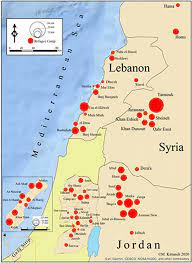
Even though the situation is different now, with Gaza destroyed, few Gazans have left. We have to understand why there were so many Gazans. In 1948, 7000,000 Arabs fled the new nation of Israel, mainly at the urging of the Grand Mufti of Jerusalem. The U.N. established the United Nations Relief and Works Agency for Palestine Refugees in the Near East (UNWRA) 1949 to aid them. The agency set up numerous camps ringing Israel:
Why did the U.N. feel it was necessary to create a new refugee agency when the International Refugee Organization (IRO) had existed since World War II and was doing great work in resettlement? This group evolved into the Office of the United Nations High Commissioner for Refugees (UNHCR), the primary vehicle for caring for and resettling refugees worldwide. It has accomplished the resettlement of tens of thousands of refugees annually.
Continue reading

 Detour on the Road