A year ago, I was still befuddled by the Democrats having secured the Republican Presidential nomination for the weakest candidate, Donald Trump, by burying him in bogus lawsuits. That made him a sympathetic figure to many and sucking all the media attention away from his competition. Democrats nominated the only person who could manage to lose big. While pondering this turn of events, I had to come to terms with the fact that Trump was back.
As I pointed out at the time, the outlook could be very positive. After all, Trump’s first term employed supply-side economics to cut taxes on capital and work to reduce onerous regulations. These actions have led to solid pre-COVID growth. Increasing supply is the best way to tackle the high inflation engendered by the Biden administration’s heavy spending. A government-directed economy was shoveling vast sums into the fight against “climate change.” Covid relief swallowed more billions.
Daming the river of wild spending to reduce demand growth, while pumping up supply, worked for Reagan in subduing double-digit inflation and promised to work for Trump. Sure, Trump had added some things to his campaign, such as no tax on tips, overtime, and Social Security, which are not supply-side, but on balance, things looked to be improving on the economic front.
After Trump’s peaceful first term, the war in Ukraine and in the Middle East raged under Biden after his disastrous Afghan withdrawal. In the campaign, Trump promised to bring peace quickly to both areas.
Millions of illegal aliens streamed across our southern border, with the Biden administration just throwing up its hands. Americans know they need immigrants, but not in this way. Trump promised to get control of the border.
The Trump Administration has taken action in all three areas, but it’s unpopular:
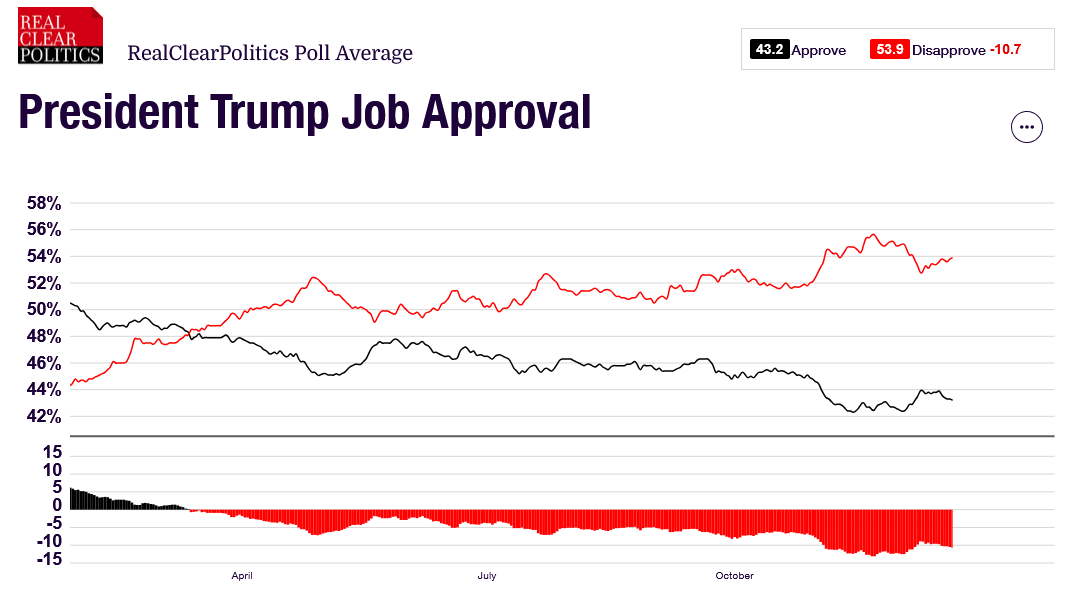
The question is why? While other essential problem areas, such as education and healthcare, exist, these three are most directly under the president’s control. The states dominate education, and neither party has a handle on reasonably priced healthcare.
While Trump, in his first term, imposed tariffs on a few products, such as steel and aluminum, and forced a revision of the NAFTA trade treaty with Canada and Mexico, the administration granted many tariff exemptions, and the new treaty had only minor changes. This time around, Trump has wielded tariffs like a club, hitting everyone in the room.
One thing we know about tariffs is that they don’t lower prices—quite the opposite. Claiming crisis conditions and national security, Trump last spring imposed the highest tariffs on imports since the infamous Smoot-Hawley tariffs—coffee from Brazil and chocolates from Switzerland were deemed existential threats.
Continue reading Detour on the Road