The oddest thing about this presidential election is that nominees base their programs on highly discredited ideas. Price caps, tariffs, and industrial policy underlie Trump and Harris programs. One might think that finding what works and building on these have a better chance of success, but both have gone in the opposite direction.
In her first economic speech, Kamala Harris positioned her inflation-fighting program on a FTC crackdown on grocery price gouging. Rather than overspending by the Government resulting in too much money chasing too few goods, the accepted reason for inflation is those rascally grocers jacking up prices to fatten their profits. Better, the Government can control inflation by determining the “correct price.”
Price controls have a long history, going back to Roman times or earlier. They have uniformly failed, often making the situation far worse. High prices signal markets to increase supply or provide substitutes. Capping prices at a lower level sends the opposite signal, resulting in less supply, increasing shortages, and black markets. Marxist countries such as the USSR, Cuba, and Venezuela suffered from the Government dictating prices.
In an era of “Super Abundance,” as documented in the same-titled book by Tupy and Pooley I’ve been recommending, you must work hard to have so much less. Richard Nixon discovered this through his wage and price controls in the 1970s. Shortages and lines were a feature of our lives. Autos in long lines at gas stations brought home this policy failure to every community.
Upon his election in 1980, Ronald Reagan dumped the price caps on oil. Many projected the price of a barrel of oil would soar to over $100. Instead, the price ultimately bottomed out at around $10. The market reacted to price signals and brought forth price-reducing supply.
Why would anyone replicate a failed policy? Kamala Harris’s boss, Joe Biden, proposed rent control, an even worse policy. Will the Democratic nominee pursue this? What other prices will she cap?
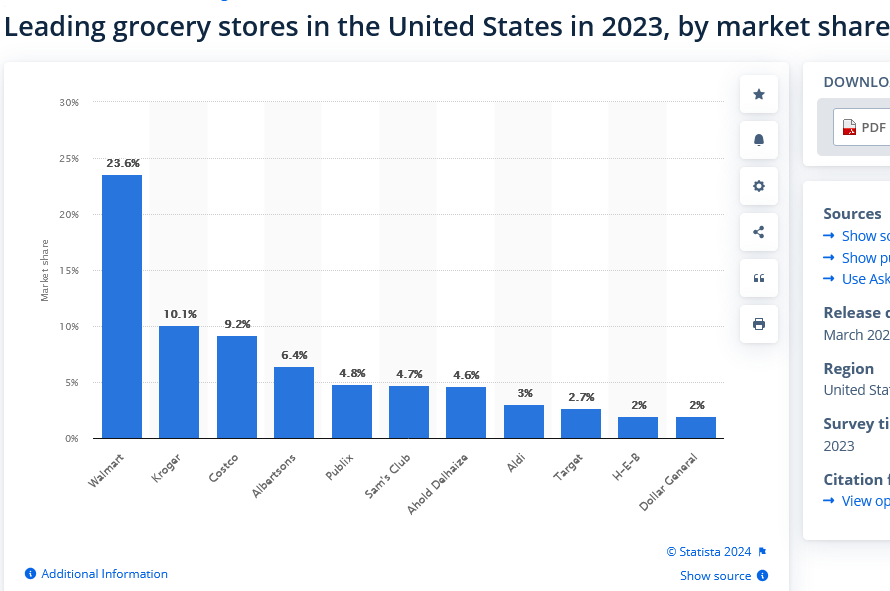
In any case, why pick on grocers? Of the top five places most people purchase groceries, who’s a gouger? Walmart? Costco? Who should the FTC go after?
Not to be outdone in resurrecting bad policy, Trump is touting tariffs as a cure-all. Keeping out foreign products will foster making things here, producing good-paying jobs. Foreigners who have been taking advantage of us will pay huge taxes into our coffers-America first. What’s not to like? After all, didn’t we have high tariffs in the past to protect our industries?
In the past, our tariffs were more for revenue than penalizing the competition. We tax people from out of state by putting extra fees on hotels and rental cars to tax people voting elsewhere rather than our own. We never make them so high that tourists and conventioneers go elsewhere. The same principle underlay our tariff history.
When we did raise them high, such as the 1828 Tariff of Abominations, they caused a crisis, splitting the nation until reduced in 1832. Many economists credit The Smoot Hawley Tariffs for worsening the depression by forcing a trade war. Do we want to repeat these mistakes?
The expansion of trade is one of the pillars of “Super Abundance.” Beggaring your neighbor, especially friends, is a lousy policy. China may be breaking the rules, but that isn’t a reason to raise tariffs willy-nilly. As the market realizes China isn’t to be trusted, a natural reduction in China’s trade and investment is occurring. No business reies on a cheat. If a company switches its sourcing to our ally Japan from China, we’re all better off.
A ten-to twenty-percent across-the-board tariff will raise prices. Regardless of Donald Trump’s claims, American importers write tariff checks and taxes Americans pay. All this hurts us rather than some panacea. As I pointed out in my series, “The Long Journey to More,” free markets allocate resources and capital more efficiently, providing everyone with “More.”
Both campaigns go in the opposite direction by relying on the Government to set prices and pick winners and losers. By their nature, Tariffs favor inefficient domestic businesses over those importing some or all their needs even though they provide a better product at a cheaper price.
Subsidies, such as those featured in the hilariously named “Inflation Reduction Act,” also favor those receiving them over others. Again, History has been unkind to this kind of government intervention. According to the Wall Street Journal, many receiving government money and support are already on the ropes.
Tariff protection and subsidies for Electric Vehicles (EVS) now suggest massive stranded investment. As I’ve always said, if governments could efficiently tell us what to produce at what price, the Soviet Union would’ve won the Cold War. Instead, it collapsed.
Why are our prospective leaders looking to government industrial policy to move us forward instead of reducing the obstacles impeding our free-market capitalism so that we can continue the march to ever-better lives?
Both campaigns seem dead-set on restoring manufacturing jobs to the Rust Belt and the Youngstown Ohios to their former glory. They believe those ” good-paying” union jobs were stolen unfairly by China, and both Harris and Trump look to tariffs and subsidies to bring them back.
Unfortunately, their thinking ignores that many jobs moved to non-union states long before China came on stage. Automation meant less labor to produce the same goods. We still make as much as we did in the Rust Belt’s golden days, but we do it with less labor in different locations.
We could have a “comparative advantage” in many manufacturing areas if we reduce the restrictions on getting the needed raw materials and processing them as competitive building blocks for flexible, innovative manufacturing. Still, neither have a solid plan to accomplish such a change.
As it stands, we need help with doing much of anything. Government at all levels creates more obstacles to development, and we don’t have the money to spend on government boondoggles.
Donald and Kamala, let’s get back to what works. Why move away from what is creating “Super Abundance” that has lifted billions out of poverty?
 Detour on the Road